
Field Trip Recap: Woodcock Walk at Indian Boundary Prairies
words by Kris Hansen
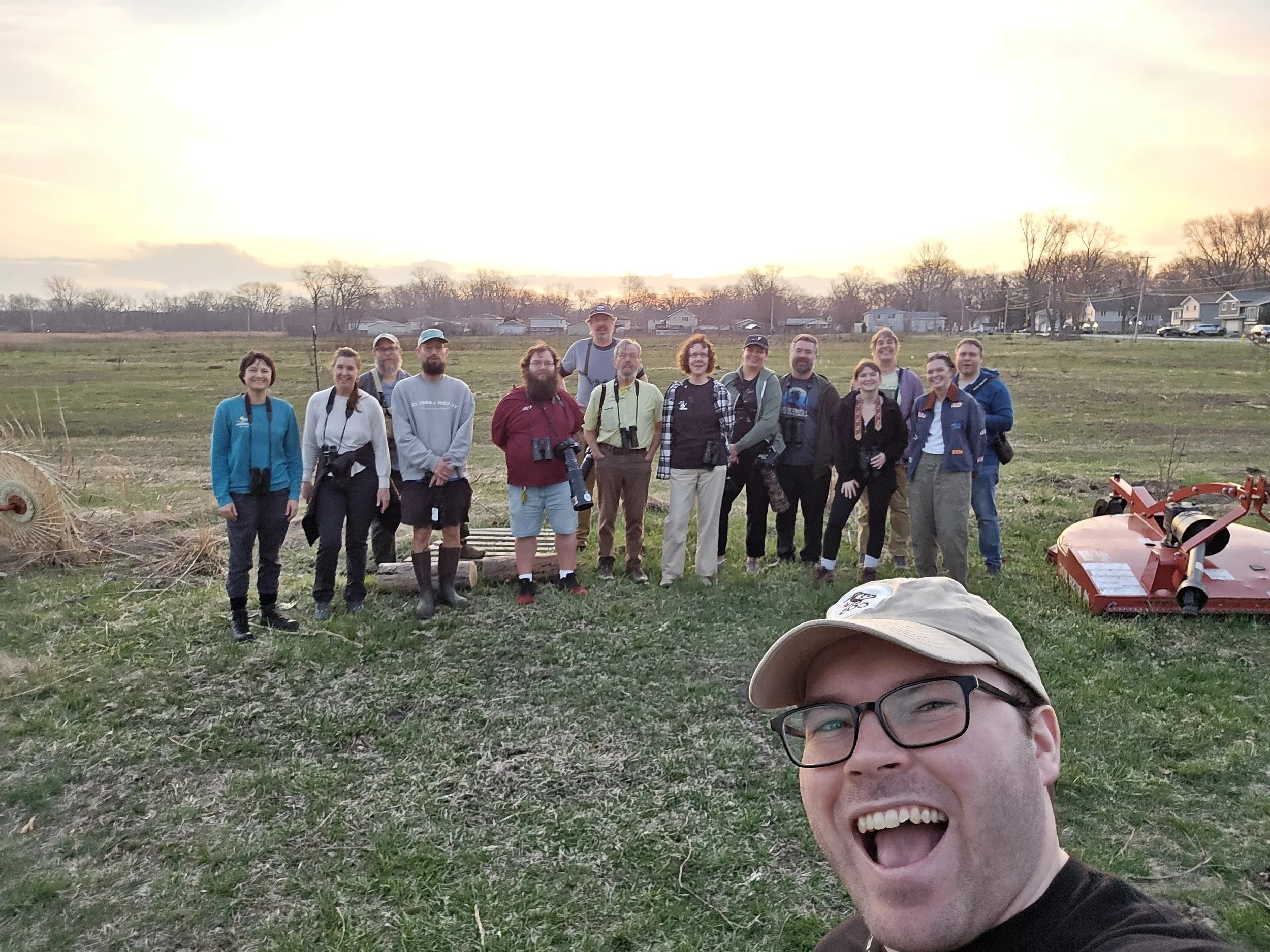
On an unseasonably warm and breezy night March 30, 15 birders gathered at Paintbrush Prairie, one of the five high-quality parcels that make up the Indian Boundary Prairies in southern Cook County. After introductions, trip leader and COS president Edward Warden provided a solid impression of the male American Woodcock rotating mating dance and peent calls.
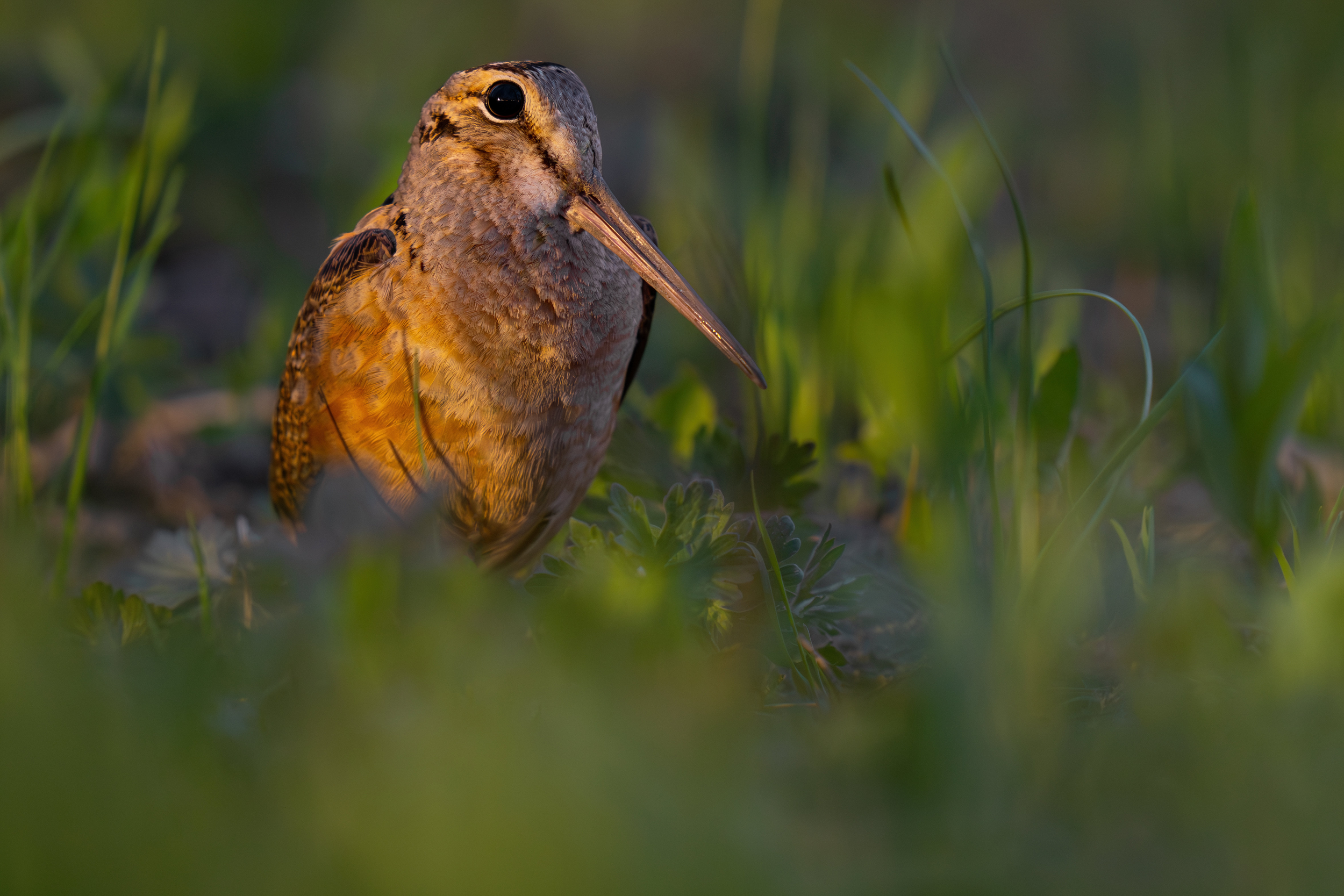
American Woodcock. Photo by Matt Zuro, Wolf Road Prairie, April 24, 2023.
We moved out into the grasses, looking for a likely place to wait as dusk fell. Edward explained the difference between sunset (the sun touches the horizon) and twilight (when the sun has entirely disappeared). Woodcocks only display at twilight and only for about 30 minutes, so we needed to get into position.
On the way we disturbed one—er, two—er, four— and finally about a dozen garter snakes that were sunbathing during the balmy afternoon. Edward explained that Chicago has its own subspecies, distinguished by a gray-green belly and broken vertical stripes near their head. Common garter snakes have yellow bellies and only horizontal stripes.
Suddenly, an American Kestral flew overhead, a small furry catch in its talons. As it continued away from us, we debated whether we wanted to watch it eat dinner or not.
As we waited for woodcocks, we admired many American Robins, a pair of Northern Flickers, and a band of European Starlings grabbing a quick snack before bedtime. We moved from one end of the prairie to the other, pausing to listen, to no avail.

Wilson’s Snipe. Photo by Jeff Bilsky, Air Station Prairie, April 18, 2020.
Then we saw a dark shape flying past. However, instead of flying straight up and spiraling down like a woodcock, this bird zipped horizontally past us. It was a Wilson’s Snipe! Soon we heard more snipe calling, sounding like a basketball team’s-worth of squeaky shoes on a gym floor. The snipe continued to take off in small groups, flying past us in the near-dark.
While Paintbrush Prairie traditionally hosts migrating woodcocks, none were present that night. Nevertheless, we saw 14 species, including 16 Wilson’s snipe, and enjoyed discovering a birding spot new to most of us.