
Field Trip Recap: Montrose Point Beginner Bird Walk
words by Lauren Kostas
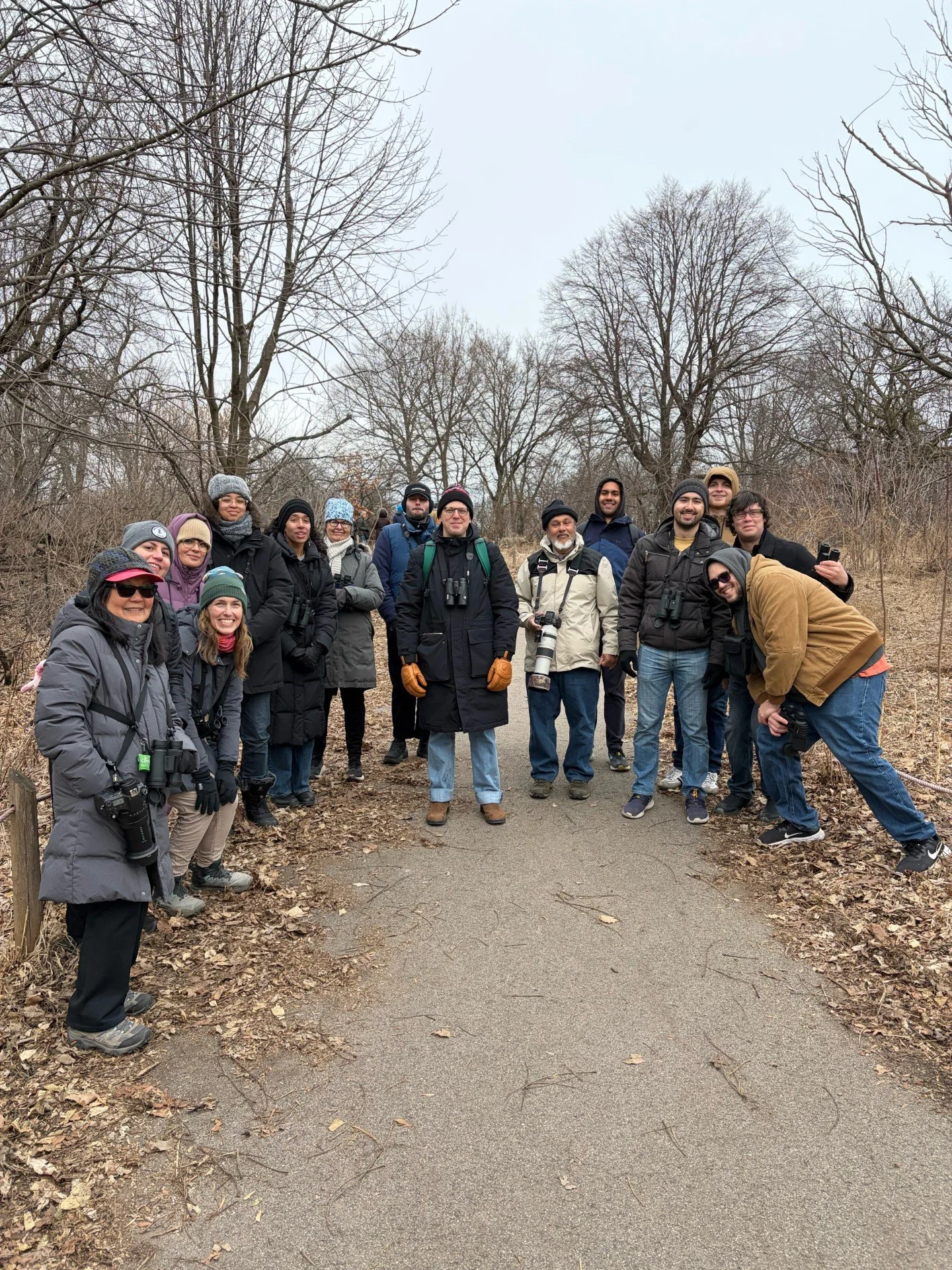
On Feb. 28, Chris Cochrane and Kelly Ballantyne led a group of about a dozen self-described beginning birders for a lively and educational walk around Montrose Point Bird Sanctuary. Novice birders from all over Chicagoland got together to explore one of the most celebrated birding locations in our region. With Chris’ and Kelly’s guidance, we made some new connections, spotted some seasonal rarities and learned valuable identification techniques.
Our trip started with some binocular (“bin”) basics before we headed to the harbor to spy on weird ducks and winter visitors. In addition to the usual suspects such as Canada Geese, Mallards and Ring-billed Gulls, we also spotted an American Black Duck and a Long-tailed Duck. Greater Scaup, American Coots and Common Goldeneyes were also seen bobbing on the water.
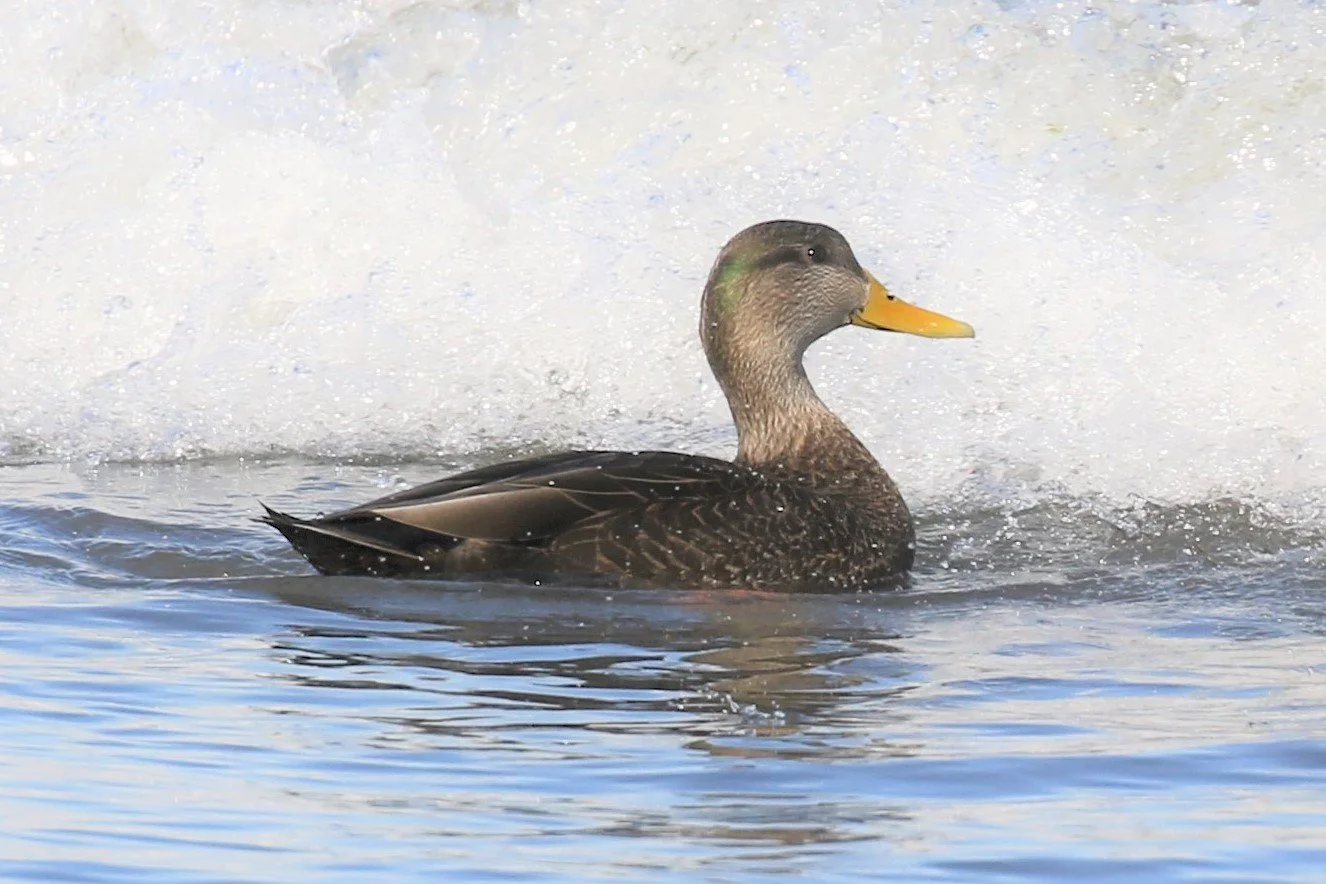
American Black Duck. Photo by Walter Marcisz, Calumet Park, Nov. 22, 2021.
We practiced our locating skills and pinpointing language, ensuring we got all eyes on a diving Horned Grebe. The male Red-breasted Mergansers proved to be a crowd favorite at the harbor, and we admired their cool mohawks and courtship displays. The mergansers served as an example of the amount of identification clues conveyed by the size, shape and color of a bird’s head.
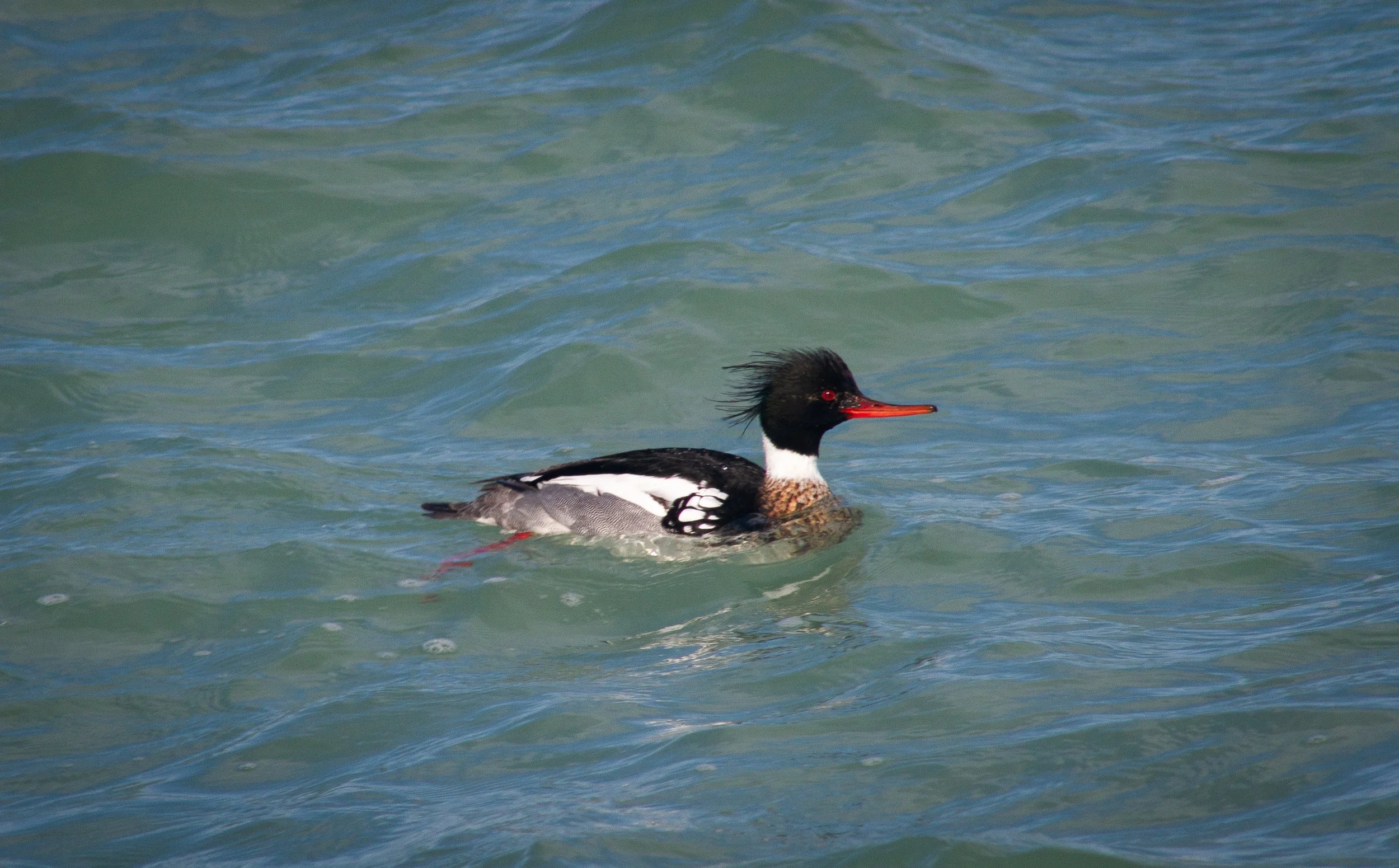
Red-breasted Merganser. Photo by Nik Wilson, Montrose Harbor, April 6, 2025.
As we walked around the point, Chris shared his perspective that late winter is a great time for novice birders to grow their skills. It is an opportunity to find a favorite patch and get to know local year-round species before the migrants come through. Spotting birds is a bit easier when the trees are bare and the distinctive diving and dabbling ducks of winter are amenable to more leisurely examination.
In the sanctuary, we spied Dark-eyed Juncos, American Tree Sparrows, European Starlings and Black-Capped Chickadees. The sight and sounds (both the call and hammering) of the Downy Woodpecker led to a quick tutorial on distinguishing the species from the Hairy Woodpecker. A Red-bellied Woodpecker made a brief appearance, and we were serenaded (or screeched at) by many Red-winged Blackbirds.
Even on a blustery winter’s day, Montrose did not disappoint. We saw 21 species. Kelly’s and Chris’ insight and enthusiasm were contagious, sparking talk of future birding plans among the group.