
Field Trip Recap: Wild Goose Chase at Humboldt Park
words by Kate Allgeier
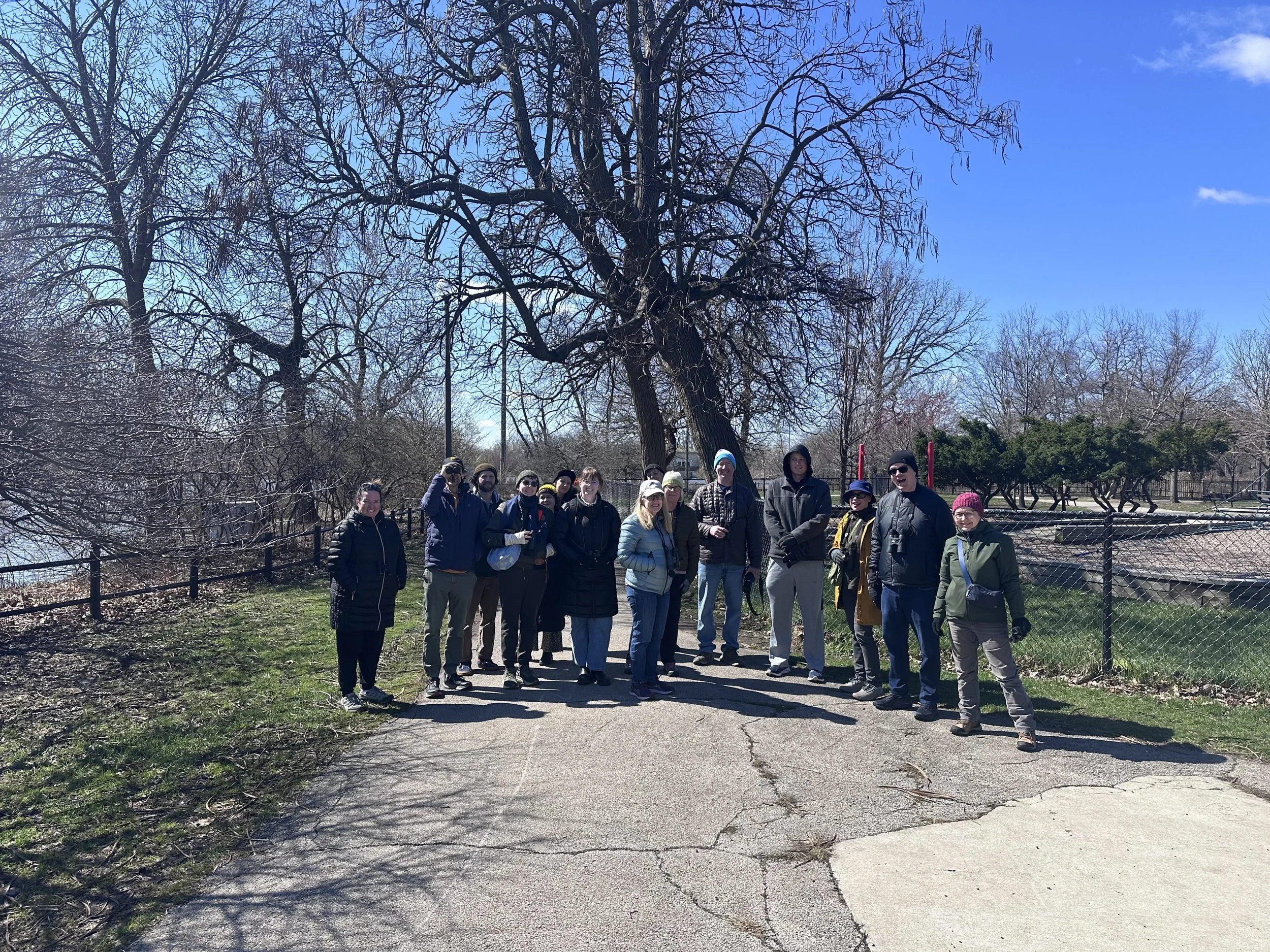
Humboldt Park welcomed birders with clear skies, gusty winds and brilliant sunlight for the Sunday Social on April 5. A group of 17 socializers gathered at the boathouse overlooking the lagoon, hoping to enjoy a little spring weather and a lot of spring visitors.
Our walk leader for the morning was COS Field Trip Committee chair Chris Holden—although a Canada Goose fiercely patrolling the terrace railing let us all know who was really in charge.
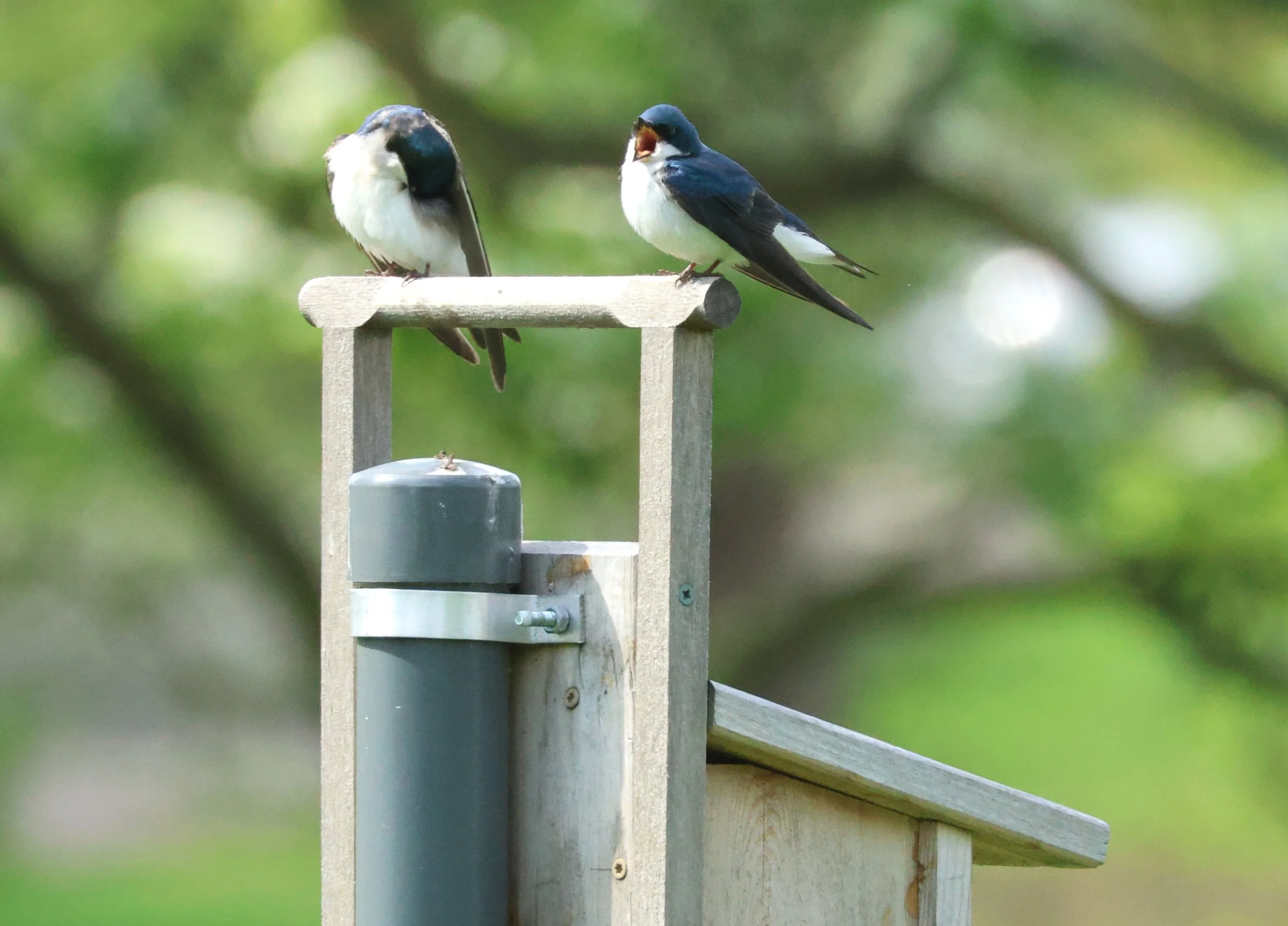
Tree Swallows. Photo by Ima Akagawa, Douglass Park, May 7, 2025.
Tree Swallows twirled overhead as we exchanged introductions. Chris offered hints for distinguishing them from other aerial insectivores. In addition to the flickers of iridescent blue and green, Chris noted the Tree Swallows’ white belly juxtaposed with dark wings, giving an impression of “crisp contrast” when viewed from below.
Beginning our expedition with a survey of the lagoon, we spotted waterbirds, including Wood Ducks, Ring-billed Gulls and a Red-breasted Merganser.
We also encountered our first mystery: a solitary dabbler in the distance whose coloring suggested either a domestic Greylag Goose or a Greater White-fronted Goose—a rare sighting for this location. We decided to bird our way along the shoreline until close enough for a better look and hopefully a definitive ID.
Passing beneath the pavilion, we turned our attention up to the rafters where Golden-crowned Kinglets flitted past a nesting pair of Common Grackles. Emerging onto the boathouse steps, we observed a Brown Creeper spiraling its way up a honey locust tree, then quickly refocused as a pair of Red-Tailed Hawks soared into sight overhead. Raptors and waterfowl, migratory visitors and nesting residents—all before we’d even left the parking lot.
Setting off on the trail, we paused at a patch of dense shrubs to observe a Hermit Thrush in profile on a low branch, and a secretive Swamp Sparrow, emerging from shadows and vanishing again.
The path wound through tall trees, whose bare branches offered clear views of a male Yellow-bellied Sapsucker, to a lawn flooded by recent rains. There, wading through the puddles, was our mystery guest!

Greater White-Fronted Goose. Photo by Sven Kranz, Montrose Point Bird Sanctuary, Oct. 16, 2025.
At close range we confirmed the vivid orange legs and broad white line at the base of its bill that positively identified it as a Greater White-Fronted Goose. Chris helped us appreciate the moment’s importance, explaining that this was only the third time its species was ever sighted in Humboldt Park**. The group settled in to watch and admire as the distinguished visitor paddled, preened, and finally took flight back to the lagoon.
Humboldt Park’s 197 acres encompass a richly diverse habitat, from prairie to wetlands to Chicago’s only inland beach. Covering just a fraction of the park, our walk explored a variety of environments—with a unique constellation of birds calling each habitat home.
A quiet stream through stands of oak trees hosted foraging American Tree Sparrows, Northern Flickers and a Red-bellied Woodpecker.
The wooded island at the lagoon’s edge revealed a female Belted Kingfisher and nearly concealed a motionless Black-crowned Night Heron roosting behind tangled branches.
In the park’s western wetlands, Blue-winged Teal and American Coots browsed among the reeds.
On the sandy beach behind the park’s historic field house, we heard the high, glassy cry of a Killdeer, and spotted a pair of Mallards napping in the warm light.
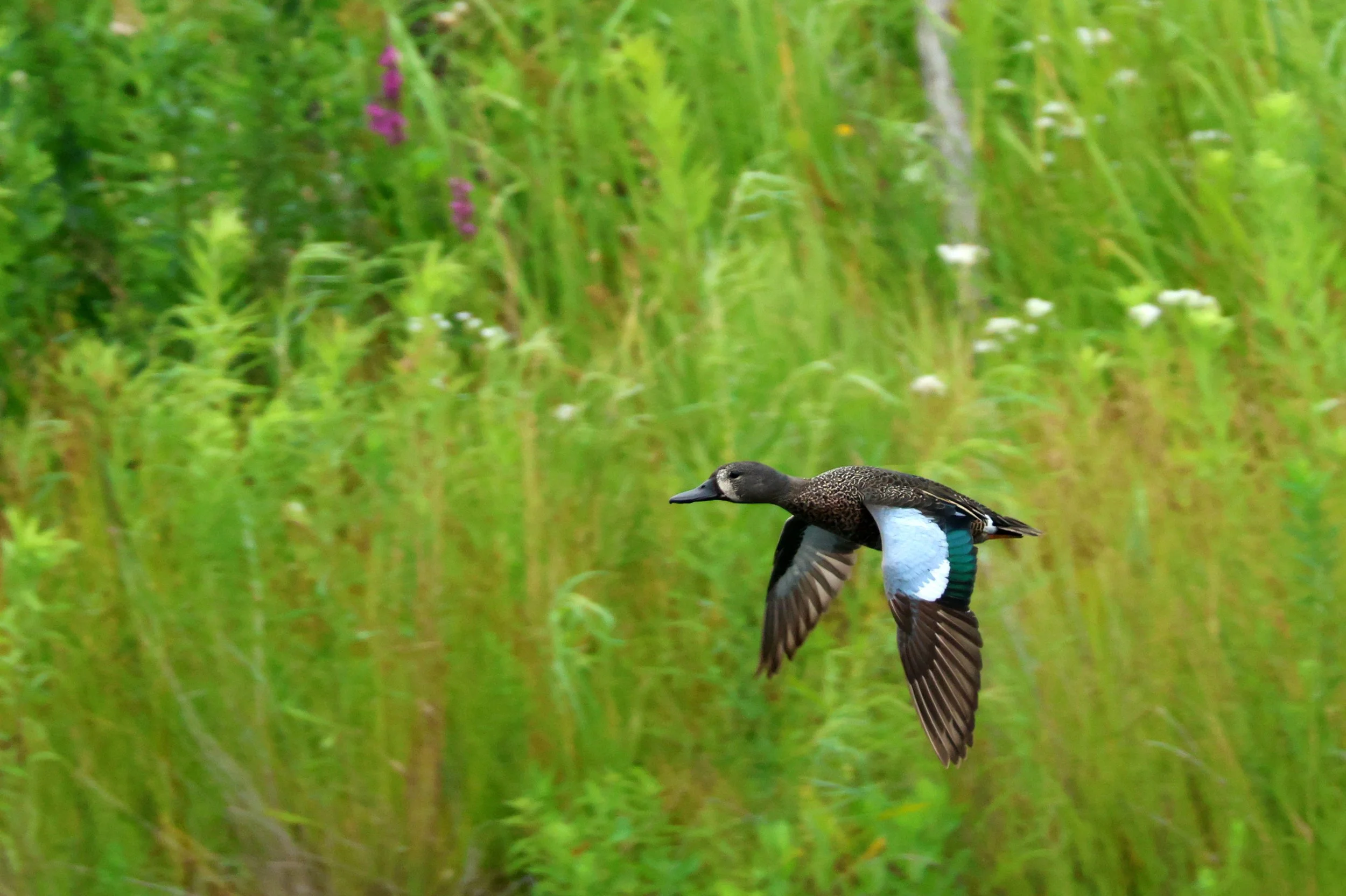
Blue-winged Teal. Photo by Ima Akagawa, Northerly Island, July 17, 2025.
Returning to the boathouse, we wrapped up our sunny Sunday Social with 35 species observed. The walk provided something new for just about everyone—including one birder’s first visit to Humboldt Park, several lifers recorded, ID tips exchanged, and the magic of migration shared with new birding friends all along the trail.