
2025 Big Marsh Bird Banding Recap
words by Lindsay Welbers
In 2025, the bird banding station at Big Marsh Park completed its sixth year of monitoring breeding populations on Chicago’s Far South Side. The station began in 2020, with the goal of identifying and monitoring the bird populations that pass through the South Side nature preserve during breeding season. Since the beginning of the station a total 1,050 birds, from 32 species, have been banded and released.
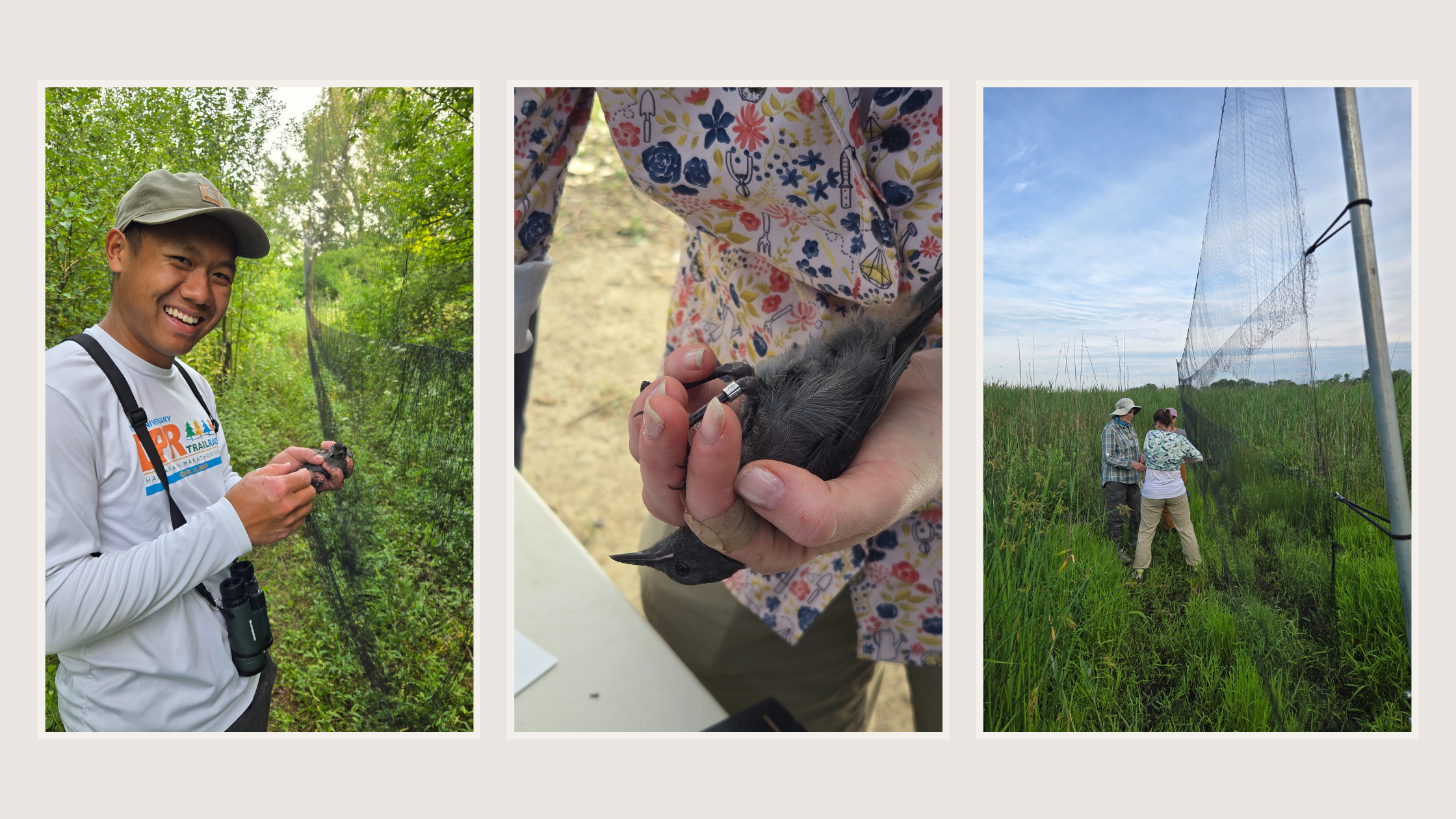
Using soft nylon mist-nets, volunteers passively and safely catch birds over seven observation days during the summer and apply a leg band with unique numbered codes on the birds.
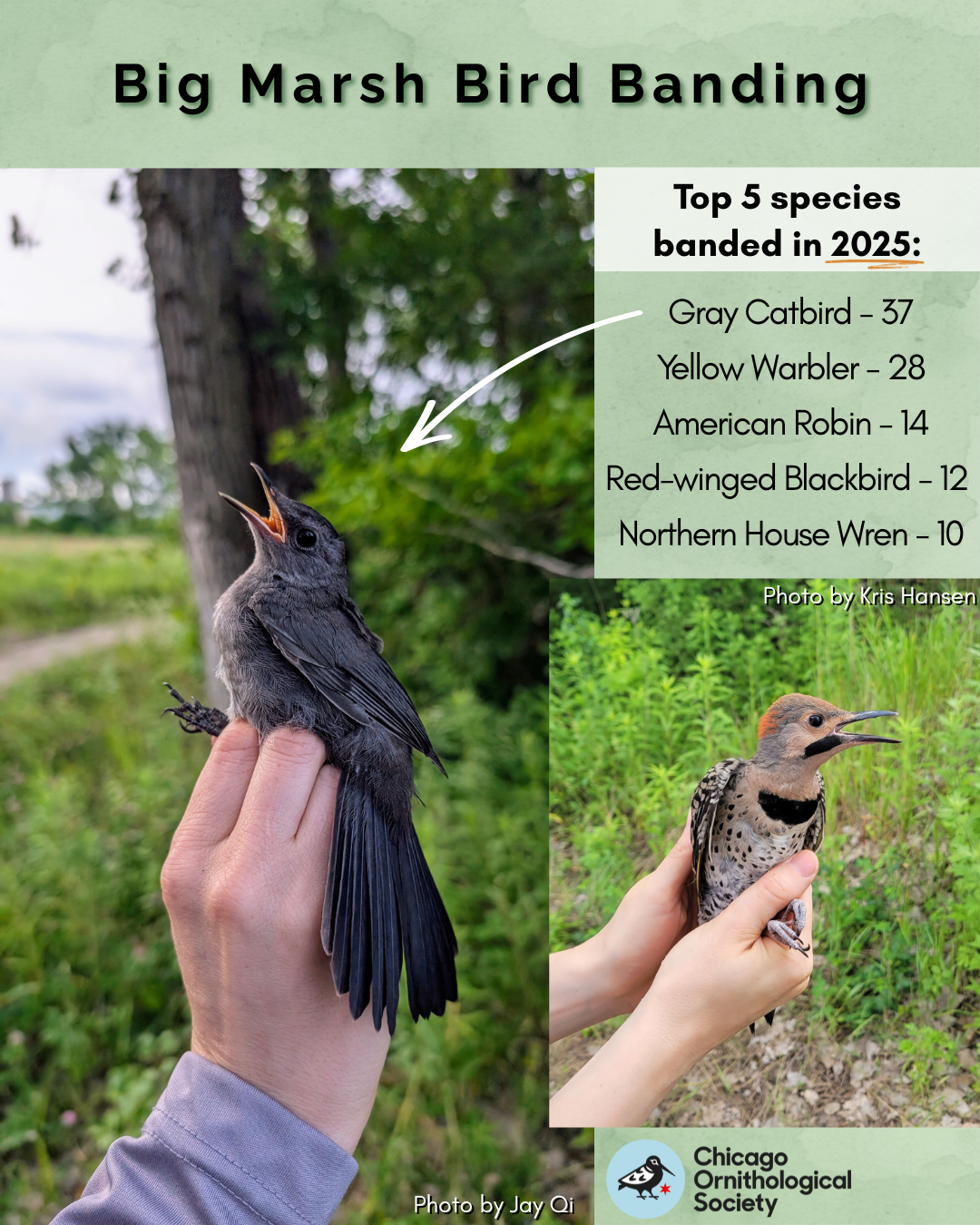
Top five species banded at Big Marsh in 2025: Gray Catbird, Yellow Warbler, American Robin, Red-winged Blackbird, Northern House Wren. Pictured: Gray Catbird and Northern Flicker.
The banding station is part of a network of similar projects implementing the Institute for Bird Populations’ Monitoring Avian Productivity & Survivorship program (MAPS). The station deploys a standardized protocol that helps researchers understand the lives of birds locally and nationally.
“Each band has an individual number, so we know who's who. No two birds have the same band number,” said Lila Fried, a volunteer with the Chicago Ornithological Society. “We are taking information on their body condition, age, sex, what molt stage they might be in—just as much information as possible.”
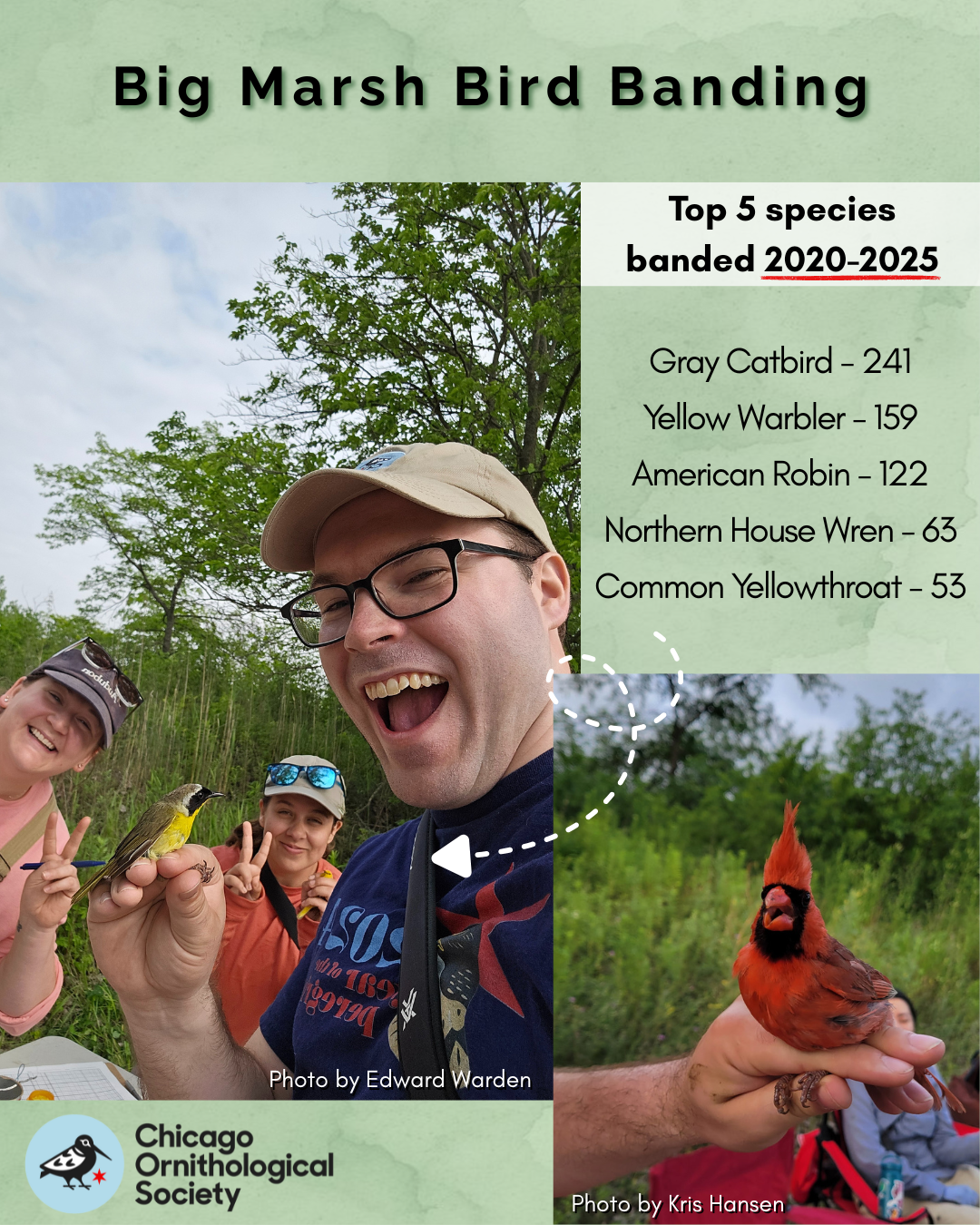
Top five species banded at Big Marsh 2020-2025: Gray Catbird, Yellow Warbler, American Robin, Northern House Wren, Common Yellowthroat. Pictured: Common Yellowthroat and Northern Cardinal.
Over time, researchers will be able to accumulate a large data set, which will illustrate the overall health of the bird populations that call the 297-acre Big Marsh Park home. Because this park is a long-neglected wetland, undergoing restoration after decades of environmental degradation from steel production, long-term research will help scientists better understand the conditions of the birds that call it home during the summer months.
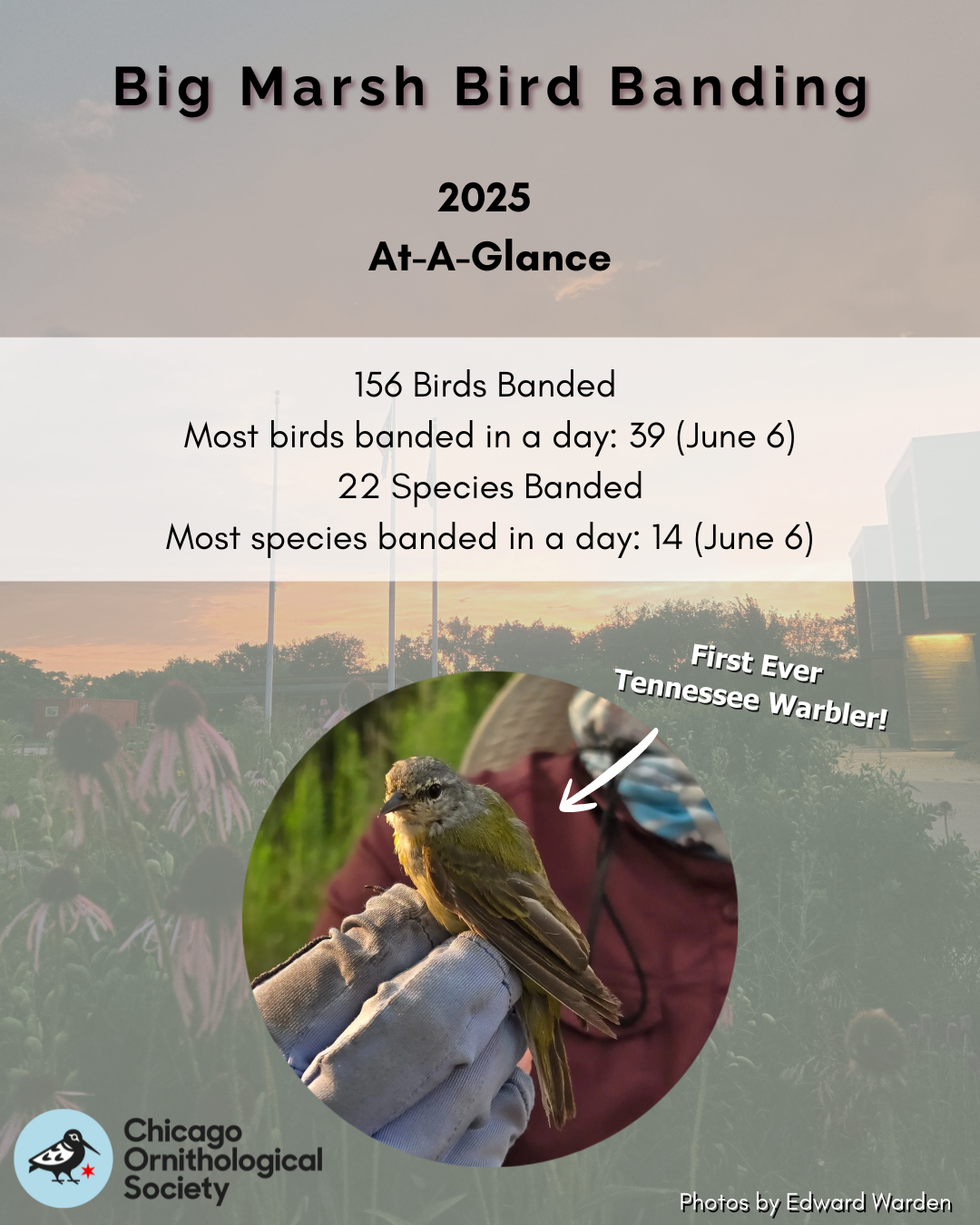
Big Marsh Bird Banding 2025 at a glance: 156 birds banded, most birds banded in a day: 39 on June 6, 22 species banded, most species banded in a day: 14 on June 6. Pictured: Tennessee Warbler.
“For instance, their fat deposits could indicate how healthy they are, how well they're eating,” Fried said. “When you're catching adult birds that have nestlings, they're busy feeding during the field season so they might be relatively emaciated because they're spending all their time feeding their young. When you catch them when they're preparing to migrate, they might have a lot more fat built up because they're trying to store up their reserves to get going.”
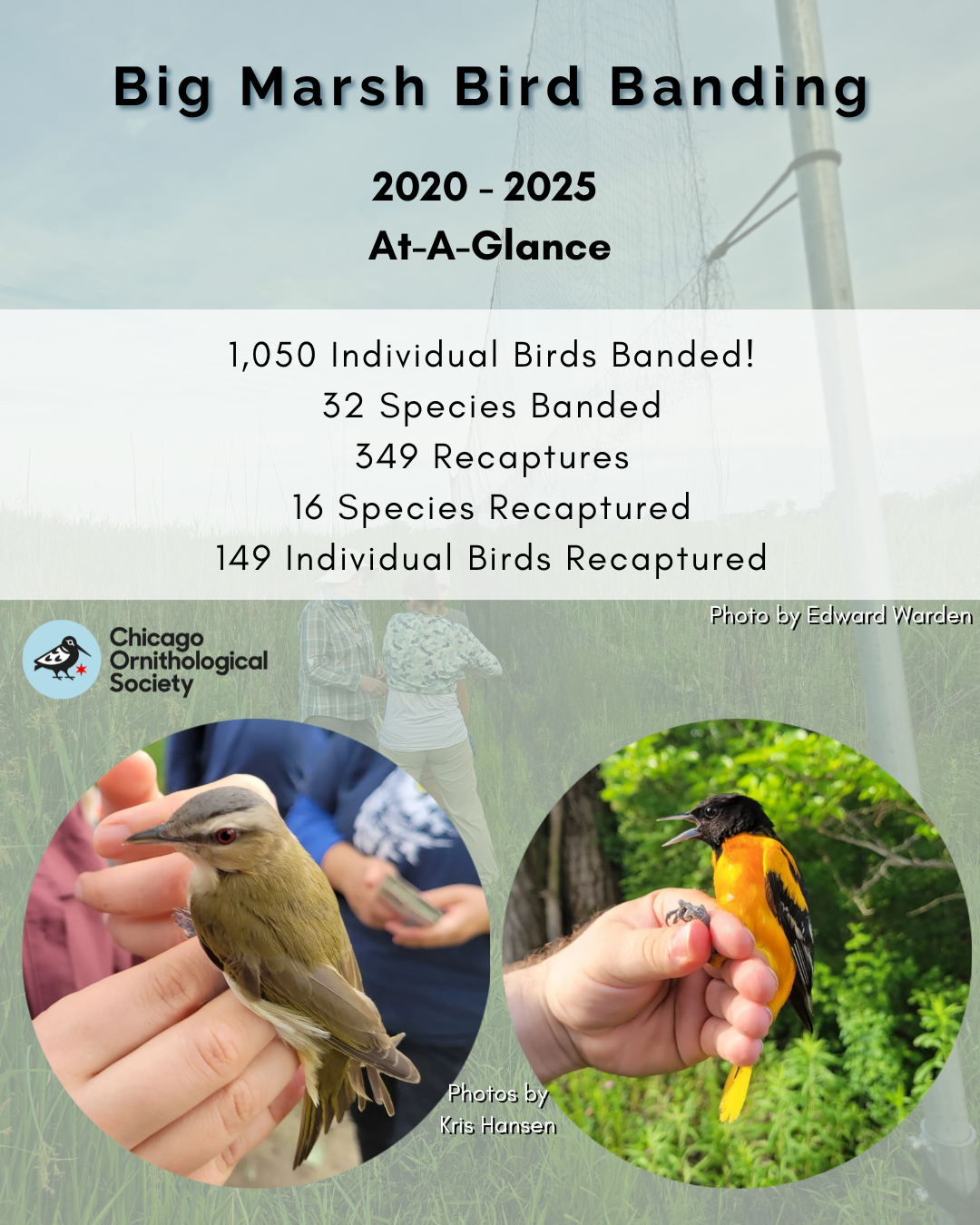
Big Marsh bird banding 2020-2025 at a glance: 1,050 individual birds banded, 32 species banded, 349 recaptures, 16 species recaptured, 149 individual birds recaptured. Pictured: Red-eyed Vireo and Baltimore Oriole.
Beginning in early June and continuing through early August, volunteers completed seven monitoring days in 2025, with a cumulative total of 311 net hours. Using a total of eight nets each day, volunteers and researchers captured, identified, weighed, and banded 156 birds. Their biggest day was on June 6, when they captured 39 individual birds. Over the course of the season, volunteers identified 22 separate species of birds, including one Tennessee Warbler, a first for this research station.
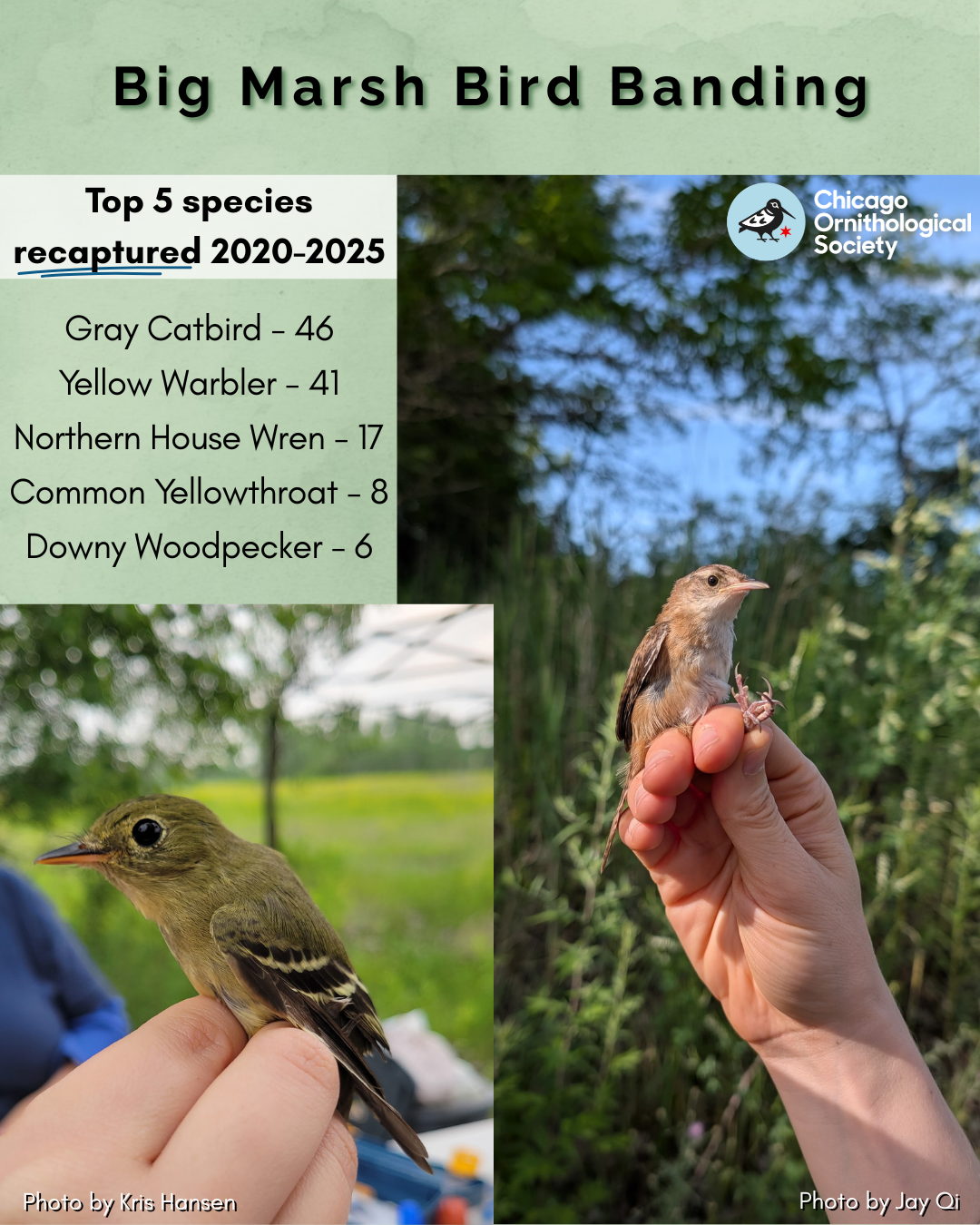
Top five species recaptured 2020-2025: Gray Catbird, Yellow Warbler, Northern House Wren, Common Yellowthroat, Downy Woodpecker. Pictured: Yellow-bellied Flycatcher and Marsh Wren.
The most common species captured included the Gray Catbird (37 individuals), the Yellow Warbler (28 individuals), the American Robin (14 individuals), the Red-Winged Blackbird (12 individuals), and the Northern House Wren (10 individuals.) Of the birds captured, 19 had been previously banded in 2025, and 25 had been banded in previous years, illustrating these birds return to Big Marsh season after season.