
Field Trip Recap: Waterfowl Watch
words by Steve Whitman
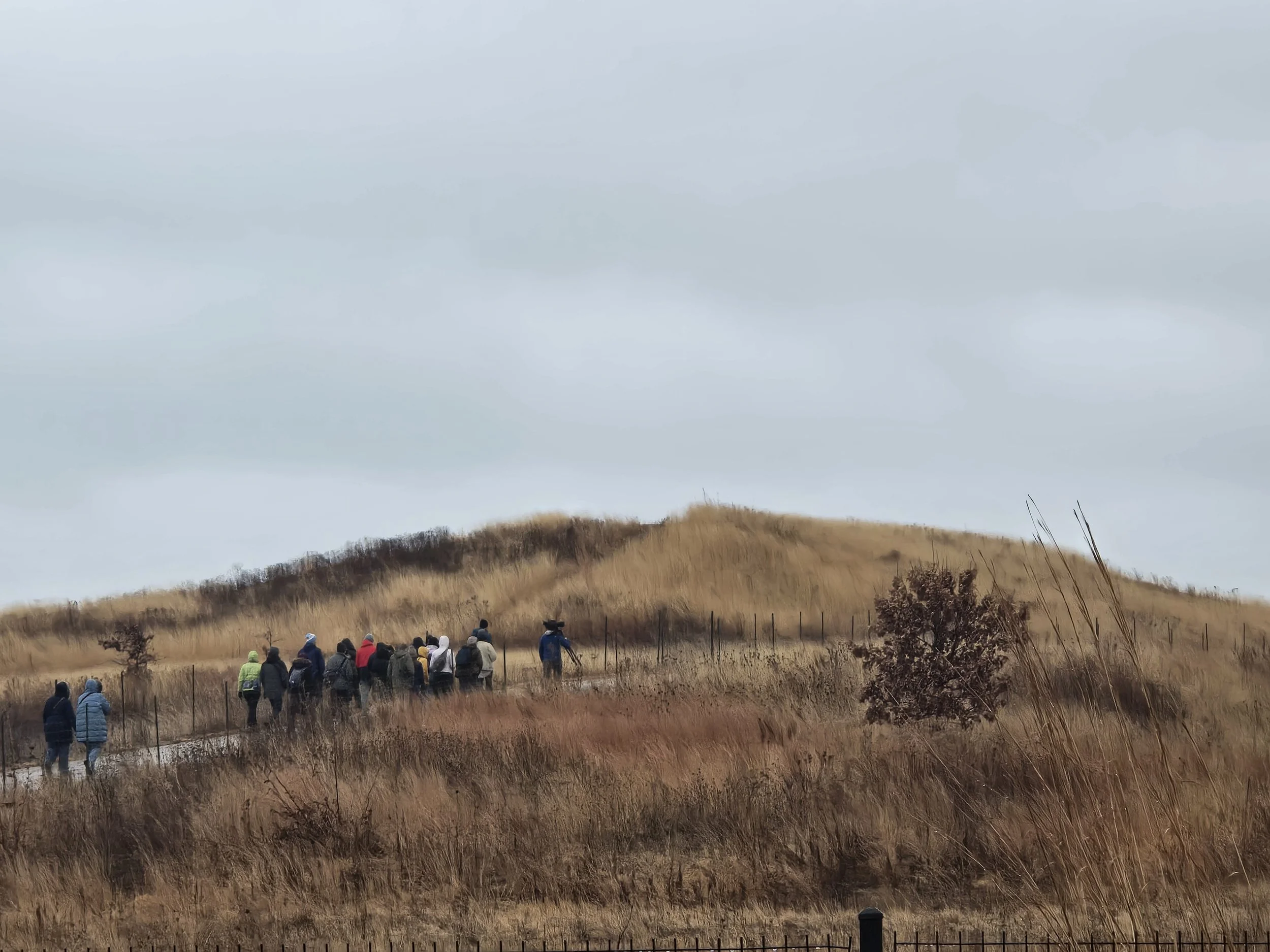
On the morning of Jan. 10, COS hosted its first Winter Waterfowl Watch at Northerly Island to, as communicated to registrants, “explore and celebrate the amazing birds that call Chicago’s lakefront home.”
Birders of all levels of experience and their families were invited to participate in multiple birding walks around the park, a Chicago Winter Waterfowl Presentation by renowned birder Tarik Shahzad, and bird-themed crafts and activity zones.
Light rain was falling throughout the morning, but as COS President Edward Warden told the first to arrive, that is “water off the duck’s back” and shouldn’t impede good birding. Phil Stosberg co-led the first walk with Tarik. They began by describing Northerly Island’s history and how its geographic positioning makes it a premier birding hotspot.
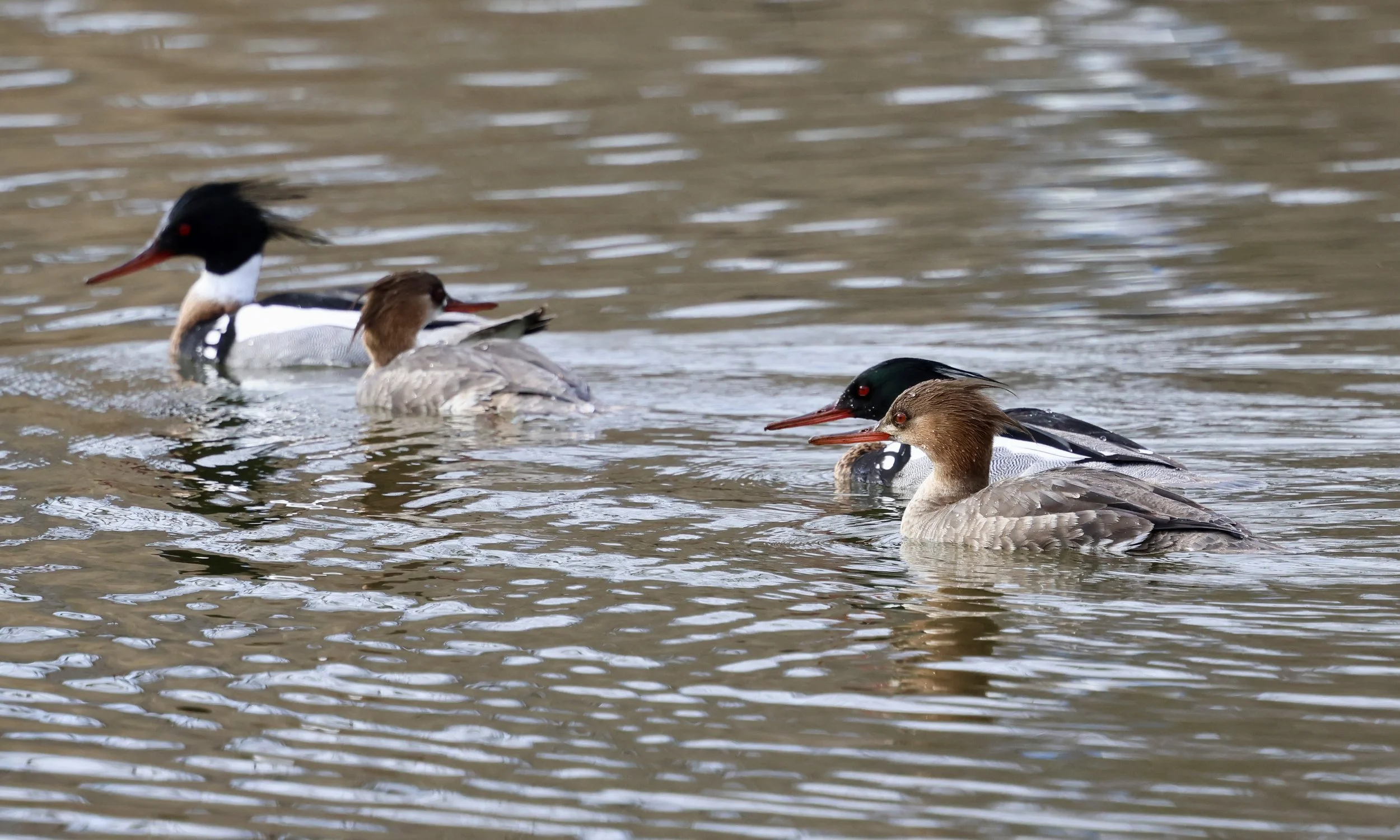
Red-breasted Mergansers. Photo by Haley Harris, McKinley Park, April 6, 2025.
Red-breasted Mergansers, which Tarik called the quintessential Lake Michigan winter duck, with tens of thousands visiting each year, were seen harbor-side and flying overhead. Traveling south on the island, the group also saw Mallards and a Common Goldeneye in the lagoon. “We have an aquatic rodent,” Tarik announced, and the birders debated whether it was a beaver or a muskrat.
Birders love to refer to the winter as “Weird Duck Season,” and the group was puzzled by an especially weird one dabbling along the lagoon slip. Tarik and Phil made sure everyone got their eyes on the duck and had a chance to guess the species before identifying it as a domestic Mallard hybrid.
A more recognizable Peregrine Falcon zipped over the island, heading south. At the south end of the island, Tarik and Phil set up their scope on a distant raft of genus Aythya ducks: Greater and Lesser Scaup, Redheads, or Canvasbacks–-too far to easily identify.
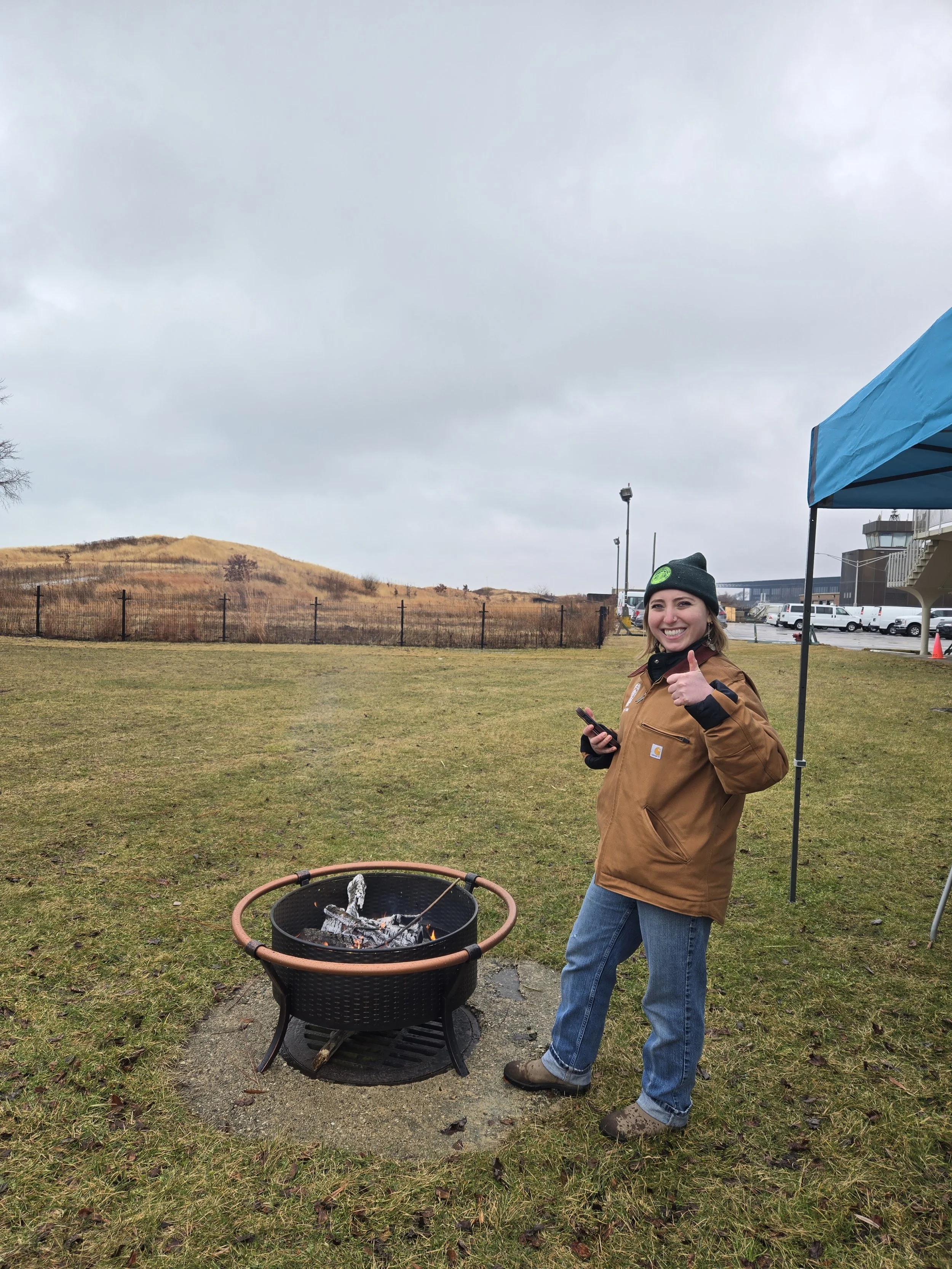
Time for toasted marshmallows!
Back at the Visitor’s Center, Park District employee Lilly stoked a bonfire and encouraged everyone to roast marshmallows on an extendable fork or a sandbar willow stalk, a native plant she had harvested on the island.
Inside the center, COS Board Member Christina Harber offered coffee and Center Director Ted Gross set up seating for Tarik’s presentation. Participants mingled, explored the activity and craft zones, and then decided whether to join Edward on a walk or stay in the center for the waterfowl presentation.
Tarik used a big screen during his presentation to first show a map of the “ancient migratory paths” that traverse the Chicagoland region, and then slides for the common waterfowl found there. He explained their natural history and, using photographs taken by the local community, gave tips on how to identify them in the field.
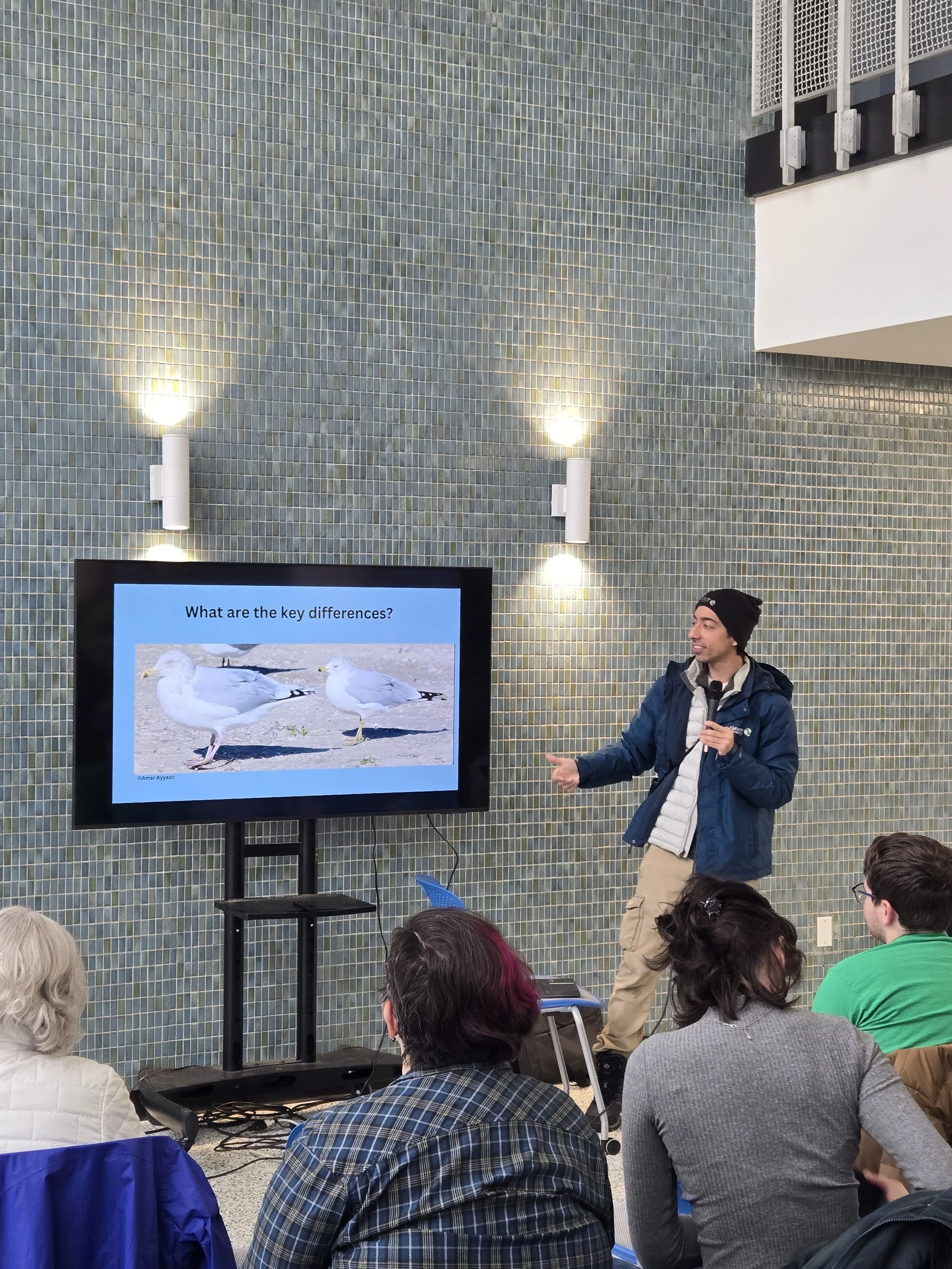
Tarik Shazad explains the key differences between gulls.
Following Tarik’s presentation, the Winter Waterfowl Watch continued for another hour, along with another walk led by Phil.
Over 200 people braved inclement weather and Bears-Packers playoff traffic, demonstrating the community’s passion for learning about birds and observing their beauty. Due to its success, COS has decided to make the Winter Waterfowl Watch an annual event.