
Field trip recap: Sunday Social at Humboldt Park
words by Mikko Jiminez
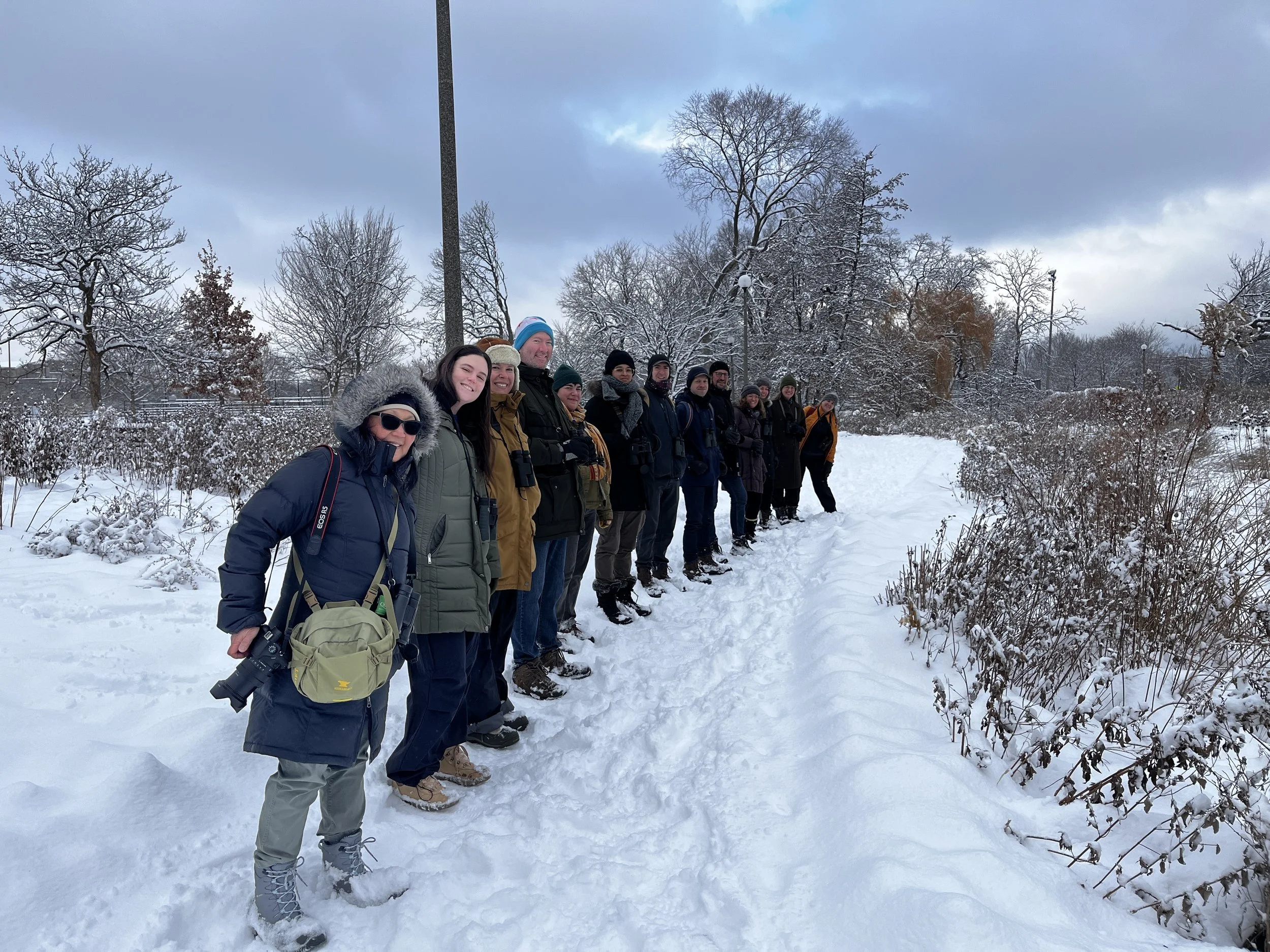
The night before our Dec. 7 bird walk, several inches of snow blanketed Humboldt Park. Winter came on quickly in Chicago and brought the joys of winter birding with it—weird ducks, numb toes, mixed sparrow flocks calling out over the still air. As we introduced ourselves at the boathouse, it became clear there was a mix of new and experienced birders, and I got excited about sharing those winter joys together.
The first stretch along the southeastern side of the lagoon brought many of the usual suspects. We heard, then saw a large flock of Canada Geese before seeing American Robins zip between the trees. A lone American Crow cawed in the distance, and a Ring-billed Gull landed on the field house.
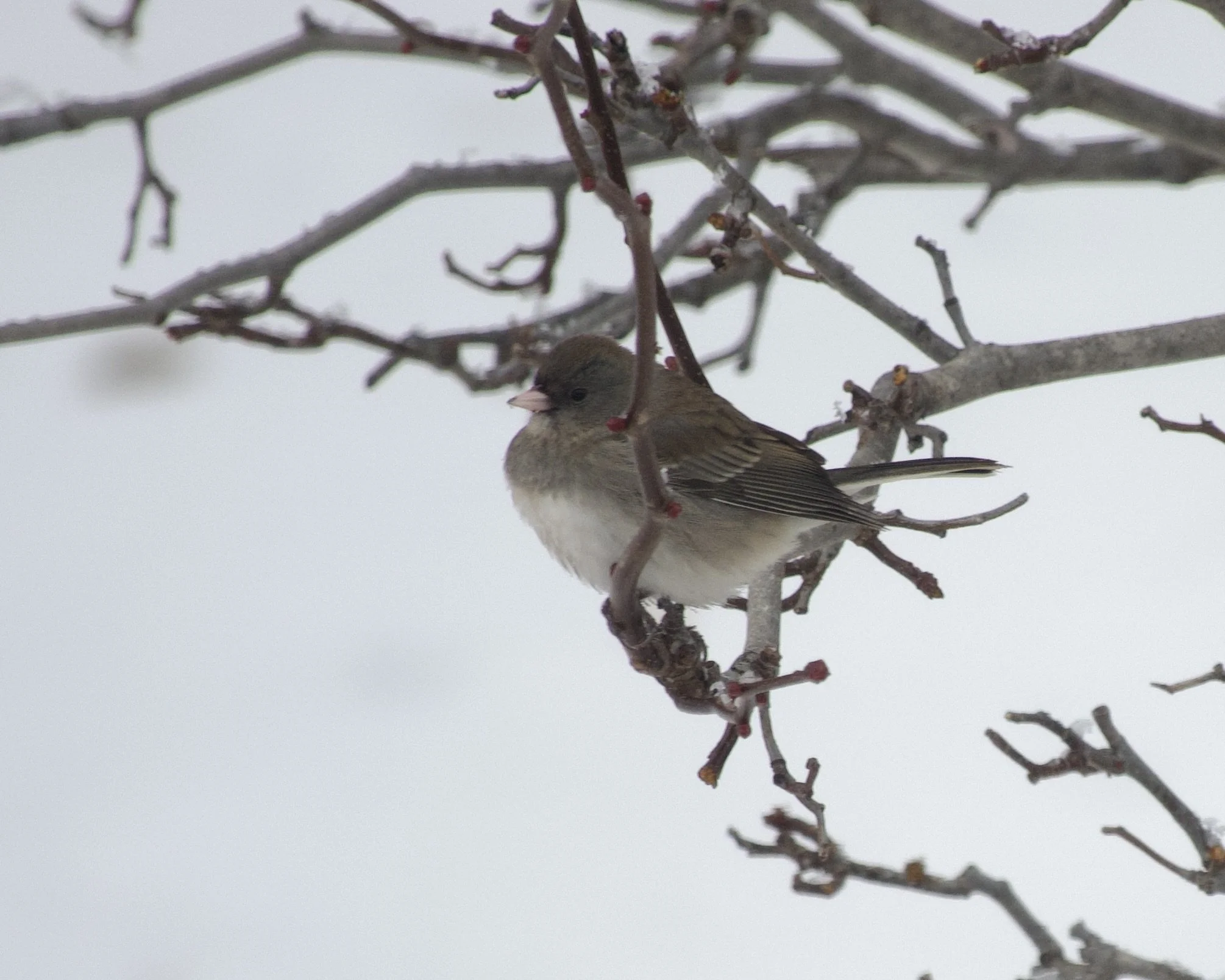
Dark-eyed Junco. Photo by Joann Umeki, Humboldt Park, Dec. 7, 2025.
As we rounded the southern edge of the lagoon, we saw a lot of movement close to the ground. Dark-eyed Juncos and American Tree Sparrows filled the low branches of the trees and dead reeds, foraging on their seeds. We also got a brief look at a Cooper’s Hawk that quickly flew by us.
We circled the bend to get a better look at the sparrows. Someone picked out a Northern Flicker calling and spotted it on a nearby tree. Before we could even get the group on the flicker, a Red-tailed Hawk swooped in, landing on a branch directly in front of us. Chris explained how female hawks are generally larger than males and we shared our sighting with a small group passing by.
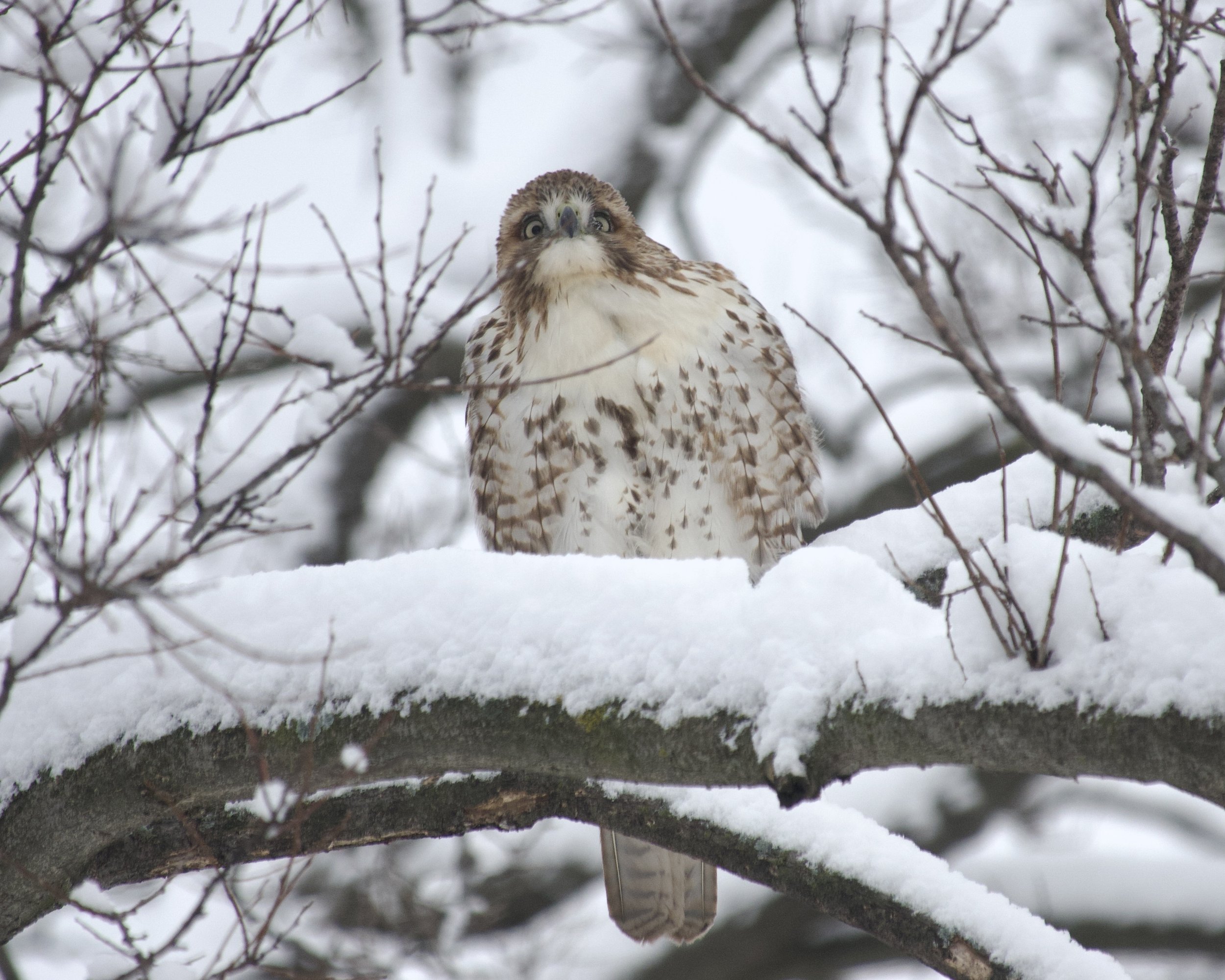
Red-tailed Hawk. Photo by Joann Umeki, Humboldt Park, Dec. 7, 2025.
From there, we made our way north, on the west side of the lagoon, stopping to listen occasionally. As we neared the field house, we heard a small flock of American Goldfinches, then a distant klee-klee-klee-klee-klee. Looking across the lagoon, we saw an American Kestrel making its way towards us before landing on a branch in plain sight. As another raptor gave us good looks, we discussed how one of the advantages of winter birding is that birds can be so visible with little vegetation to hide behind.
As if to make that point, as we made our way past the field house and across Humboldt Drive, we had a few more Red-tailed Hawk sightings. On the northern side of the park, one seemed to be swooping in and flushing flocks of Rock Pigeons. We reasoned that it was likely the same 2-3 birds being very active and visible throughout the park.
Making our way to the northeastern edge of the lagoon, Chris pointed out an exciting find up above—a large flock of Sandhill Cranes was flying overhead! We had a direct view long enough for us to count 54 individuals and discussed how late fall/early winter is a reliable time to see them migrating over the city. Shortly after seeing the cranes, we saw a vibrant red male Northern Cardinal perched atop a snow-covered bush; a quintessential Midwestern winter sight.
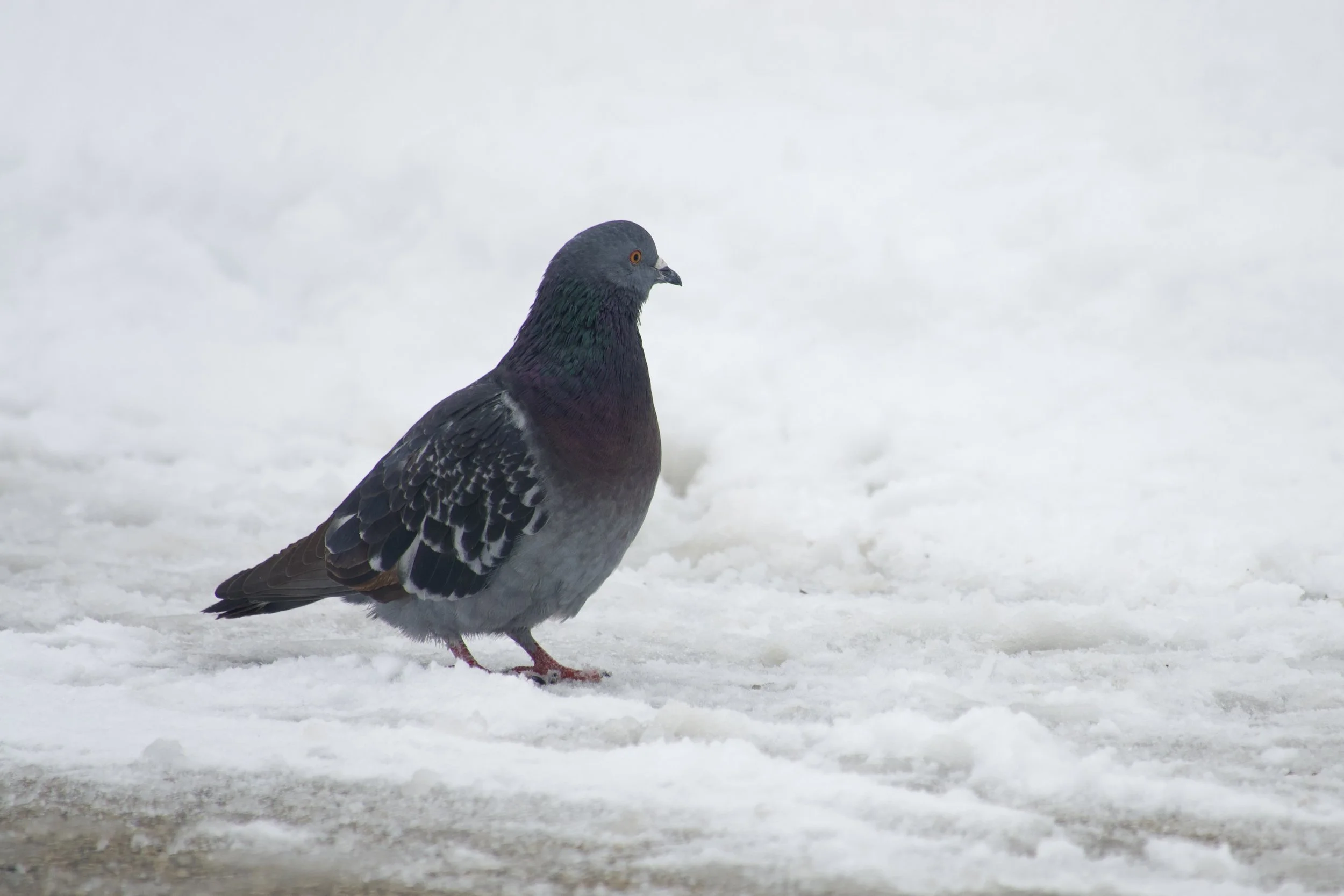
Rock Pigeon. Photo by Joann Umeki, Humboldt Park, Dec. 7, 2025.
Rounding out our trip back to the boathouse, we saw another Red-tailed Hawk swooping low and flushing flocks of pigeons. Along the trail, we also had another large flock of Dark-eyed Juncos and two American Tree Sparrows. Chris and a few folks said they may have heard another species in the mix, but we were unable to pick out any new species beyond those two.
In total, we saw 17 birds species, including some really fantastic looks at a few raptors. As I walked home with numb toes, I thought about how much amazing wildlife we share our city with—even in those quiet winter months when it feels like our green spaces go silent.