
Field Trip Recap: River Park Heron Watch
words by Brighten Jelke
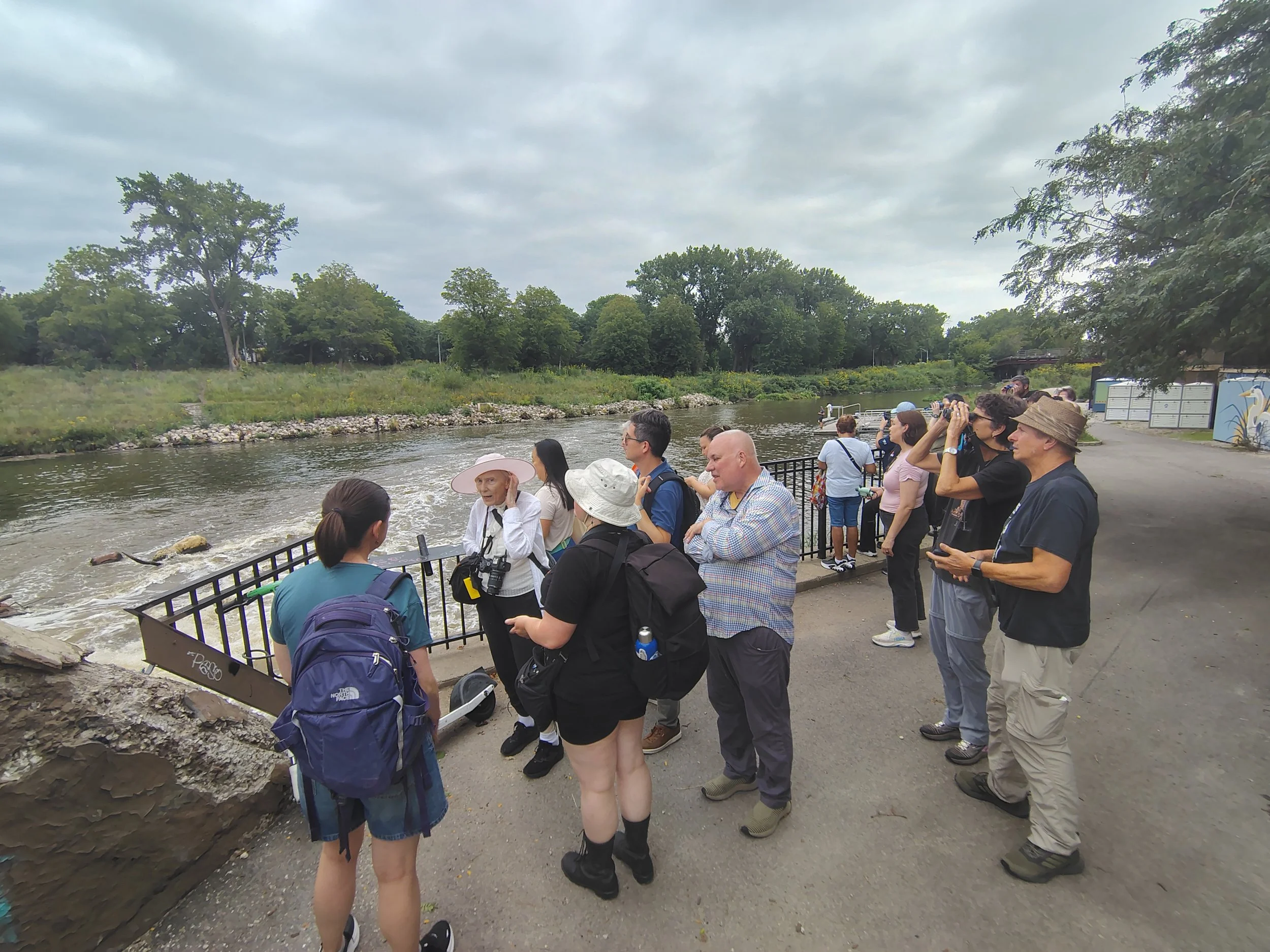
On Aug. 12, 2026, around 30 people gathered at the confluence of the North Branch of the Chicago River and the North Shore Channel for the second official “heron hangout” of the summer.
“This is the best part of my day!” one participant said, as a Black-crowned Night Heron cruised by at eye level. That was one of 11 Black-crowned Night Herons we counted throughout the evening, including brown-and-white patterned juveniles and more blurry, grayish subadults.
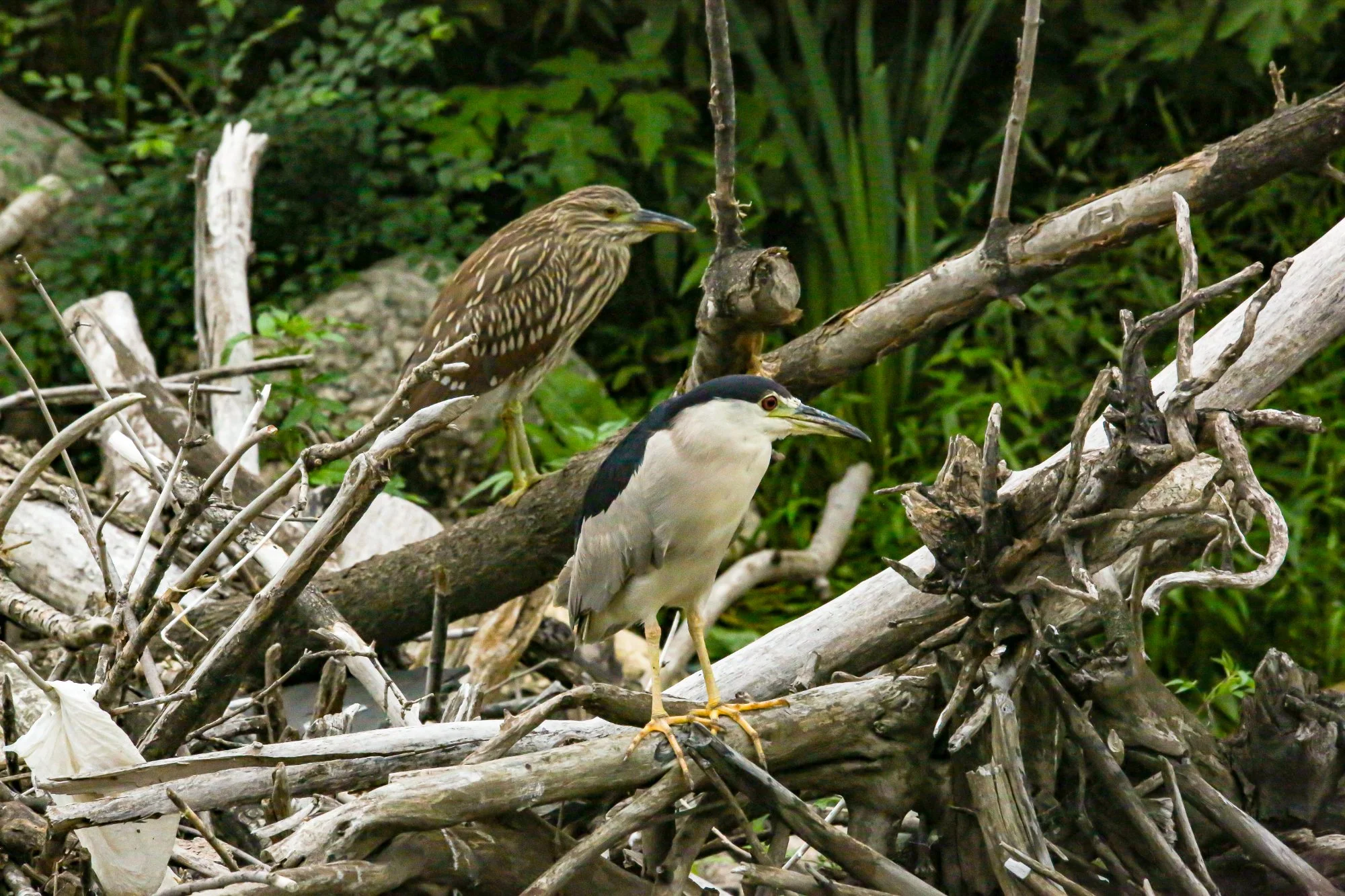
Juvenile (left) and adult Black-crowned Night Herons. Photo by Olivia Cerra-Krawiec, River Park, Aug. 12, 2026.
River Park has some herons at any time of day, but early evening is best for Black-crowned Night Heron-watching as it’s their most active time for fishing, and even more will fly in from other areas of the city.
The Lincoln Park Zoo is home to the largest remaining breeding colony of this state-endangered species in Illinois. GPS-tracked and banded herons have been documented visiting foraging areas within roughly six miles of the colony, including River and its neighbor Ronan Park.
The recent rains and high, fast-moving water at the time of the event meant that the herons mostly stuck to trees, downed branches, and fences overlooking the river rather than standing directly in the water.
As we peered over the railing, volunteers from the Chicago Black-crowned Night Heron Project discussed answers to the most commonly asked questions that participants had about the herons, including “What do they eat?”, “How long will they stick around?” and “What’s that white thing on their heads?”
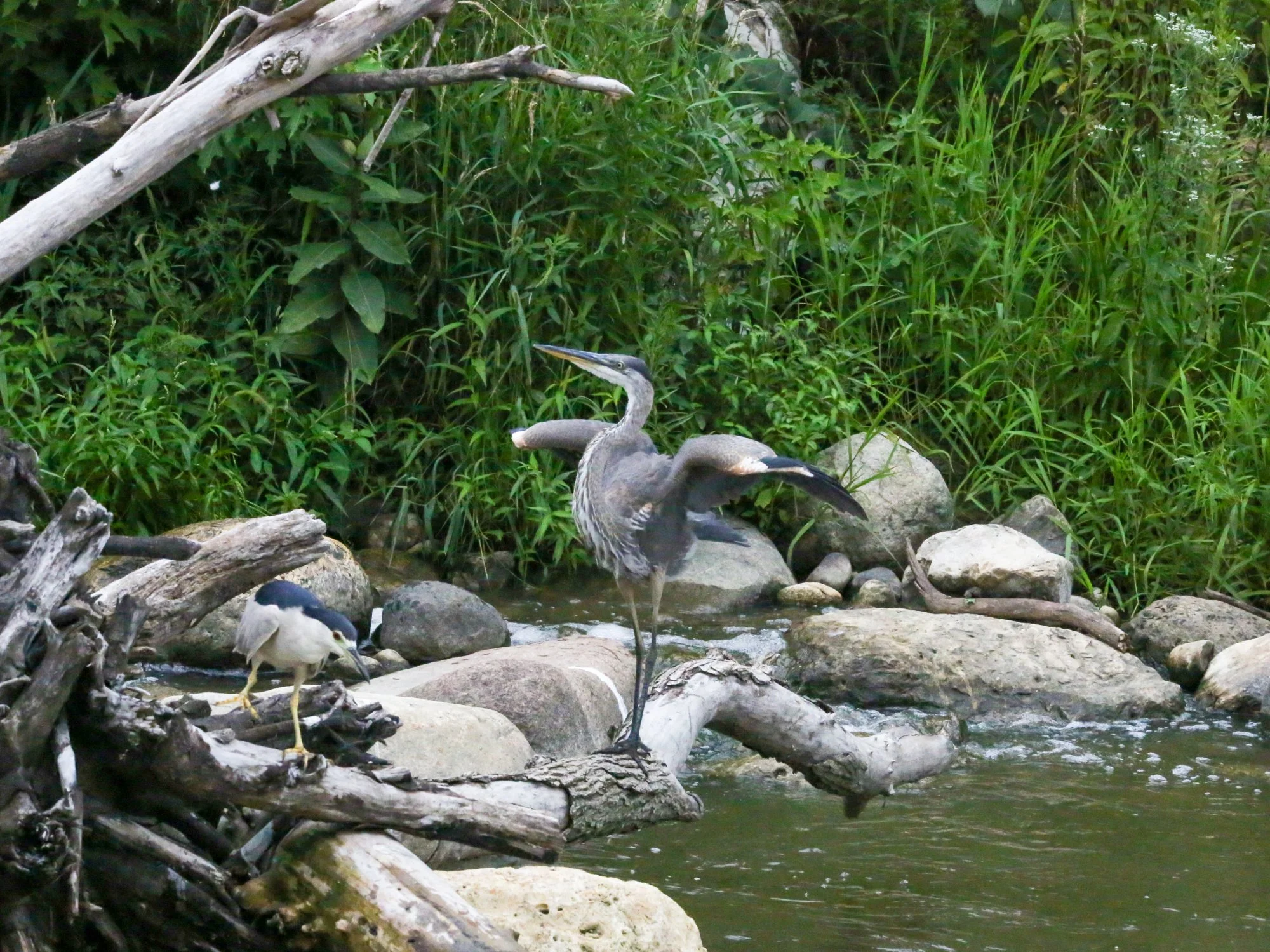
Black-crowned Night Heron (left) and Great Blue Heron. Photo by Olivia Cerra-Krawiec, River Park, Aug. 12, 2026.
Standing in one spot for an hour and a half may not seem like the most fun at first glance, but the conversation and bird antics kept things lively. Each time one of the herons caught a fish, we all cheered.
The Black-crowned Night Herons and one Great Blue Heron were constantly getting in each other’s space. And even when some people fishing close by caused the herons to take off, we got to see them line themselves up on the nearby fence instead, perfectly spaced apart.
We ended the evening with 11 Black-crowned Night Herons, one Great Blue Heron, and one Green Heron on the checklist. (The Green Heron was kind enough to briefly pass by on its way north from a different part of the river, right at the end of our stakeout.)
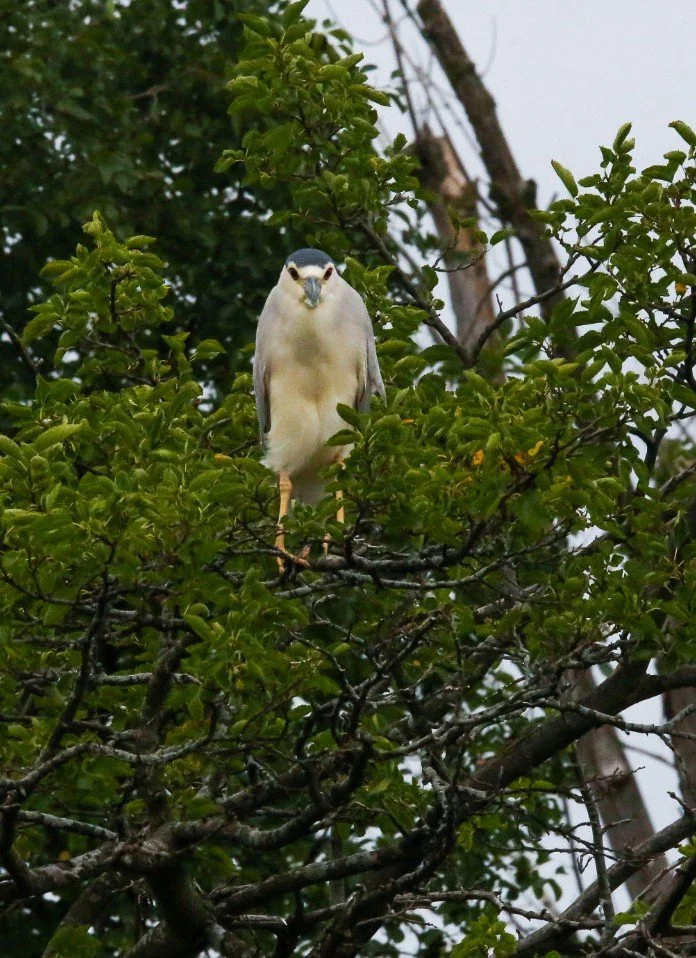
Black-crowned Night Heron. Photo by Olivia Cerra-Krawiec, River Park, Aug. 12, 2026.
One of the best moments of the night was when a curious Black-crowned Night Heron perched on the wall right next to the group, joining us for its own kind of Heron Watch.