
Field Trip Recap: Douglass Park Evening Walk
words by Joann Umeki
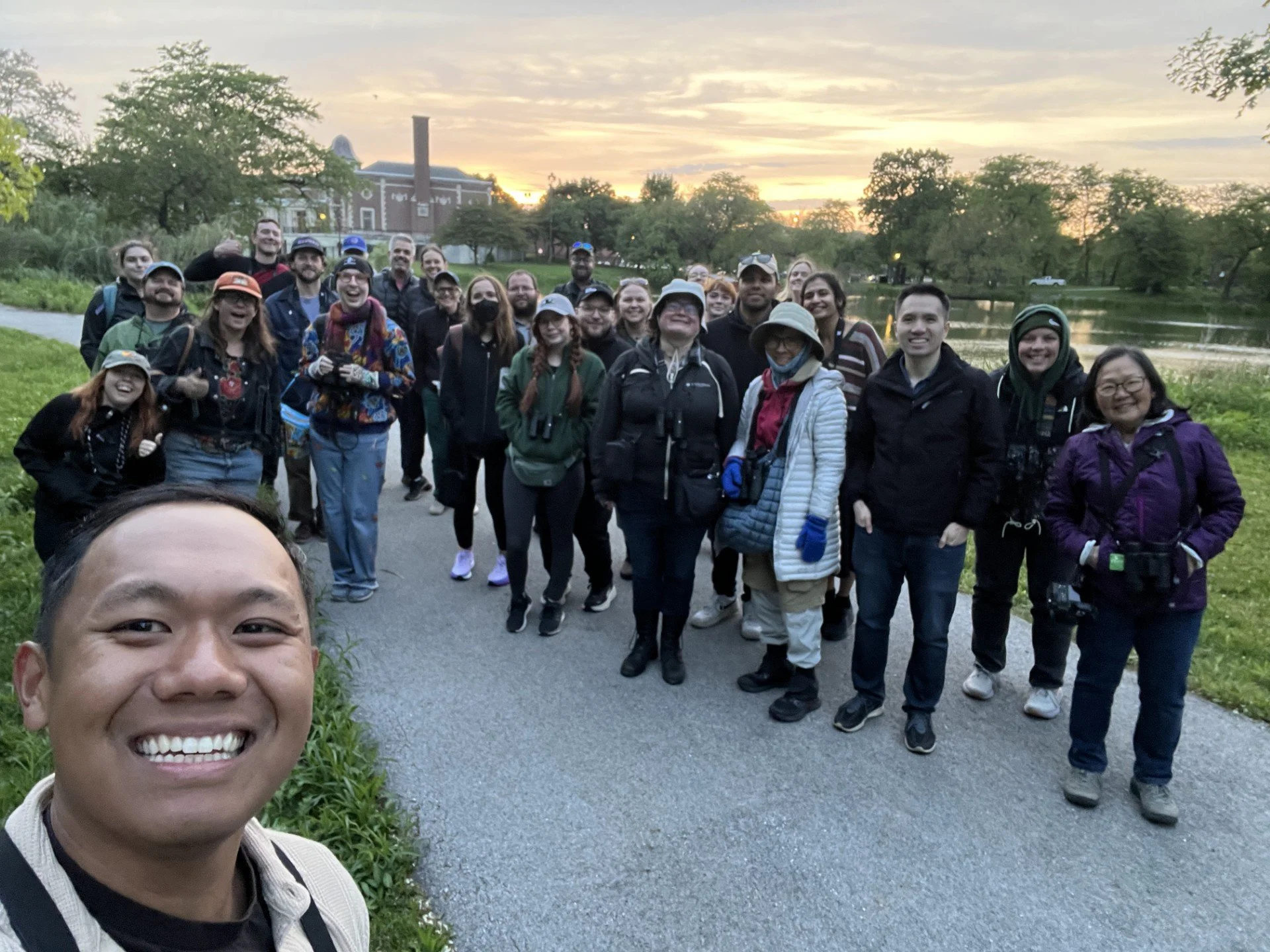
Douglass (Anna & Frederick) Park in North Lawndale was the site of Sammy Cabindol’s latest evening bird walk, which took place on Thursday, May 21. Although there is usually a cap of 15 to 20 people on most COS walks, Cabindol wanted to test the interest in birding Douglass Park, and an astonishing 80 people signed up. Luckily, only 44 birders showed up, otherwise the group might have snaked around the entire lagoon.
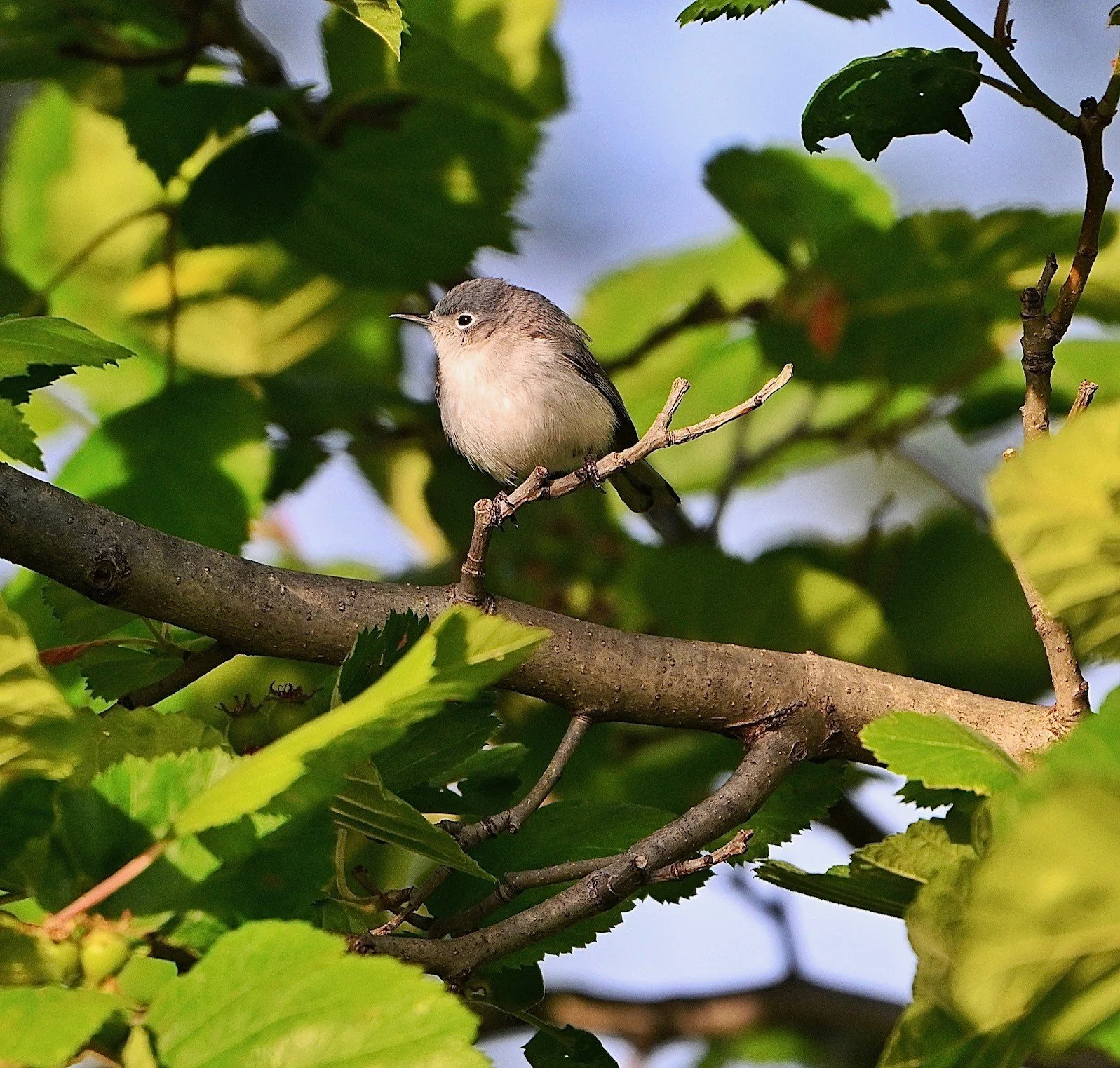
Blue-gray Gnatcatcher (female). Nick Paarlberg, Douglass Park, May 21, 2026.
Yellow-rumped, Magnolia, and Palm Warblers bounced around in trees along the north lagoon while Cabindol touted the benefits of an evening bird walk. First, no waking up before sunrise. Second, there is still the possibility of viewing many of the same migrating birds that fuel up before moving on to their next stops.
A Blue-gray Gnatcatcher buzzed in a nearby tree and paused long enough to give the group some good looks. Tree, Northern Rough-winged, and Barn Swallows flew over the lagoons, and Chimney Swifts flew high in the sky as the group started the walk.
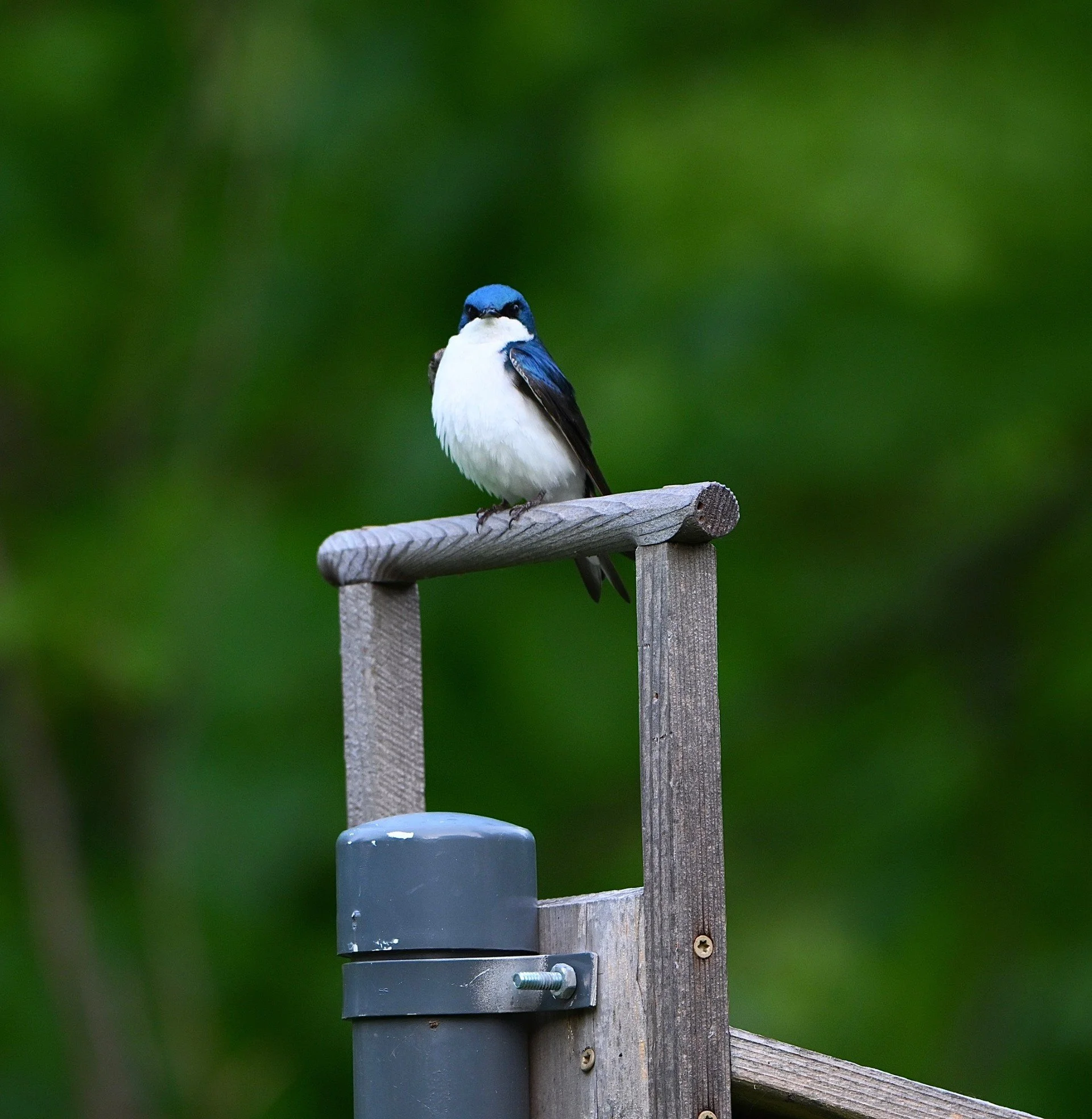
Tree Swallow. Photo by Nick Paarlberg, Douglass Park, May 21, 2026.
On the lagoon island, a Black-crowned Night Heron posed in the evening sun and watched the group with half-closed eyes, while a second hid amongst the leaves. Always informative, Cabindol explained that these birds are crepuscular and are active mainly at dawn and dusk. He added that these Black-crowned Night Herons, as well as most in the area, roost and breed in the giant rookery in Lincoln Park. The colony of 400—700 birds is the largest in Illinois.
“Canada Warbler!” The shout led to the group’s quick movement to search for the stunning black and yellow beauty with a built-in necklace. The warbler hopped between trees and in and out of sight, teasing the photographers to move from one side of a tree to the other. Most of the group were able to get at least a glimpse, as the Canada Warbler seemed to follow us around the park.
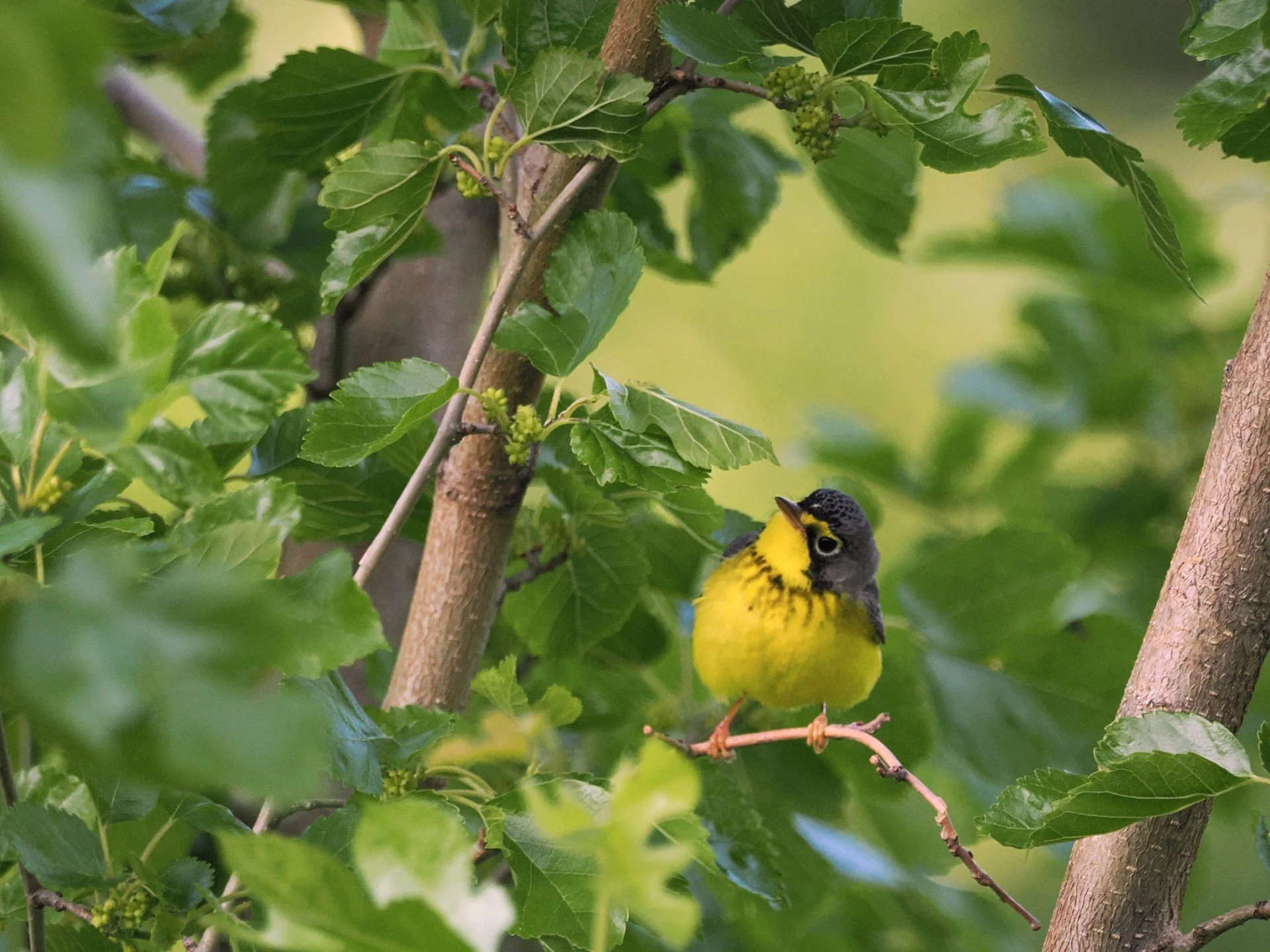
Canada Warbler. Photo by Anney Grish, Douglass Park, May 21, 2026.
Other warbler sightings included a Black-and-White, Northern Waterthrush, Bay-Breasted, and Northern Yellow Warbler. Water bird sightings included Wood Ducks, Herring and Ring-billed Gulls, a Caspian Tern, Double-Crested Cormorants, and Canada Geese and goslings.
As dusk fell, the group waited for signs of one of Cabindol’s target birds for the walk—the Common Nighthawk. Finally, a buzzing “peent” was heard, and the first Nighthawk was seen, flying low over the water, almost swallow-like. Another appeared, and as they swooped higher, the diagnostic white blaze on their pointed wings could be seen.
Seeing their flying maneuvers up close was a satisfying end to the evening. In all, 40 species were observed.