
Chicago Hotspot: Marian R. Byrnes Natural Area
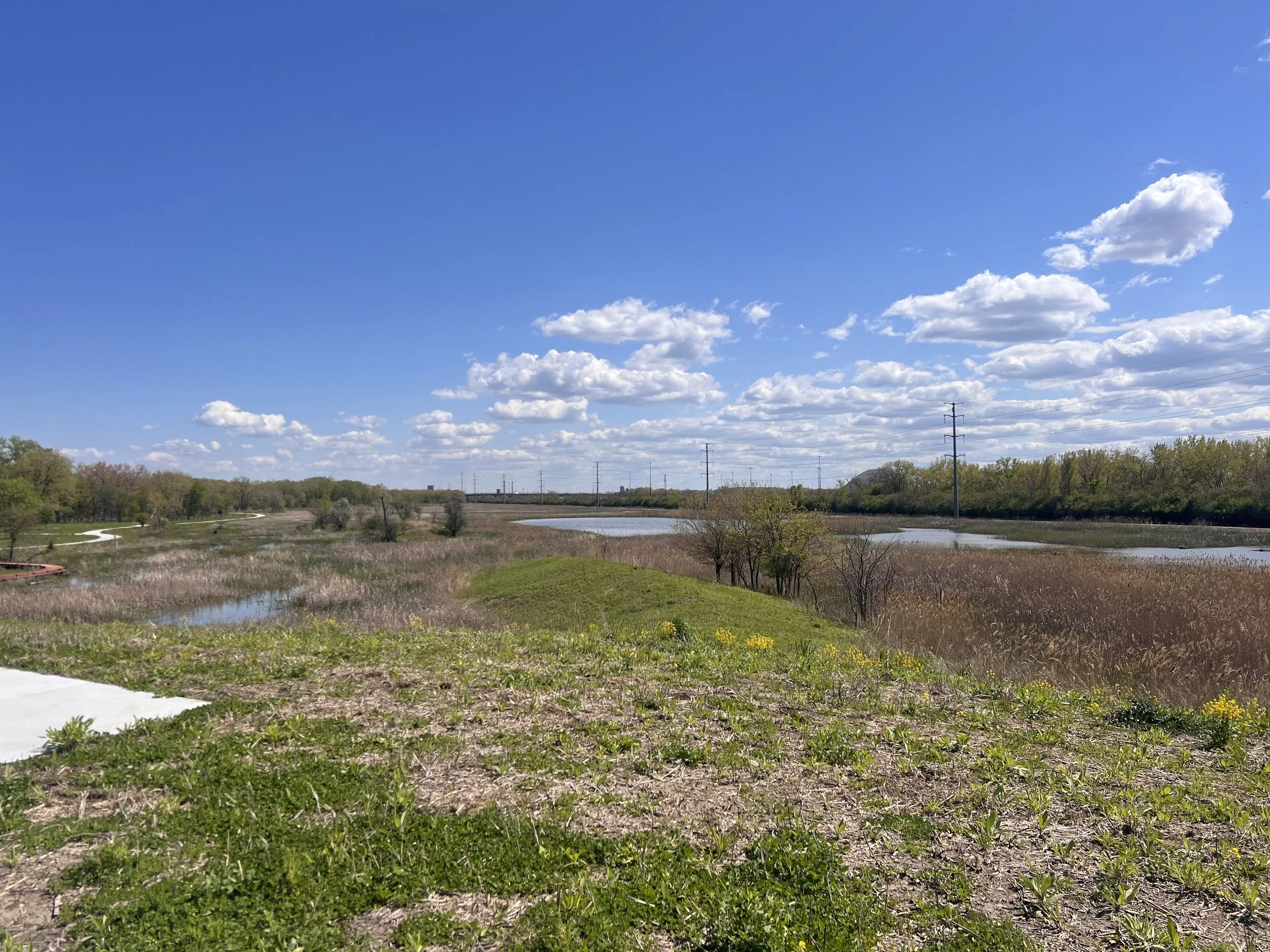
Marian R. Byrnes Natural Area. Photo by MaryKent Wolff.
words by MaryKent Wolff
Previously known as Park No. 562 and Van Vlissingen Prairie, the Marian R. Byrnes Natural Area (MRB) is officially reopening on June 13 after receiving a facelift in the form of ecological restoration from the Chicago Parks District.
The MRB, which is located in the neighborhood of Jeffrey Manor, has a storied history. Once considered an industrial wasteland, the MRB was nearly bulldozed to make space for a Chicago Transit Authority (CTA) bus barn in 1979. Thankfully for the neighborhood, however, this was where the park's namesake stepped in. Chicago Public School teacher and environmentalist Marian R. Byrnes led the charge to preserve the prairie, organizing both neighbors and activists in her effort to stop the city from building on the property.
Nearly fifty years later, the natural area has gotten some well-deserved TLC. The 140-acre expanse contains several types of habitats, including prairies, savannas, wetlands, and woodlands, and is home to frogs, turtles, snakes, and deer. It's also, of course, a great place to bird. In fact, some Chicago birders have had success spotting their life-list American Woodcock there in recent springs.
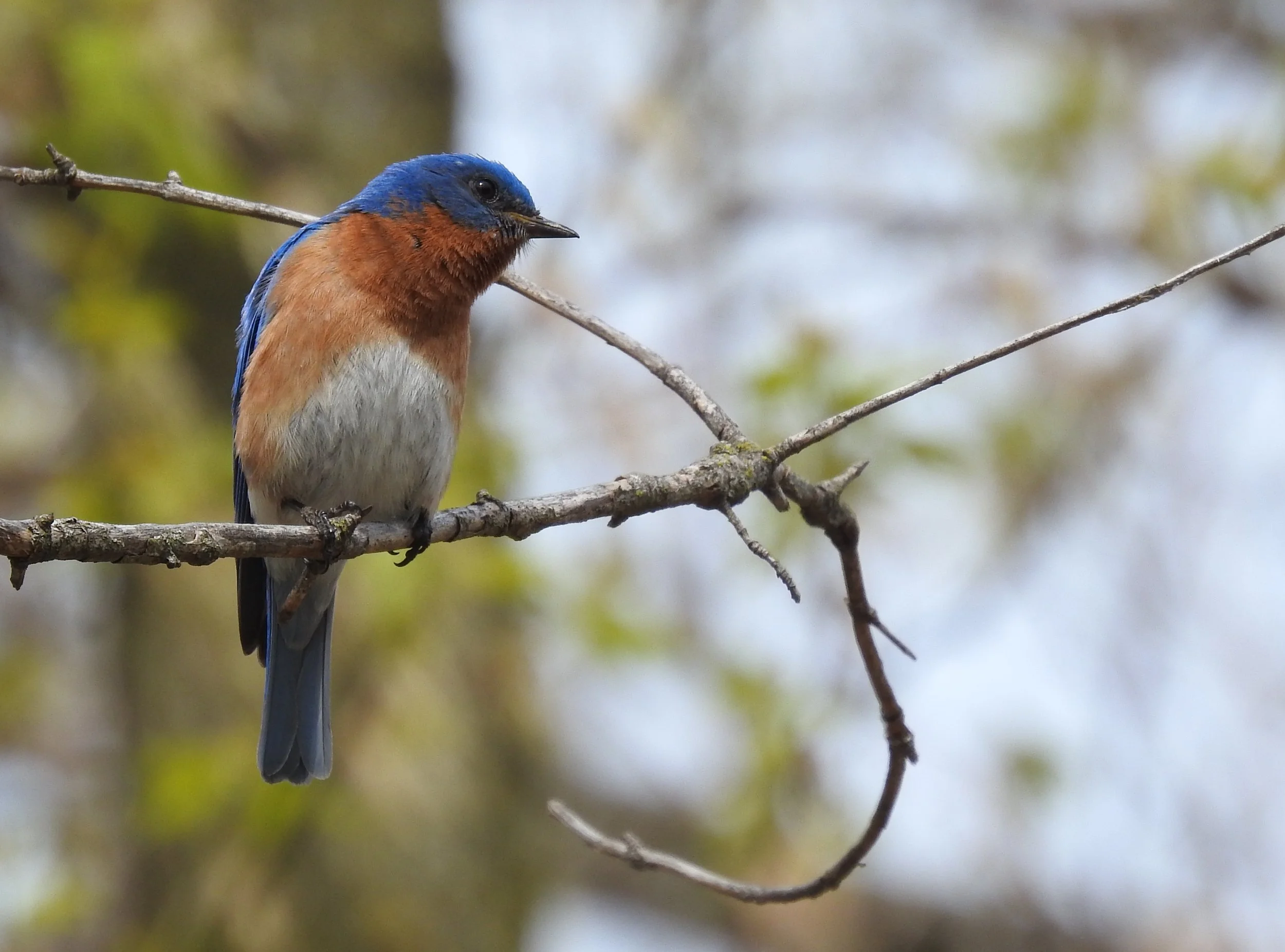
Eastern Bluebird. Marian R. Byrnes Park. April 10, 2021.
When visiting the park, be sure to map to the gravel parking lot at the southernmost end of the natural area. From there, visitors will find it easy to access the newly paved multi-purpose trail, which spans the length of the park with a quarter-mile loop on each end. Those hoping to feel a little closer to nature or catch a glimpse of a Green Heron's hiding spot can also choose to follow the meandering curves of an unpaved trail on the east side of the park, though it never diverges far from the multi-purpose pathway.
The pathways aren't the only improvements that visitors will find after the ribbon-cutting ceremony in June. A large dock jutting into the wetlands provides a perfect spot to sit, or to lean just a little over the railing to ID whatever marshbird is hiding in the reeds.
Despite the updates, the urban history of the MRB hasn't been completely erased. Powerlines provide a perfect perch for hawks, and visitors may catch the unpleasant scent of stagnant water from time to time. They're reminders of the changes that the land has gone through, and what it nearly became.
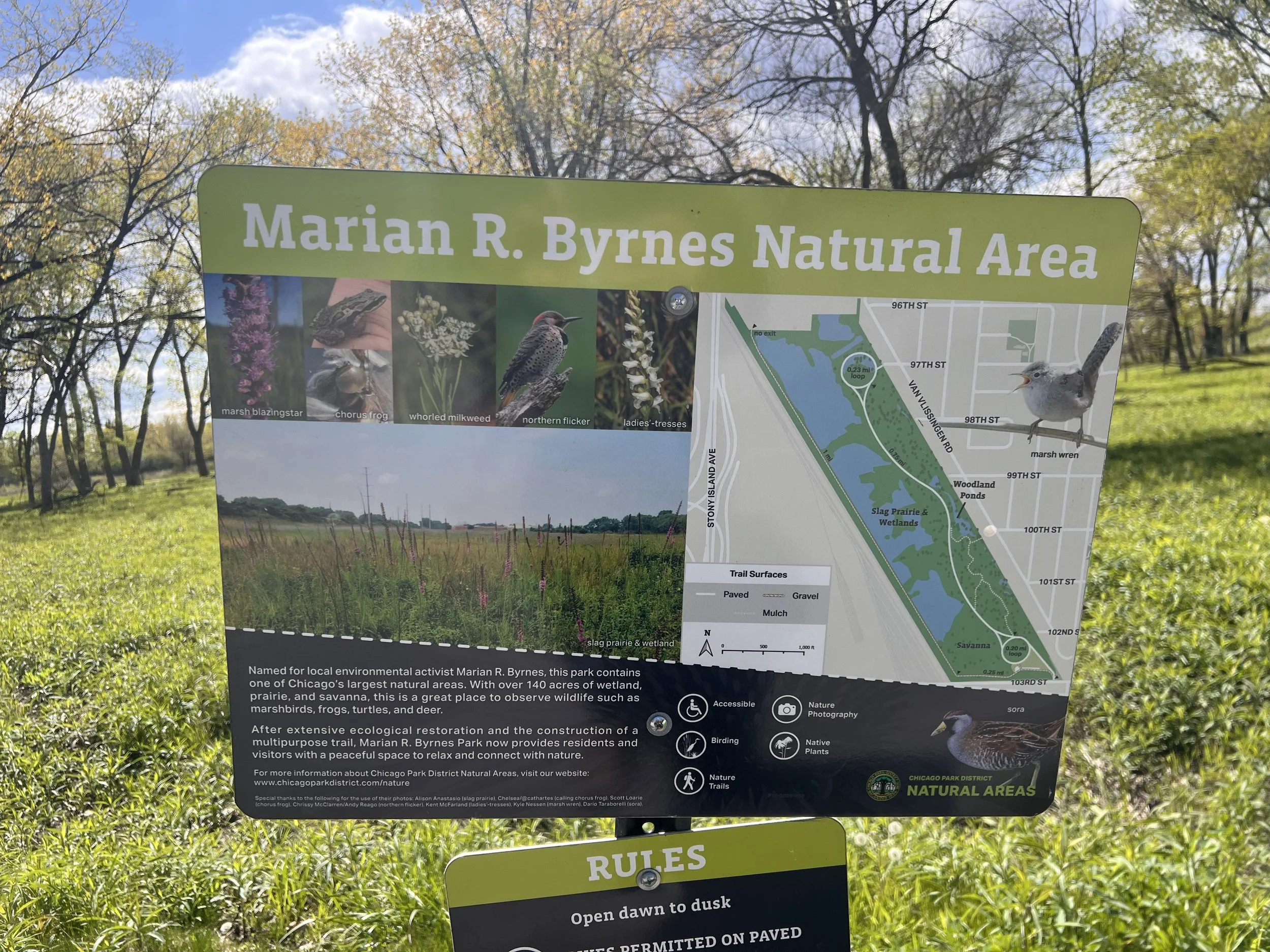
New signage at Marian R. Byrnes Natural Area. Photo by MaryKent Wolff.
Follow the trail up to its northernmost point, across new footbridges and up a slight incline. There, summer birders are likely to find Swamp Sparrows, Solitary Sandpipers, and even the occasional Sora. Plus, the Park District has set up an overlook complete with a covered bench and two scenic viewers.
At the Marian R. Byrnes Natural Area, it's easy to tune out the hum of the city and focus instead on the chorus of life that exists in what was once a slag barren. Being there feels like taking a walk through someone's cherished wooded backyard—perhaps because, at its core, that's exactly what it is.