
Field trip recap: Marian R. Byrnes Natural Area
words by Kris Hansen
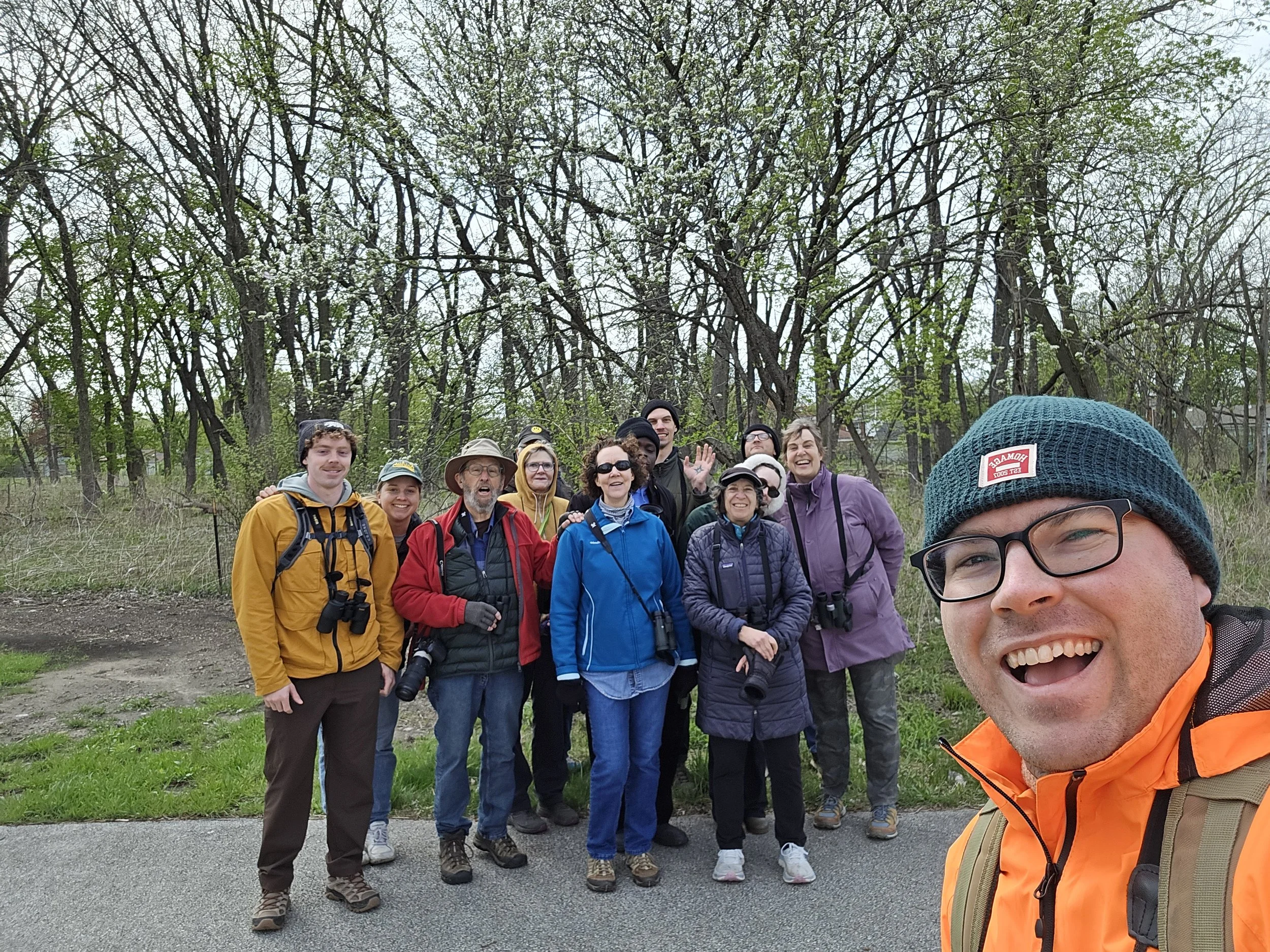
Fifteen birders gathered on a sunny yet brisk Sunday morning, April 19, at Marian R. Byrnes Natural Area for a “Birds & Botany” walk. We introduced ourselves, each naming a bird we hoped to see.
As we headed up the new boardwalk to the raised north end of the park, trip leader and COS president Edward Warden explained that the park once was a dump site, particularly for train cars serving the old steel mills. In fact, before restoration, the area was known as the “cinder flats” for all the ash on the ground. Despite that, the low-lying, frequently wet area was and remains an important way station for migrating birds.
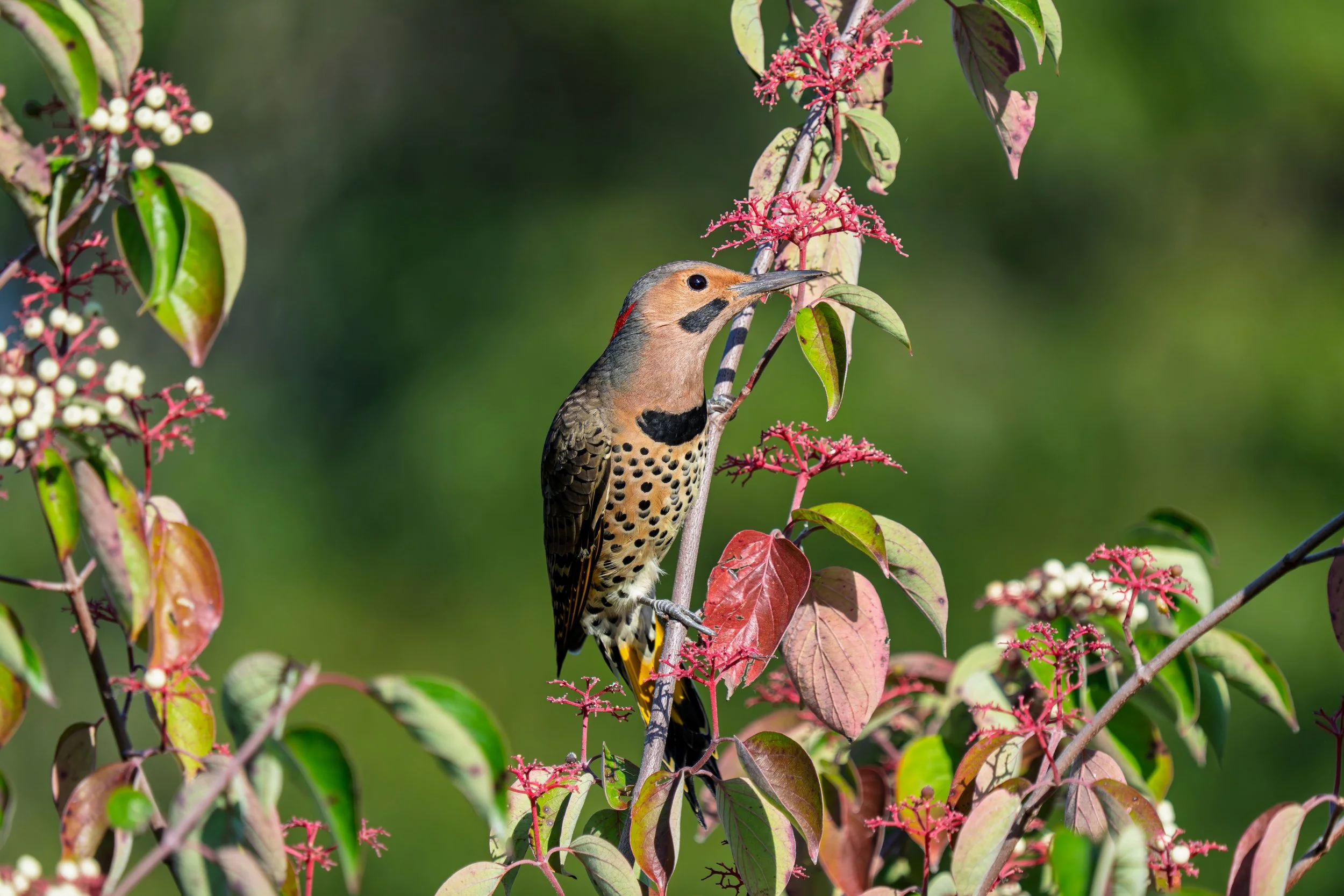
Northern Flicker. Photo by Miguel Martin, Montrose Point Bird Sanctuary, Sept. 26, 2025.
Following a prescribed burn last fall, we could easily see into previously hidden ponds. A pair of Mallards quacked incessantly, and several Northern Flickers added to the cacophony. Red-winged Blackbirds, Swamp Sparrows and Blue-winged Teal came into view as we walked.
Edward stopped to point out Marsh Marigolds, a native perennial with bright yellow flowers that the Chicago Park District is reintroducing.
A low-flying bird sailed overhead, and Edward quickly identified it as an American Kestrel. It and a second kestrel, likely its mate, perched on a transmission tower in the distance.
Then two birders spotted a bird with an unusual shape making a low leap among the reeds. It wasn’t long before we heard the distinctive whinny of a Sora. Moving to the platform at the top of the hill, we alternated scanning the marsh for the bird and admiring the waterfowl on the now-visible pond behind us.
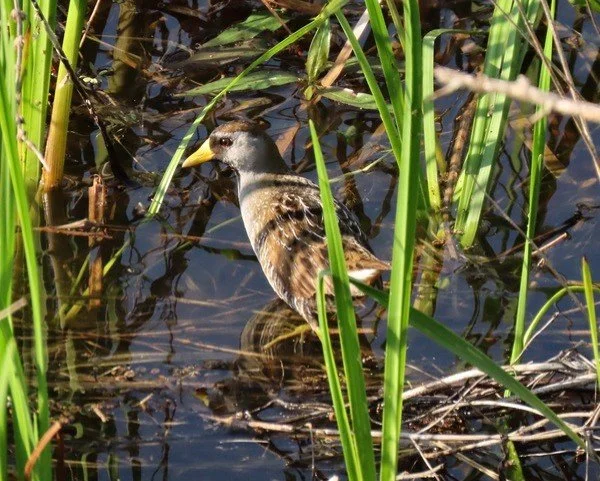
Sora. Photo by Stephen Pearson, Burnham Park. May 4, 2024.
First one and then a second Sora eased into view, holding their bright yellow bills high and giving amazingly good looks for this secretive bird. A Virginia Rail called in the background but declined to join the Soras in the front.
As we headed back the way we came, the pair of kestrels perched in trees near the path. A second pair could be seen on a wire in the distance.
Passing our starting place, we wound along the trail into the prairie and cottonwood section. An inquisitive coyote watched us from a distance. Ruby-crowned Kinglets and Yellow-rumped Warblers flitted among the trees, but no other warblers were present.
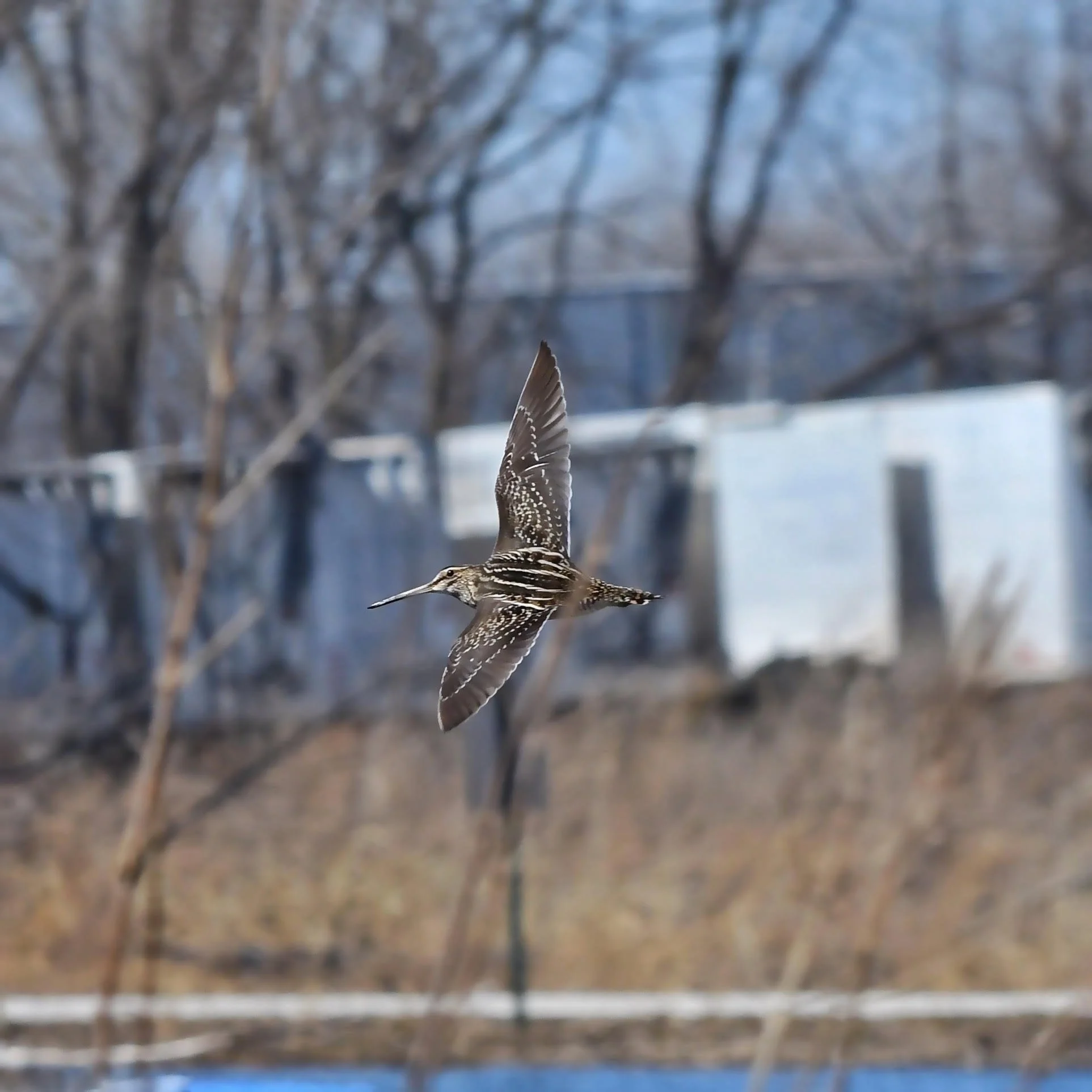
Wilson’s Snipe. Photo by Jake Vinsel, Burnham Harbor, March 20, 2022.
Several Wilson’s Snipe flushed as we moved along the path. Edward pointed out the pinkish orange stems of the oddly named Little Bluestem and the long stalks of Water Plantains. Just beyond them we spotted a Killdeer, a life bird for one of our party!
Edward was delighted to find purple Woodland Phlox underneath the canopy of cottonwood trees. The cottonwoods themselves are a “grow fast, die young” species, he joked, and would be replaced over time by the slow-growing oak trees interspersed among them.
With a cold breeze picking up, we headed back to our cars. We saw 44 species.