
Field Trip Recap: LaBagh Woods
words by Kris Hansen
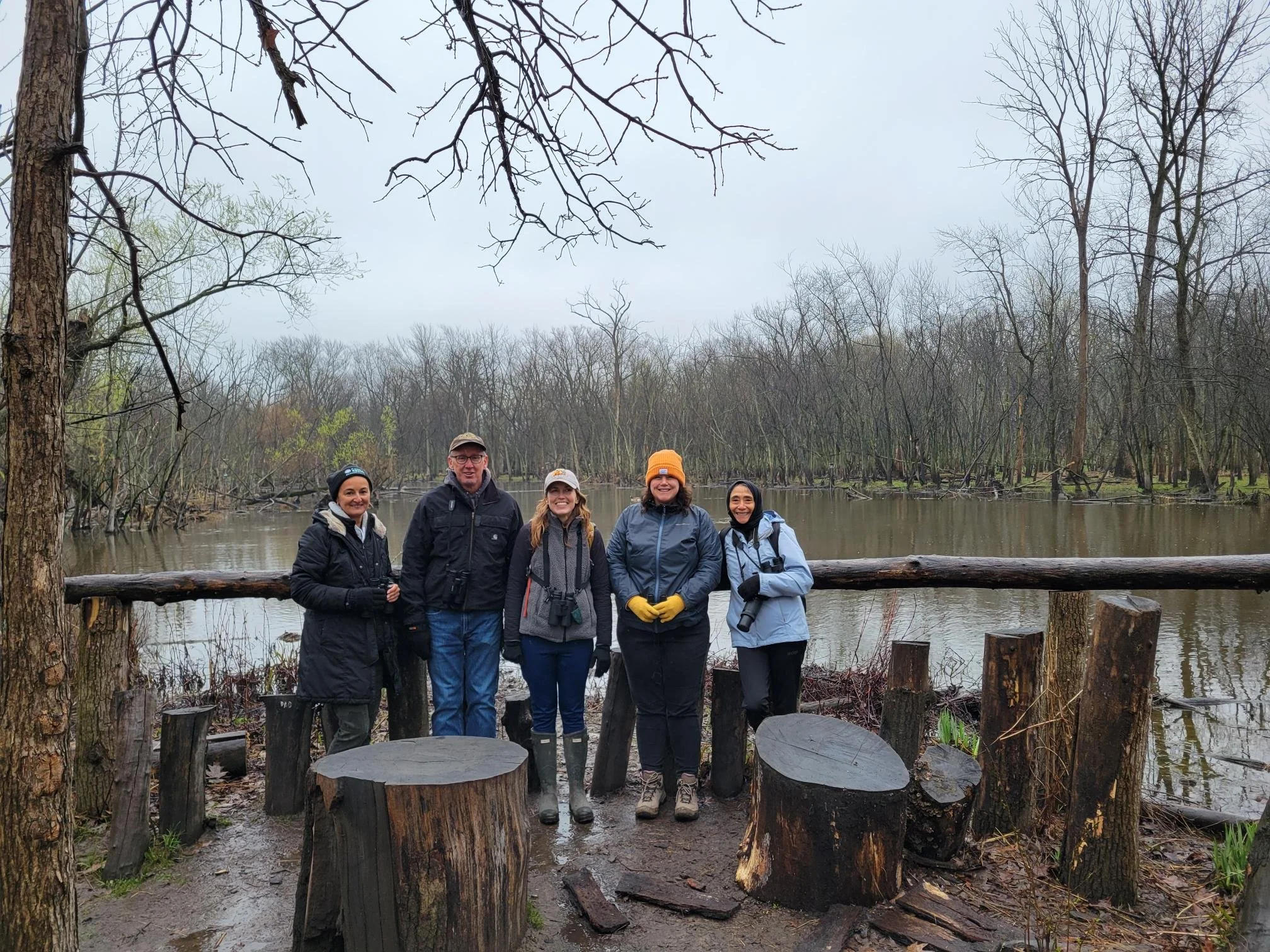
Six birders, equipped with waterproof boots and rain gear, had no trouble braving the misty condition at LaBagh Woods on Friday, April 10.
As we gathered, half a dozen Northern Flickers foraged on the ground near the picnic shelter at Grove 3, joined by assorted Dark-eyed Juncos and House Sparrows. Brown-headed Cowbirds perched in a tree above them. Behind us, an Eastern Phoebe sang and then made a brief appearance.
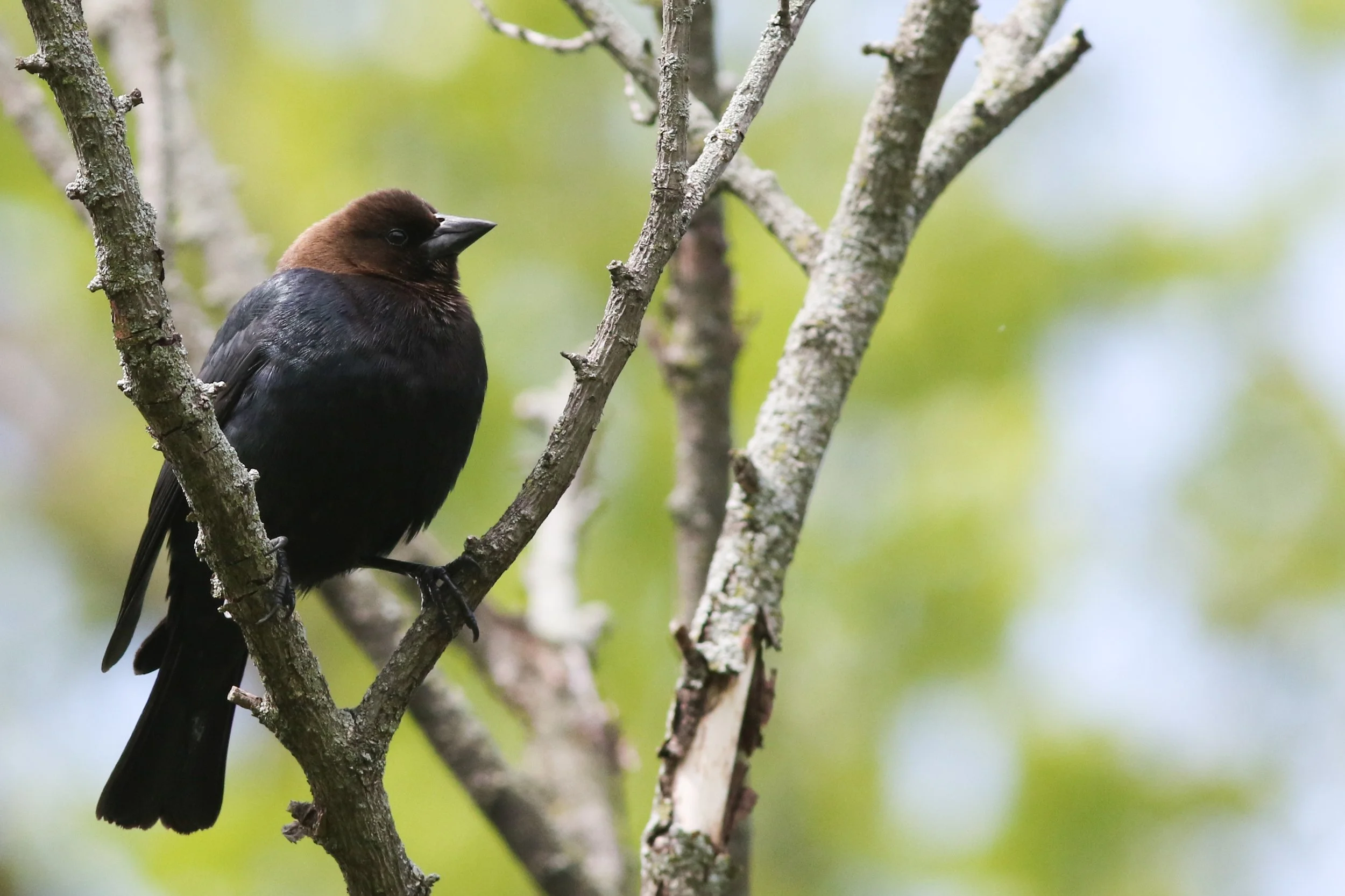
Brown-headed Cowbird. Photo by Nathan Goldberg, LaBagh Woods, May 10, 2021.
Two of the participants were new to birding, so trip leader Kelly Ballantyne explained how to spot the bird and raise the binoculars to find it. She said that most birders like binoculars with a magnification of 8 x 42 and shared the link to the Audubon site that reviews different models.
Dozens of Yellow-rumped Warblers called incessantly as we walked toward the trestle bridge. LaBagh dripped with these birds, and we estimated about 65 different individuals by the end of the day.
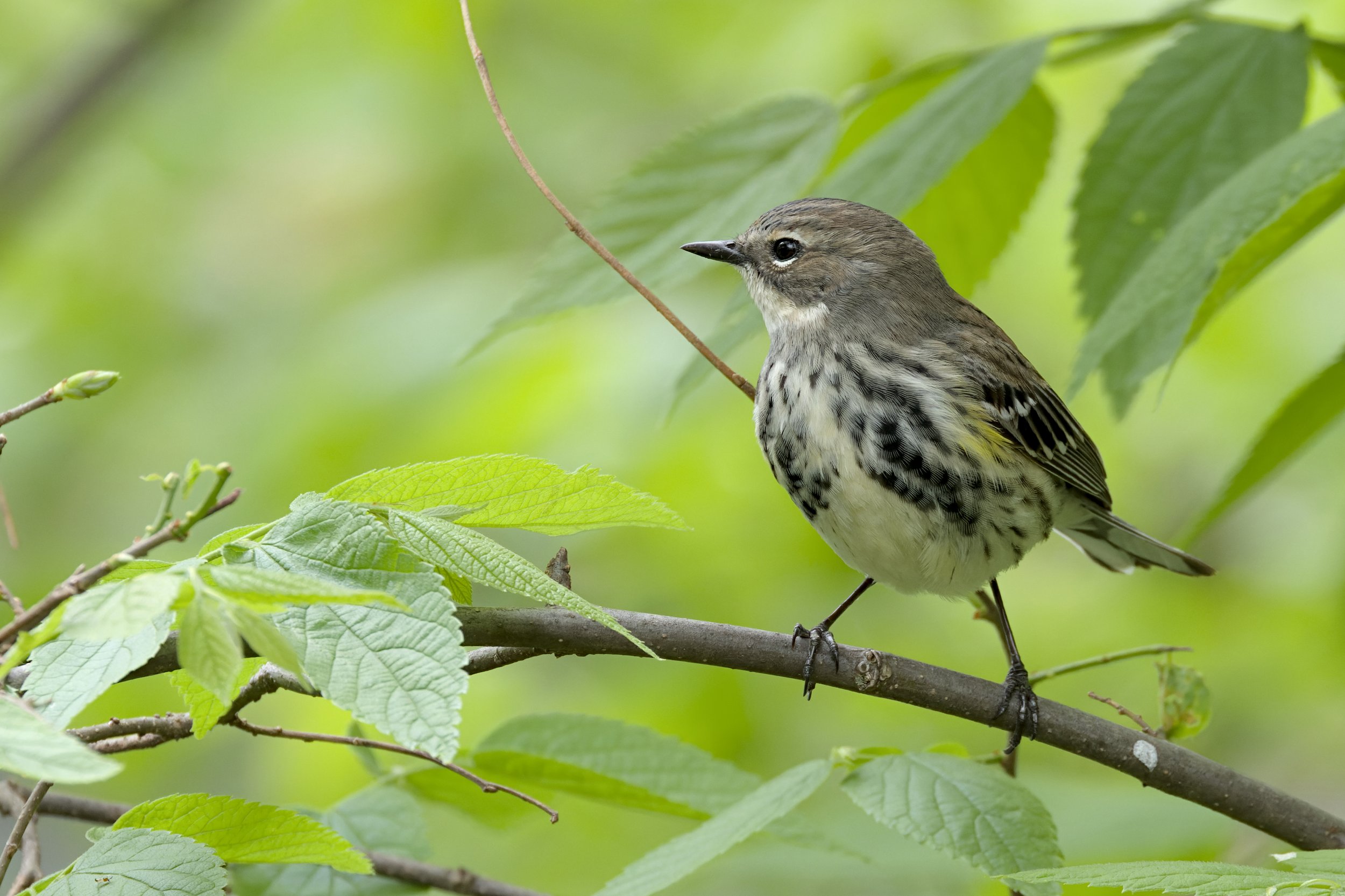
Yellow-rumped Warbler. Photo by Alex Muench, LaBagh Woods, May 17, 2025.
While the bridge itself was fairly quiet, we soon saw our first of five Yellow-bellied Sapsuckers. Red-bellied and Downy Woodpeckers drilled trees as we walked. We learned that we can use Merlin, a free app from the Cornell Lab of Ornithology, to ID birds by sound, photo and step by step.
Kelly pointed out the Little Slough on our right as we walked along the bike trail, noting that it is often good for ducks. Right on cue, several Wood Ducks winged overhead.
We took the branch trail toward the condo building and the slough, hearing but never seeing several elusive Winter Wrens. Egg-shaped Brown Creepers appeared. Then we spotted two different warblers! The Palm Warbler was pumping its tail in characteristic fashion. The Pine Warbler sang and then came into sight, drawing sighs of appreciation at its bright yellow feathers.
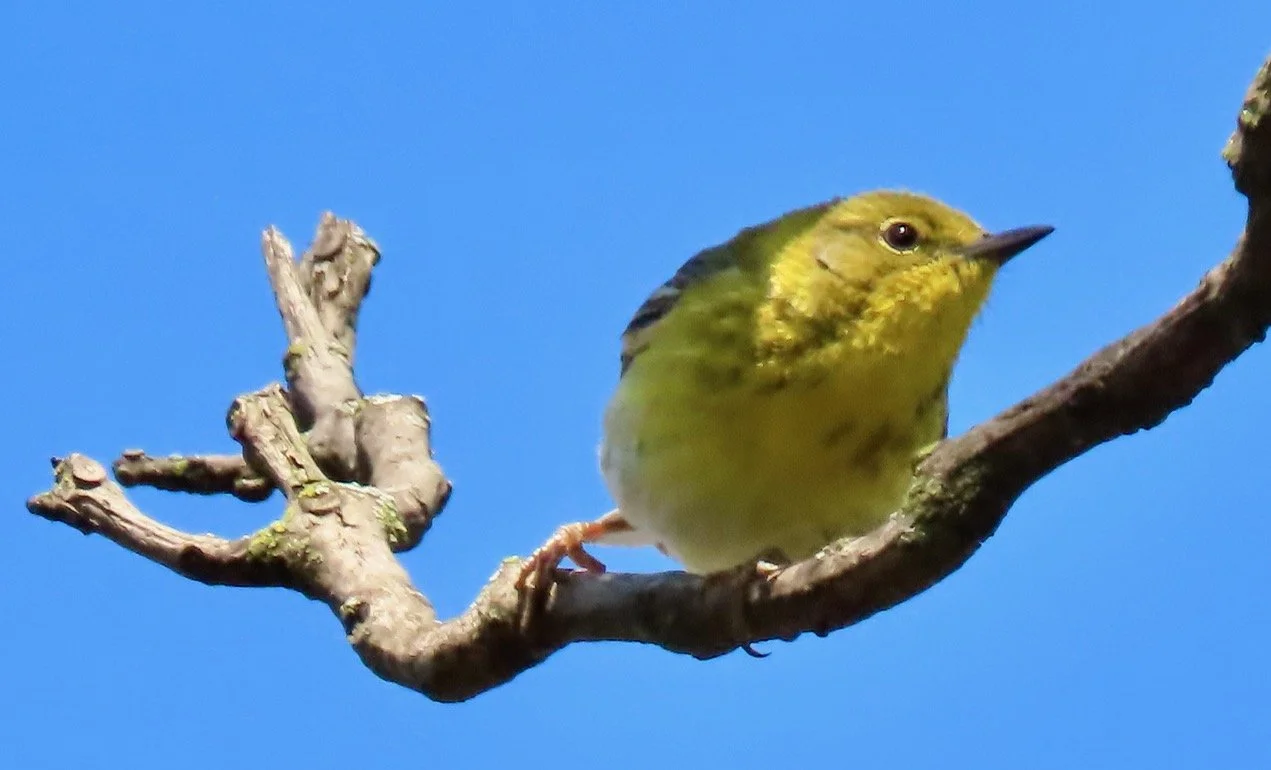
Pine Warbler. Photo by Randy Shonkweiler, Washington Park, May 5, 2023.
We doubled back and proceeded along the lower trail toward the Big Slough. Kelly pointed out the soggy ephemeral wetlands that often draw ducks and herons, especially during migration.
As we approached the dance pavilion, we delighted in the appearance of a pair of Eastern Bluebirds. The male’s feathers seemed especially brilliant against the gray sky.
At the Big Slough, we watched carp break the surface of the water with their fins, drawing laughing accusations of “Shark! Shark!” Unperturbed, a Great Blue Heron fished in the distance.
We worked our way back to the parking lot, spotting Hermit Thrushes, Golden and Ruby-crowned Kinglets and a White-breasted Nuthatch. The phoebe rejoined us near our cars, providing much better looks. All together we saw 29 species.
Kelly also shared the link to the Urban Birding Festival in September, which features guided walks, presentations and more. It was a fun and informative walk!