
Field Trip Recap: Peregrine Walk
words by Kris Hansen
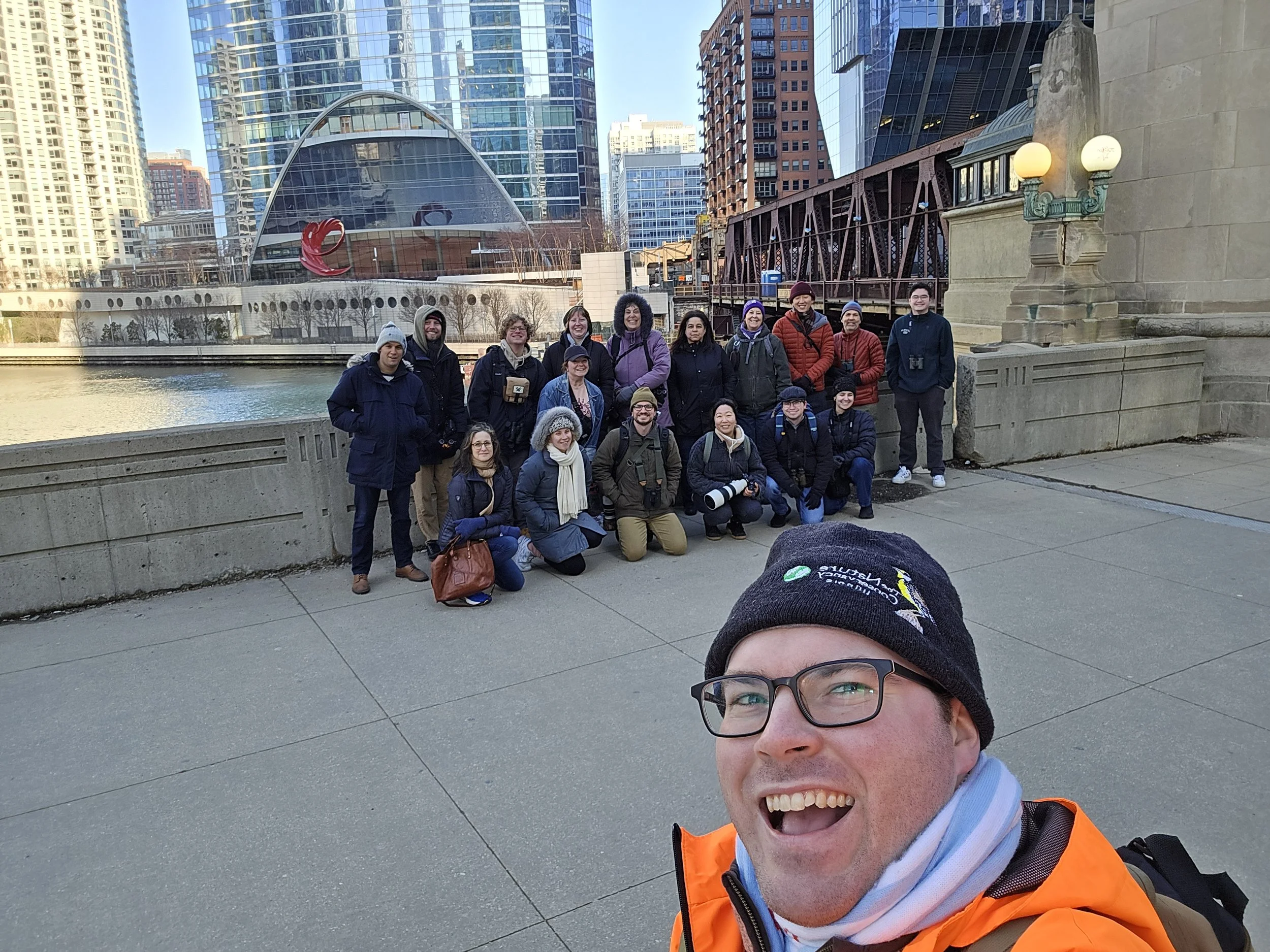
On a brisk yet sunny morning March 8, 18 birders gathered in the shadow of the Sears—er, Willis—Tower to scan the skies for Peregrine Falcons.
The action was unexpectedly at our feet, as three American Woodcocks suddenly rocketed out of the shrubs in the little park at Jackson and Wabash Avenues. Trip leader and COS president Edward Warden said he had never known them to overnight in this park during their migration, but it would be on his watchlist now.
Moments later our target bird soared through blue skies nearby. Edward explained that peregrines have sharply pointed wings, helping distinguish them from similarly shaped hawks or Rock Pigeons high in the sky.
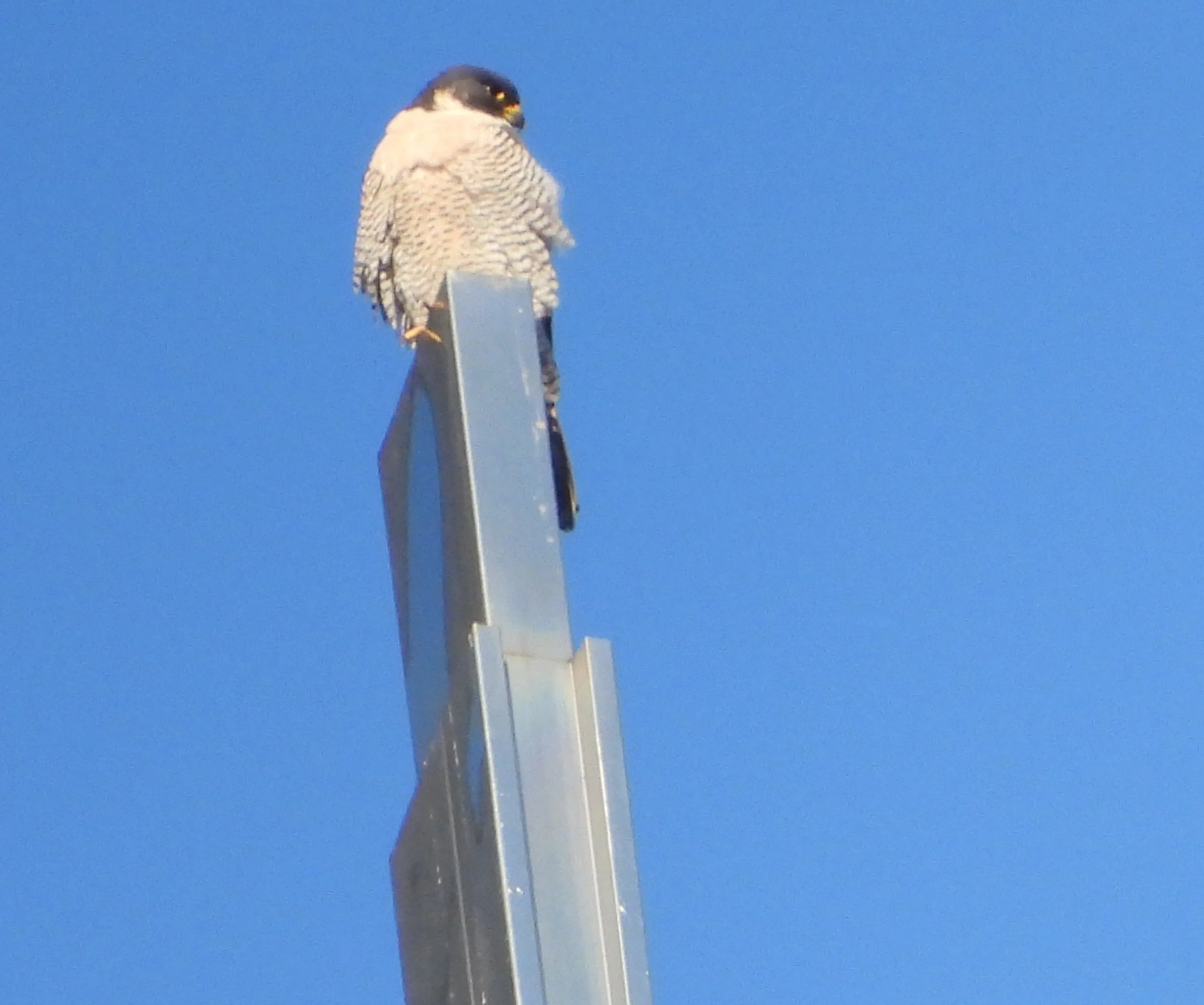
Peregrine Falcon. Photo by Kris Hansen, West Loop, March 8, 2026.
Happy with our quick success, we trooped onto the Jackson Avenue bridge, where we spotted a pair of peregrines perching on and swooping about the top of the Motorola Building. Edward said that this was likely one of two mated pairs that nest within a block of each other along that stretch of the river. This density is unheard of in other locations but apparently fine with these birds, since they return annually.
Edward also explained how Chicago was the first city where peregrines were successfully reintroduced. The tall buildings and high ledges mimic the rock faces that peregrines prefer, and food is plentiful. Following years of successful breeding, peregrine couples now nest across Chicagoland. Other cities have adopted Chicago’s reintroduction program, but the Windy City continues to have the largest peregrine population.
In fact, the Peregrine Falcon is Chicago’s official bird. More than 40,000 people voted in an election in 1999 to make it so.
The group continued along Wacker northward and then eastward as it bends with the Chicago River. Red-breasted Mergansers swam in pairs in the still water.
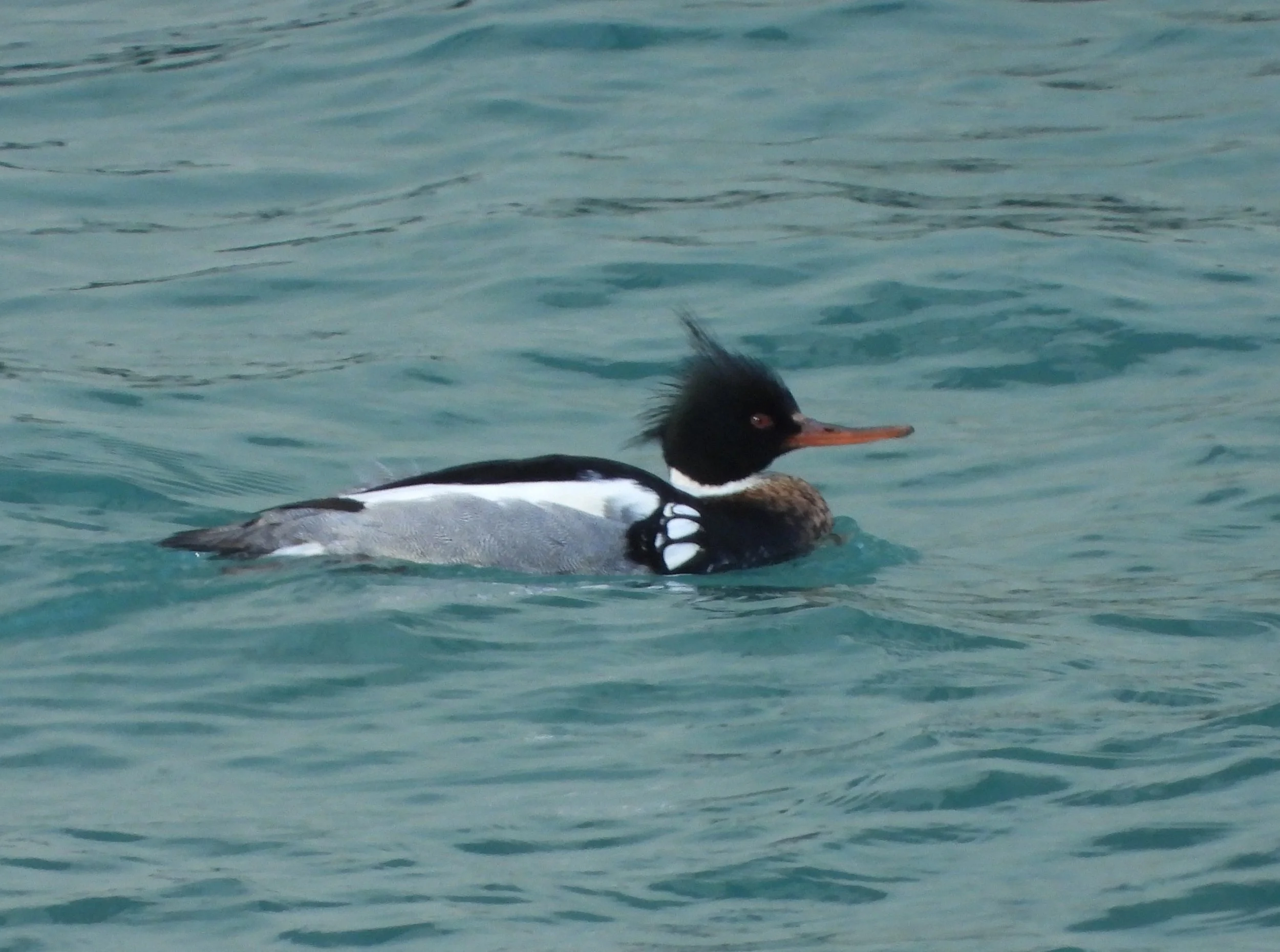
Red-breasted Merganser. Photo by Kris Hansen, Chicago River, West Loop, March 8, 2026.
Another peregrine appeared, seemingly hunting pigeons. Edward said that peregrines were the fastest animals on the planet, capable of moving more than 200 mph when they stoop, or plunge, toward their prey.
We reached the area near Michigan and Wacker where another pair nests, but they declined to make an appearance. We saw four peregrines and 10 other species. We disbanded, happy with our views of the largest falcon in Illinois.