
Field Trip Recap: Sunday Social at Humboldt Park
words by Ryan Pate
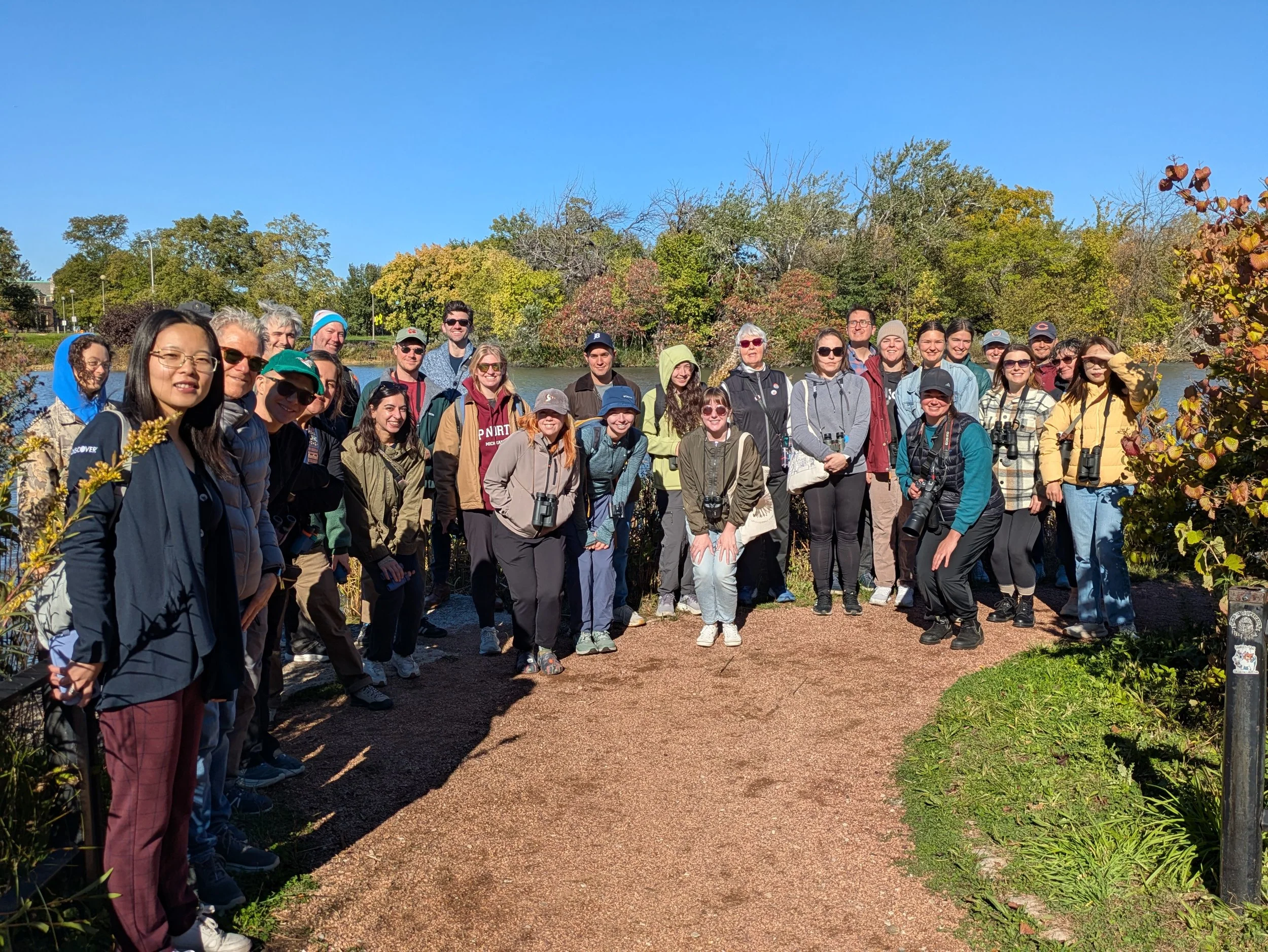
On Sunday, Oct. 18, birders gathered at the Humboldt Park Boathouse, embracing the chilly morning in anticipation of late fall migrants. As we began chatting amongst ourselves, recognizing familiar faces and learning new ones, we took stock of the bird activity.
Visible across the lagoon was a pair of Double-crested Cormorants drying off on Grackle Island, as well as a pair of Wood Ducks lazily swimming across the far north end. Co-leader Steve Whitman set a spotting scope on the cormorants and invited everyone to get a better look. We also watched a Cooper’s Hawk flush a flock of Rock Pigeons across the north end of the park.
After going over guidelines and leader introductions, the group got started along the path. A Great Blue Heron was quickly spotted in the trees along the water, as well as a Yellow-rumped Warbler flitting through the foliage above, which co-leader Vinod Babu pointed out.
While we stood along the water’s edge, a Red-tailed Hawk soared over the lagoon and banked past us, giving us a great look at the vibrant red tail of an adult. Shortly after, the Cooper’s Hawk made a reappearance, much closer this time. We were able to see the long tail and slim build compared to the red-tail’s short tail and heavy build.
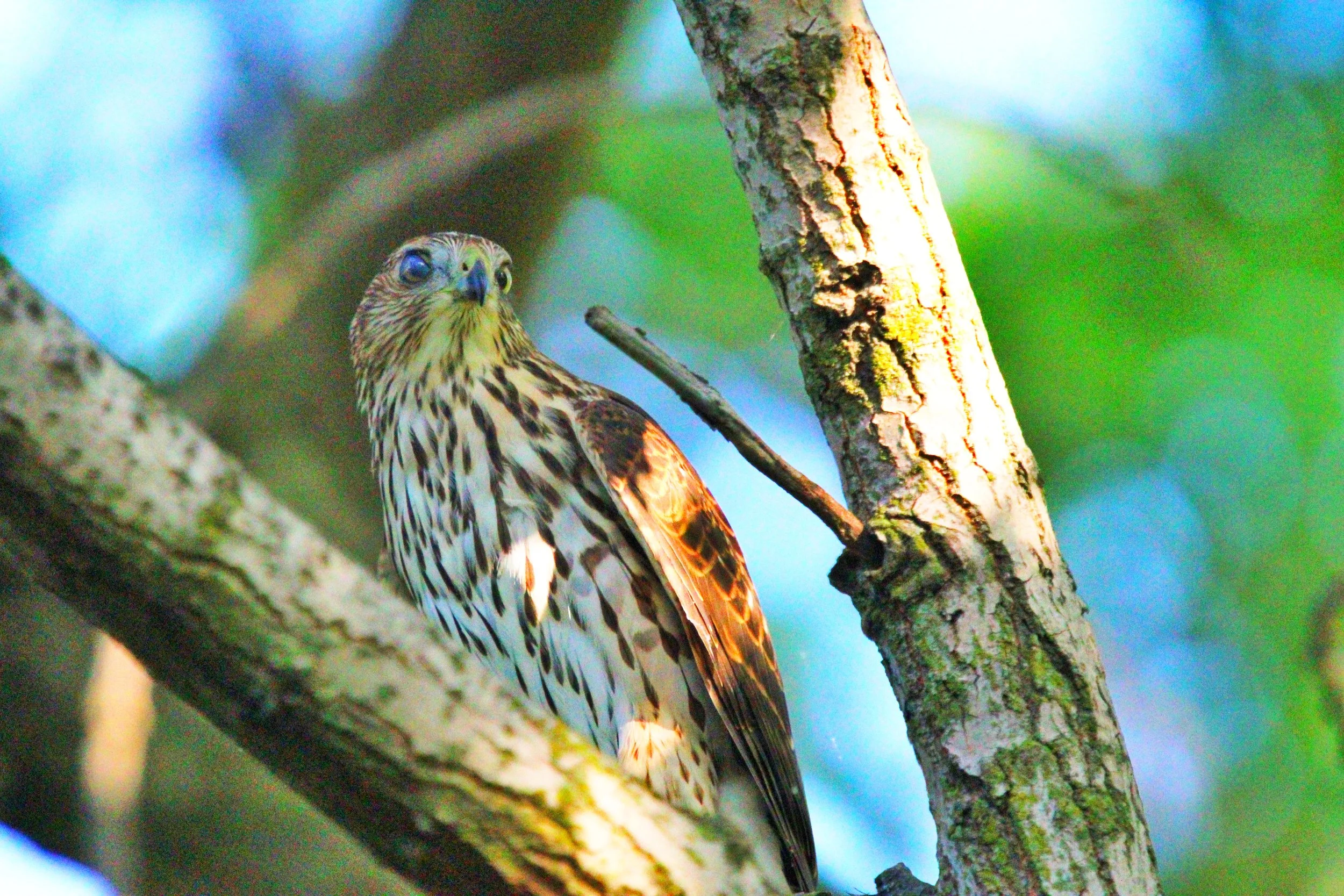
Cooper’s Hawk. Photo by Nick Paarlberg, North Pond, Aug. 12, 2024.
As we approached the bridge to Picnic Island, Whitman stopped to point out pokeweed, a native plant that bears bright red berries. This particular plant was stripped of berries, as it is a favorite of thrushes and other birds.
On the island, we respotted the cormorants, now swimming in the lagoon like mini-Loch Ness monsters. As we watched, one of them surfaced triumphantly with a fish in its mouth!
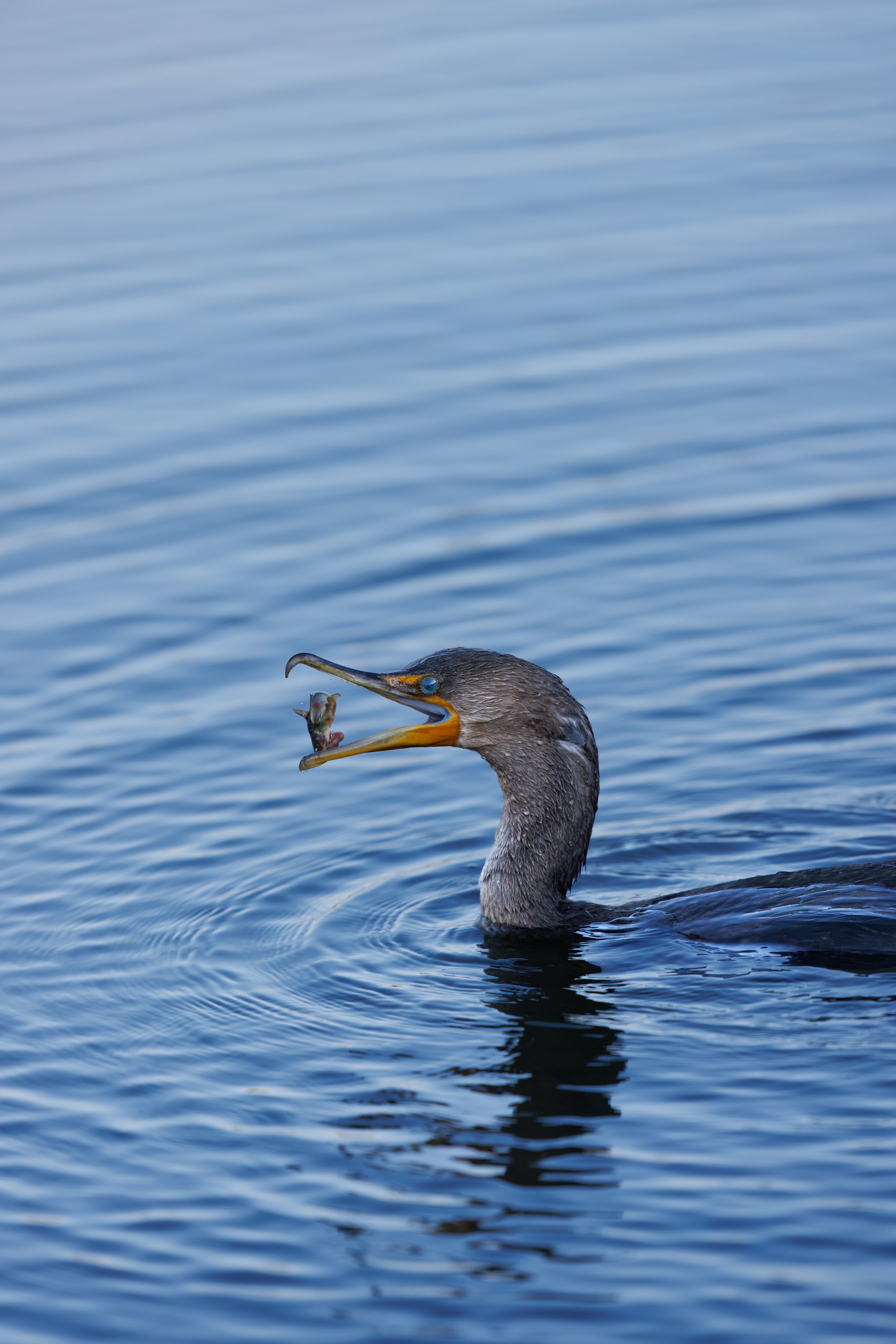
Double-crested Cormorant. Photo by Sven Kranz, Montrose Point Bird Sanctuary, Oct. 4, 2025.
Moving on from the island, we continued along the water’s edge. In a cluster of trees we got incredible views of a Golden-crowned Kinglet working the bark of a large tree. Behind us was a group of White-throated Sparrows foraging in the leaves. Later we spotted both a Golden- and a Ruby-crowned Kinglet, giving great views to compare the plumage of these tiny birds.
Heading to the east side of the park, we saw an Eastern Phoebe wagging its tail over some fallen trees, along with a group of vocal American Goldfinches in their fall colors.
Sparrow season is clearly upon us; a mixed group of sparrows foraged in the bushes near the boathouse, along with Song and Swamp Sparrows calling from the reeds in the Prairie River. We made it to the southwest end of the park to find a lovely American Coot who was waiting patiently to be the subject of our binoculars and camera lenses.
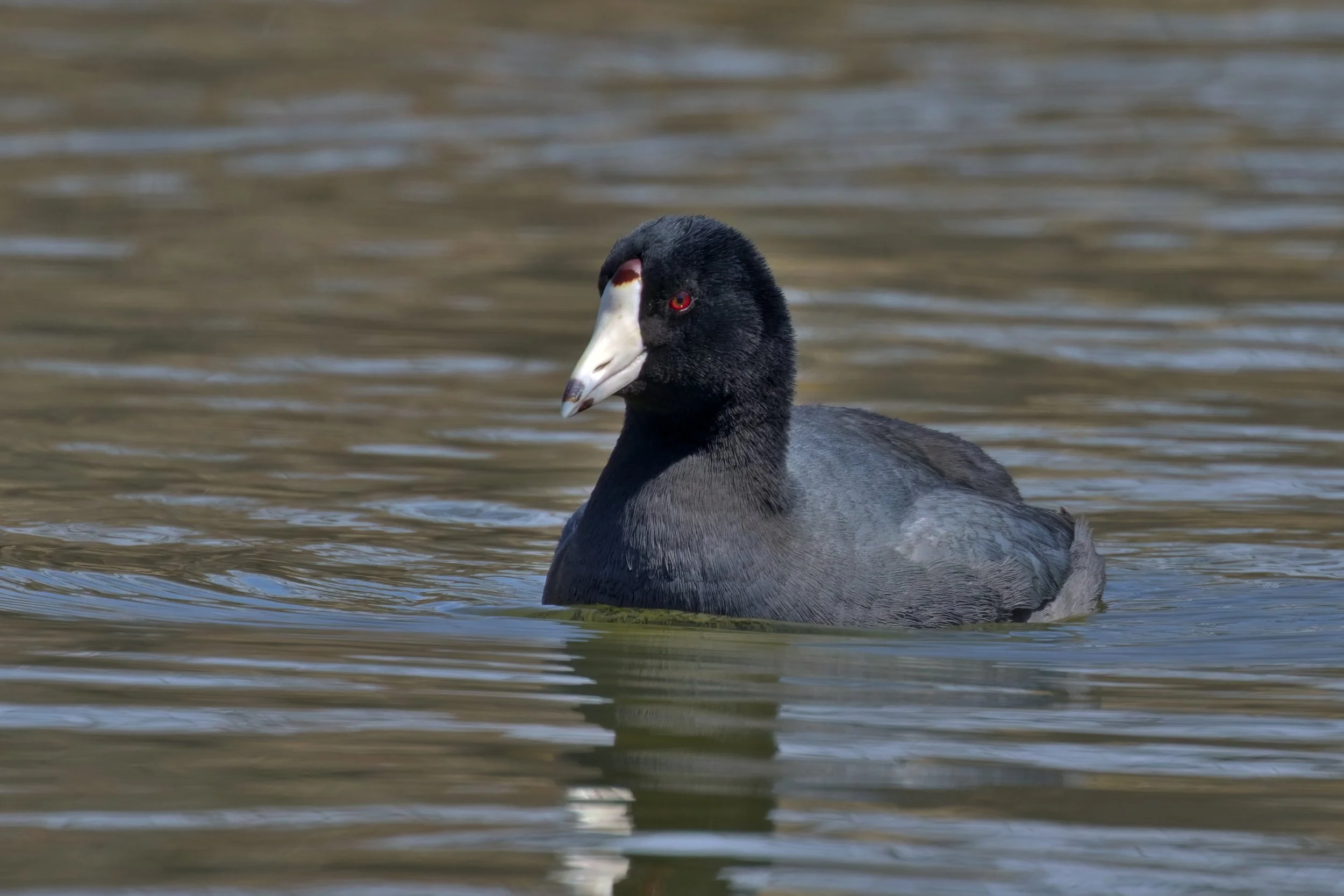
American Coot. Photo by Alex Muench, Humboldt Park, April 2, 2023.
The birds seemed keenly aware of the walk’s scheduled end time of noon, as the activity quickly subsided. On the walk back to the boathouse, birders chatted and recounted the day’s sightings. In total, we logged 30 species on our walk.