
Field Trip Recap: Horner Park
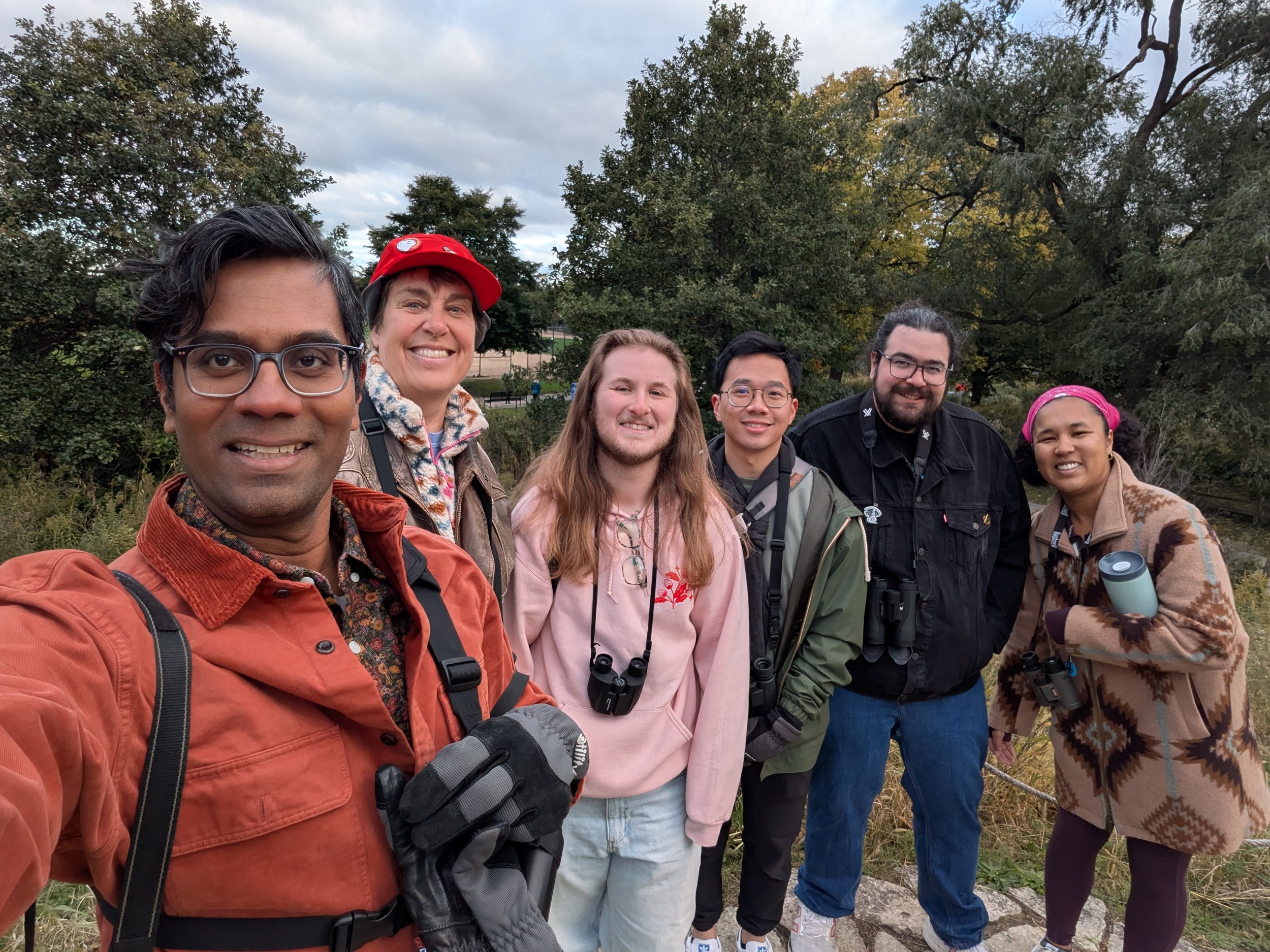
words by Kris Hansen
Kinglets to the right! Kinglets to the left! Kinglets overhead!
The insect-covered plants and leaves in Horner Park were swarming with Ruby-crowned and Golden-crowned Kinglets on a sunny morning Oct. 17 at Horner Park. The bird action started in the parking lot on the west side just north of Irving Park Road, with a dozen Dark-eyed Juncos and a handful of White-throated and White-crowned Sparrows joining in the fun.
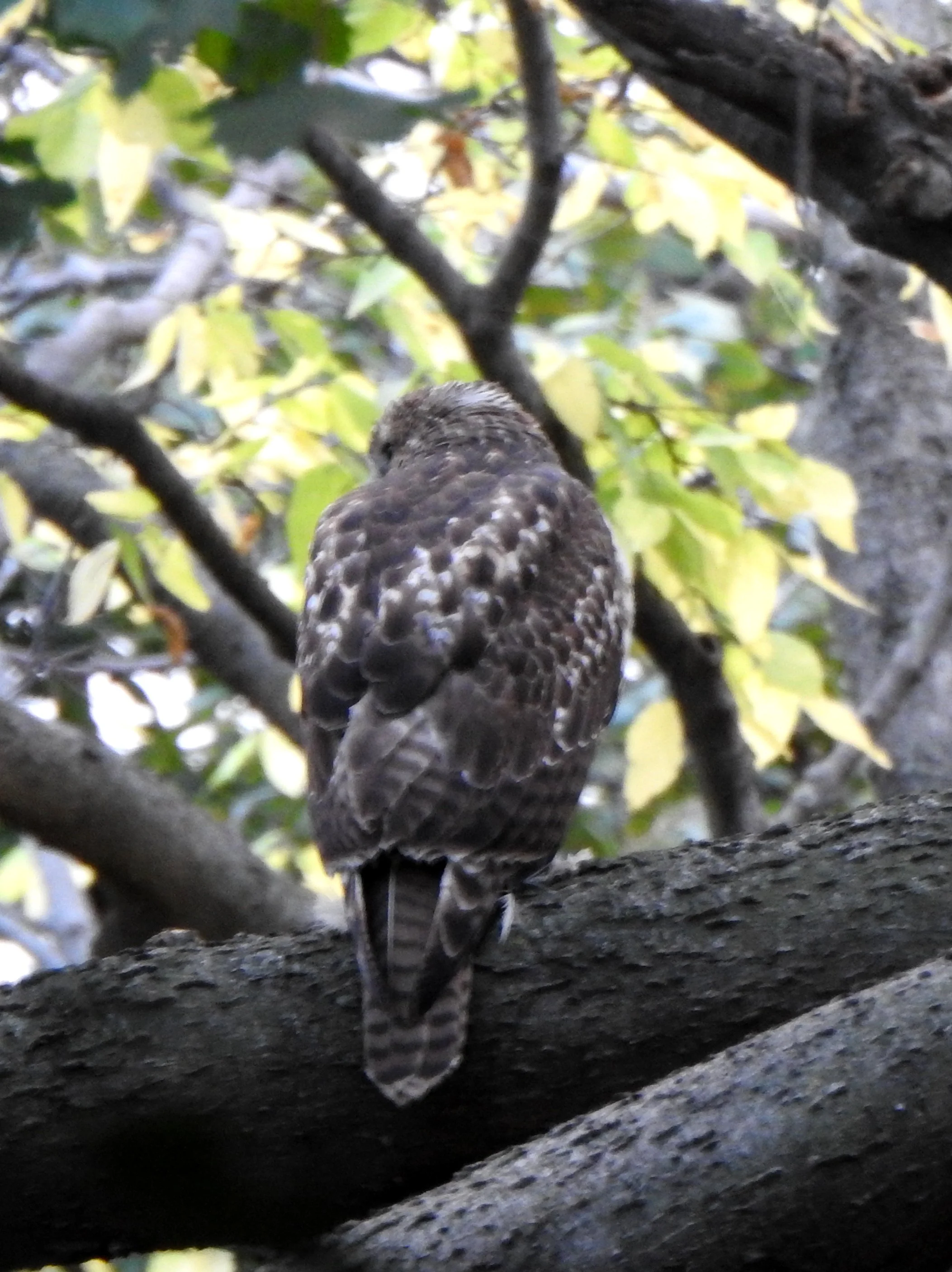
Red-tailed Hawk. Photo by Vinod Babu, Horner Park, Oct. 17, 2026.
Suddenly we spotted a large bird gliding low to the ground, then posting up into a nearby tree. A Red-tailed Hawk displayed its creamy white breast with the distinctive dark-spotted V below. After giving the six of us a good look, the bird glided to another tree and displayed its back with the white V on its folded wing feathers. An angry squirrel criticized the entire display.
We made our way east across the natural area along the south end of the park. The occasional Yellow-rumped Warbler chipped loudly at us, while sparrows and a Hermit Thrush foraged along the path. We were treated to a late-season pair of Yellow-bellied Sapsuckers.
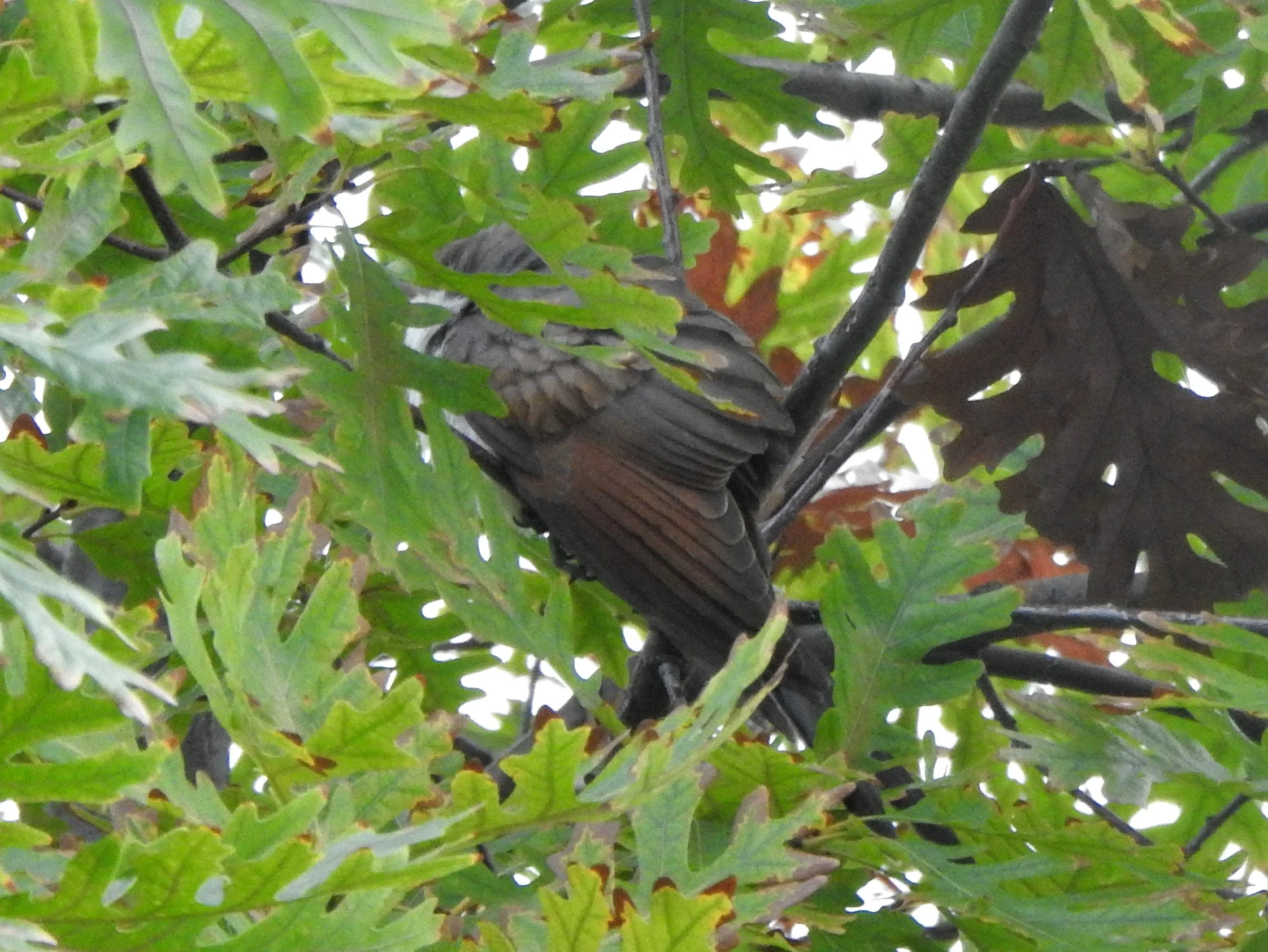
Yellow-billed Cuckoo. Photo by Vinod Babu, Horner Park, Oct. 17, 2026.
We turned north to follow the path along the river. Soon our leader and COS Board Member, Vinod Babu, spotted a Yellow-billed Cuckoo, with characteristic drooping wings. The well-camouflaged bird was hard to see from most angles, even when we knew where it was.
Alerted by the sound of a squeaky toy, we scanned the trees for a Red-breasted Nuthatch. A few Brown Creepers entertained us while we searched. We marveled at the hummingbird-like hovering behavior of more kinglets.
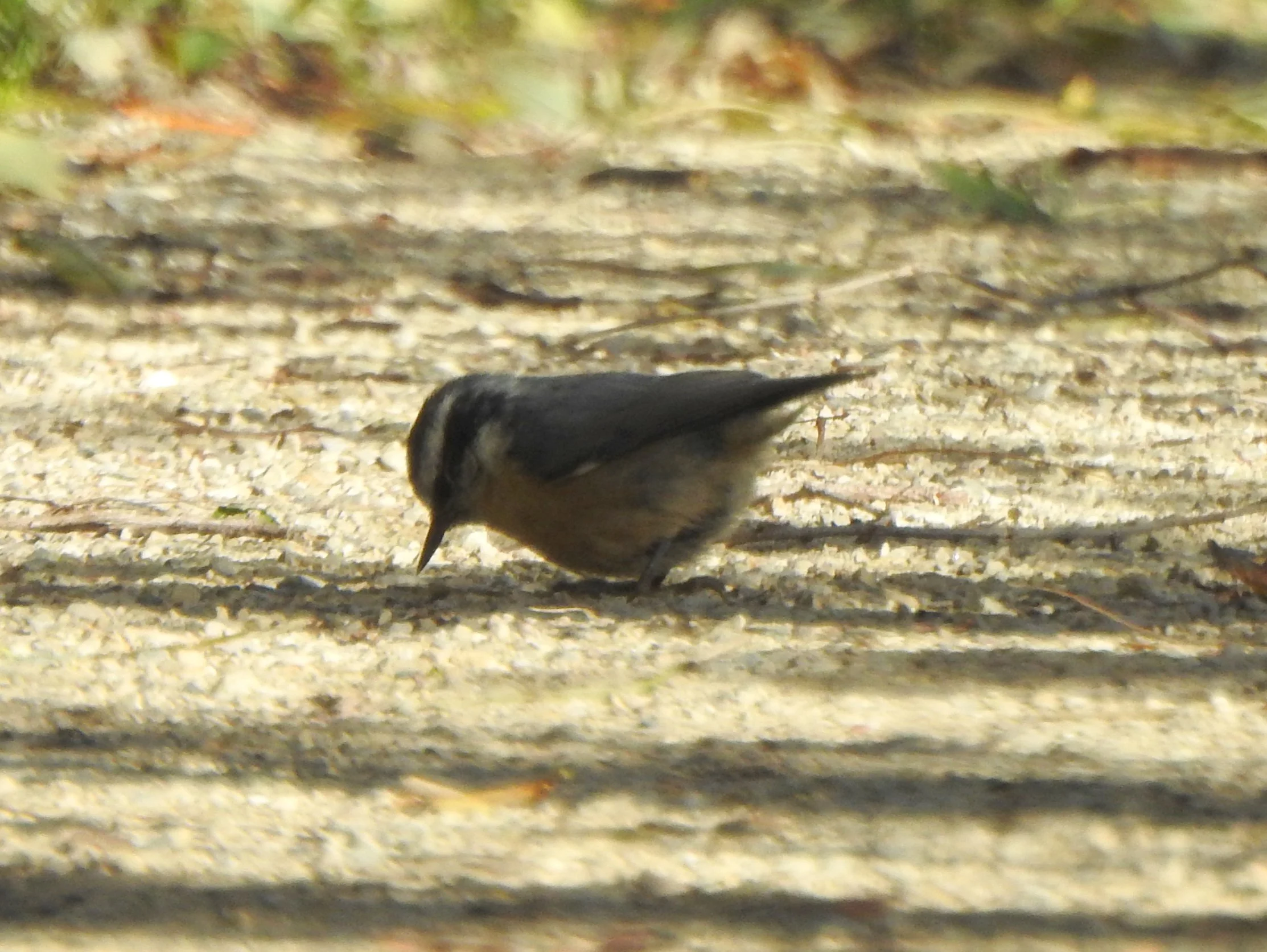
Red-breasted Nuthatch. Photo by Vinod Babu, Horner Park, Oct. 17, 2026.
Momentarily giving up, we turned our gaze to the path ahead and behold—the nuthatch on the ground! We had great views of this migrant, who usually is working its way around branches so fast it is hard to get a good look.
Sparrow-palooza continued, with Chipping, Fox, Field, Swamp and Song joining the parade. Several Orange-crowned Warblers flitted about, along with a solitary Nashville Warbler.
A Belted Kingfisher and a Great Blue Heron soared over the river as we reached Montrose and turned around to retrace our steps. A Purple Finch and a Winter Wren made brief appearances.
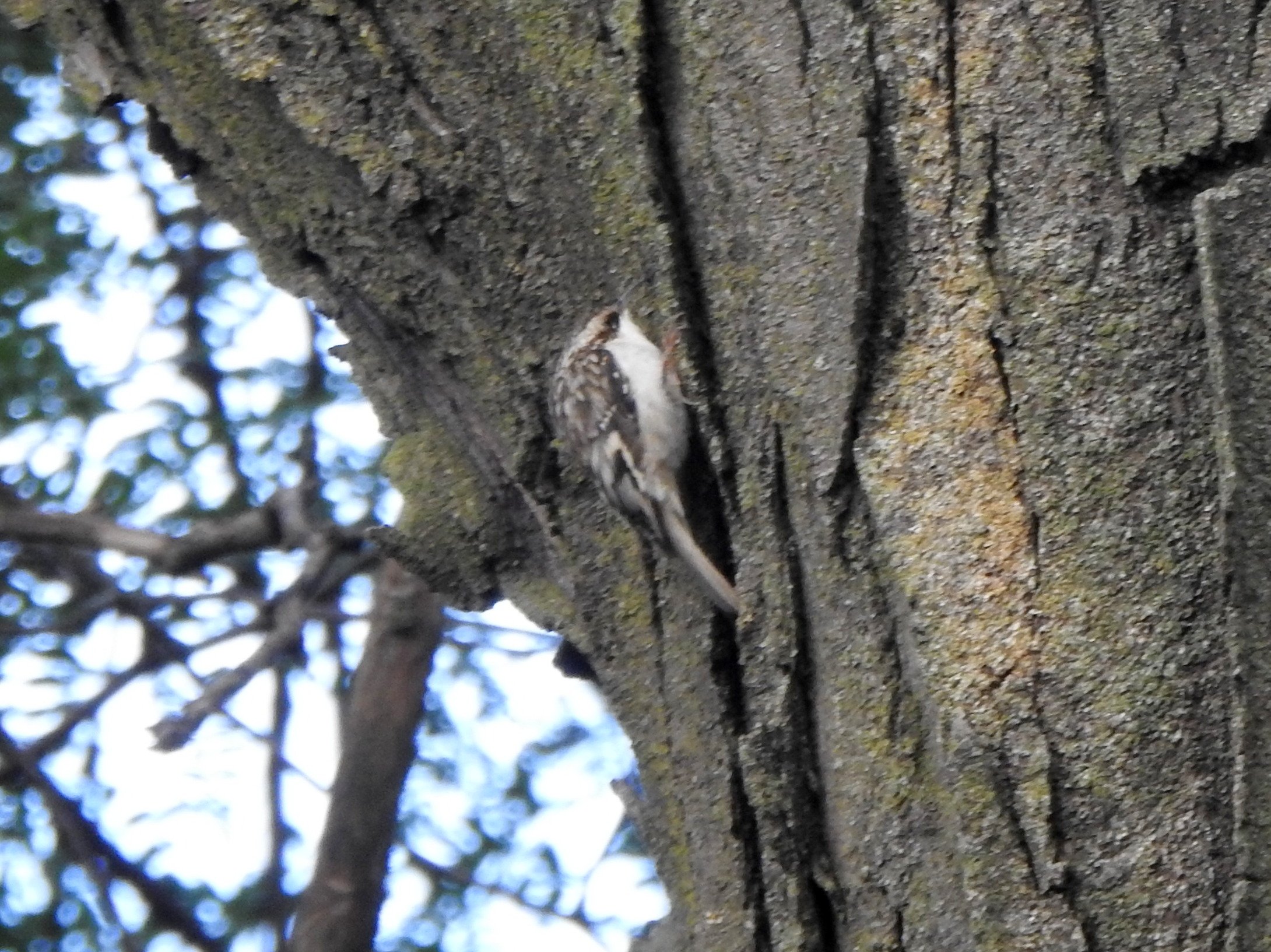
Brown Creeper. Photo by Vinod Babu, Horner Park, Oct. 17, 2026.
As we returned to the parking lot, we stopped to again admire one of the black squirrels that are famous in this park. We saw 41 species and learned why Horner is a favorite spot for many birders.
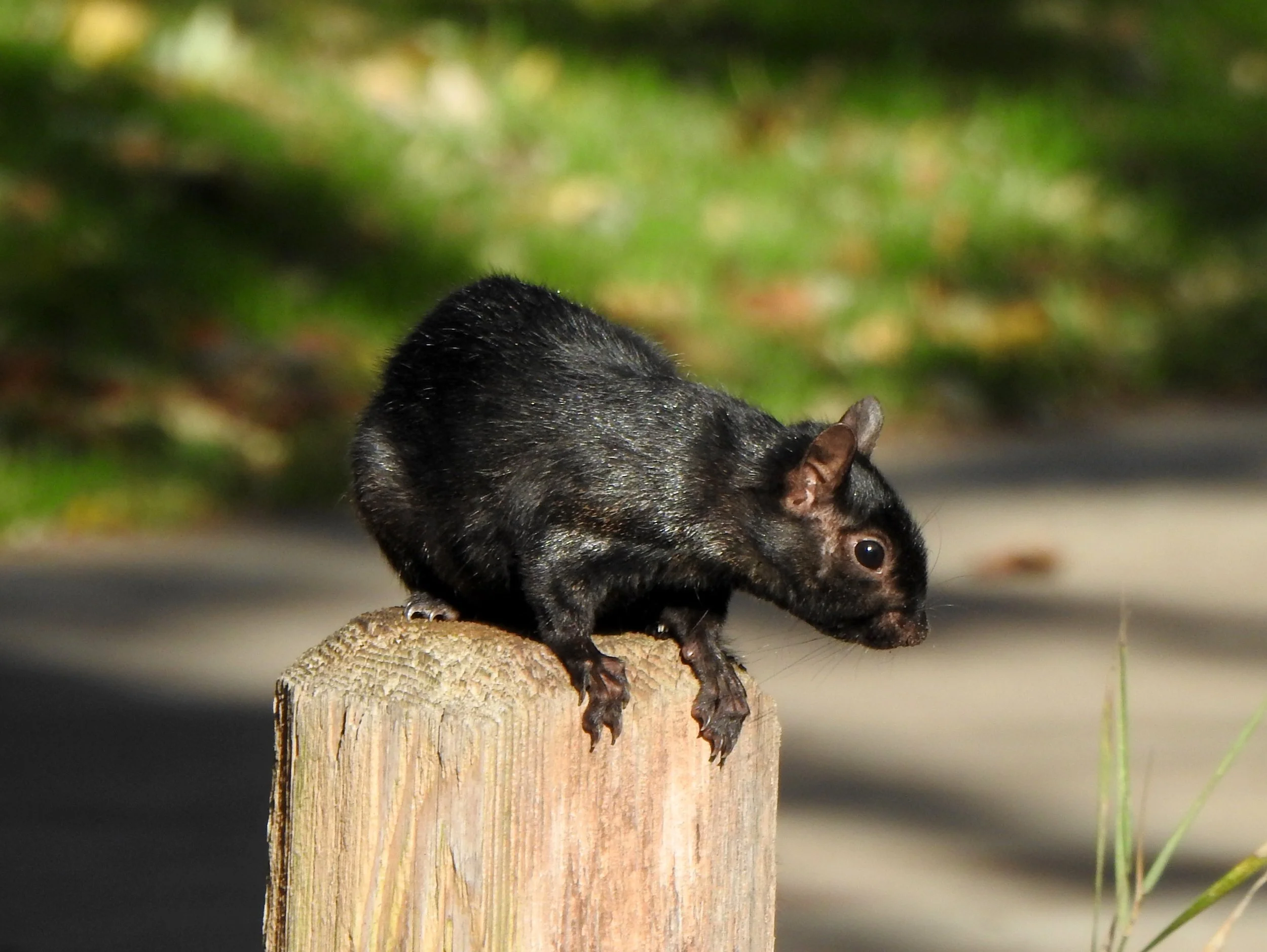
Eastern Gray Squirrel, melanistic. Photo by Vinod Babu, Horner Park, Oct. 17, 2026.