
Field Trip Recap: McKinley Park
words by Kris Hansen
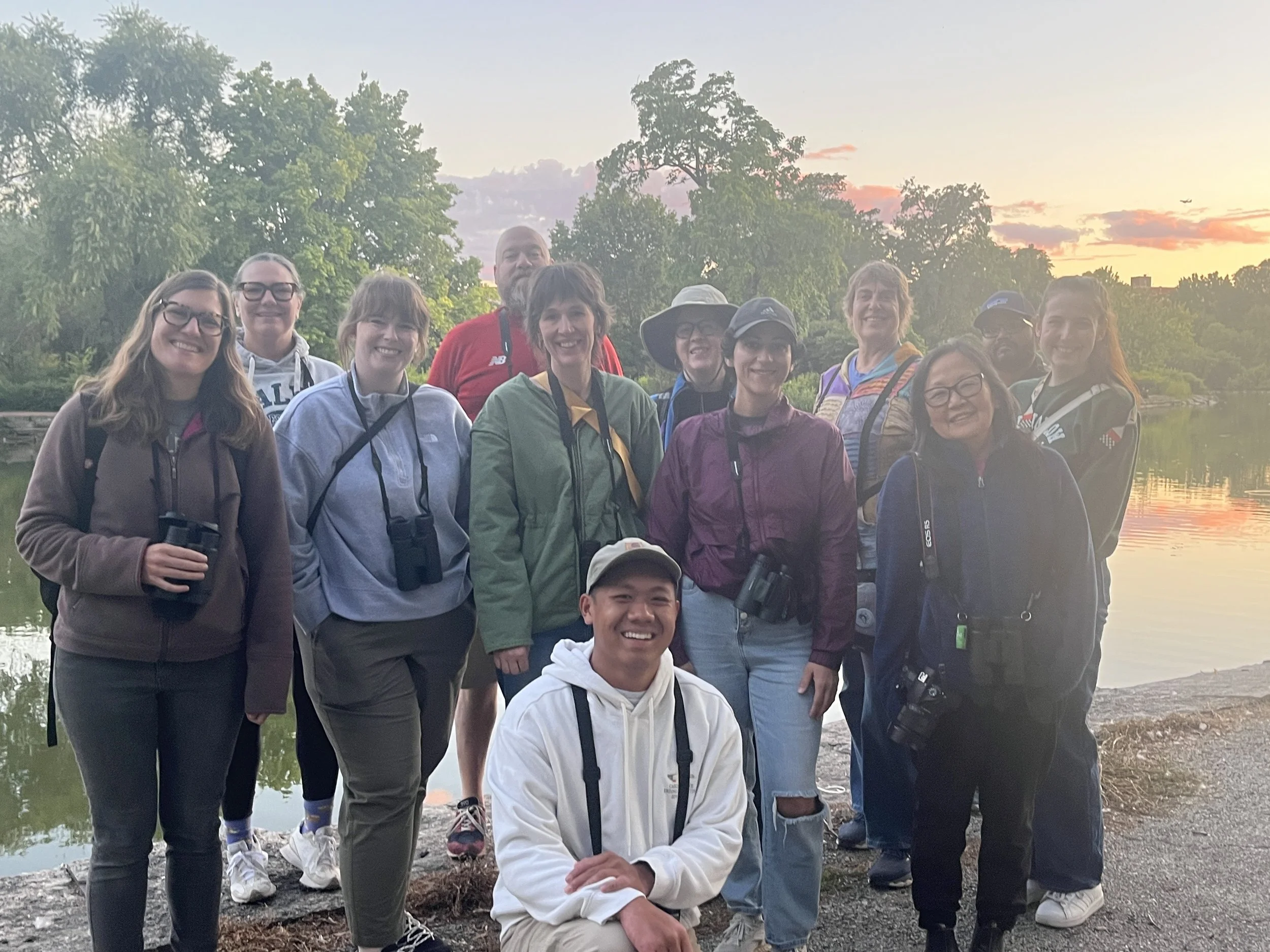
Twelve people joined trip leader Sammy Cabindol for a sunset walk at McKinley Park on Sept. 7. Sammy led us on a “test run” for the walk he is leading for the Urban Birding Festival the following weekend. It was a new park for most of us, and we were impressed with the large lagoon surrounded by native plants plus inner and outer walking paths, as well as many majestic trees lining other paths and near the well-kept playing fields.
Early fall migrants had been arriving in Chicago for the past few nights, and it did not take long before we spotted birds grabbing another meal before launching into their nighttime journey.
Several American Redstarts and a Blackpoll Warbler flitted between honey locust trees as we made our way from the parking lot to the lagoon path. A gorgeous Black-and-White Warbler, a favorite bird for many of us, gave wonderful looks on a nearby oak. Its pal soon revealed itself to be a Swainson’s Thrush, the first of many.
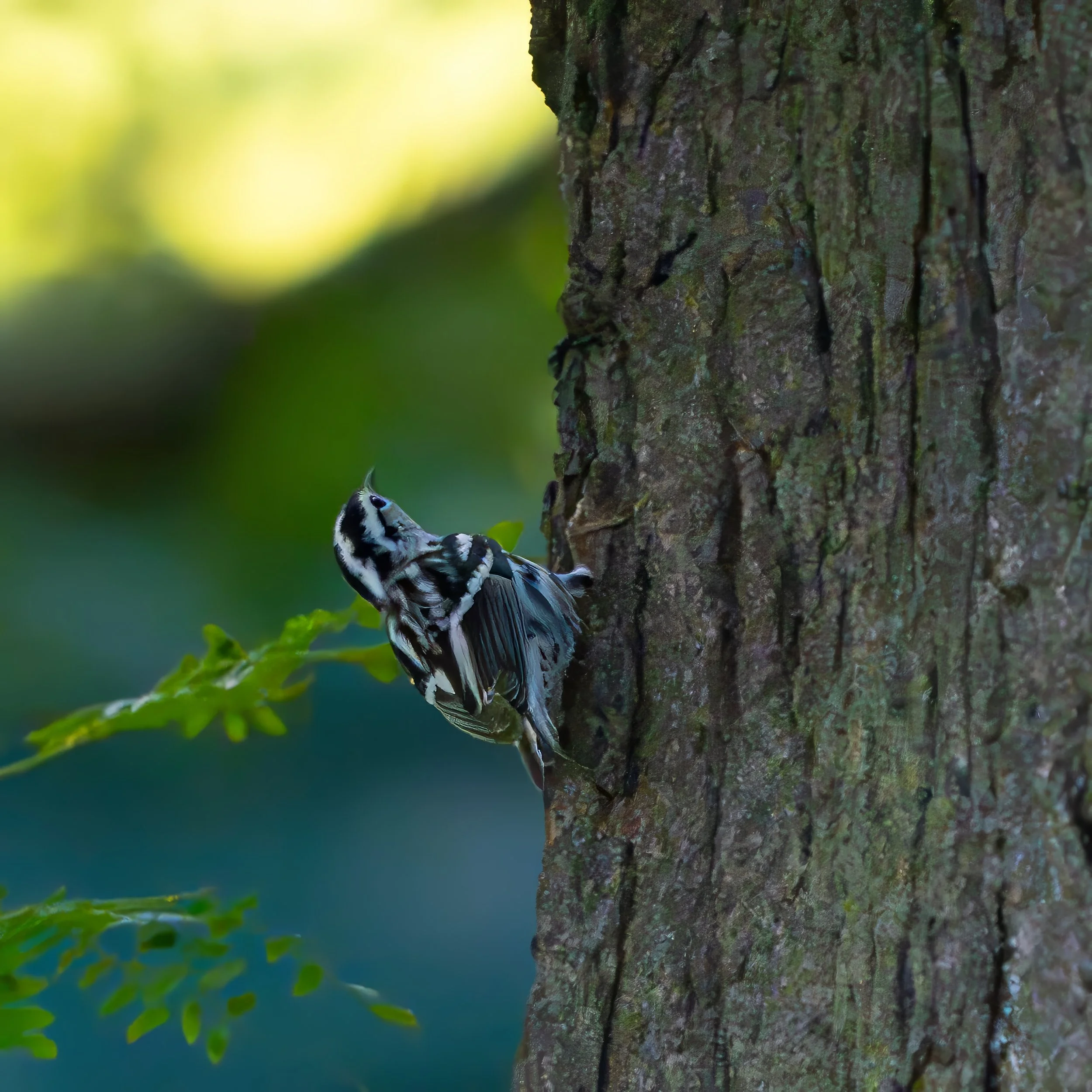
Black-and-white Warbler. Photo by Madhu Nukathoti, McKinley Park, Sept. 7, 2025.
A handful of American Goldfinches in dull fall plumage greeted us as we reached the lagoon. A few steps along the path brought us to a clearing, where we spotted a Great Blue Heron, a juvenile, calmly feeding among dozens of Canada Geese out on the lagoon. Several of the geese had neck bands with large numbers, remnants of a research project. We also spied a Green Heron on the far side.
As we rounded the southeast corner of the lagoon, Sammy heard a Common Yellowthroat. He explained about pshing, the sound that humans make to try to attract curious birds, as well as “mob calls,” which are recordings of actual birds protesting a predator. While mob calls can be effective at drawing some species in, they should be used sparingly, if at all, to avoid stressing birds. Sammy’s pshing was enough to call in the yellowthroat from the dense native plants.
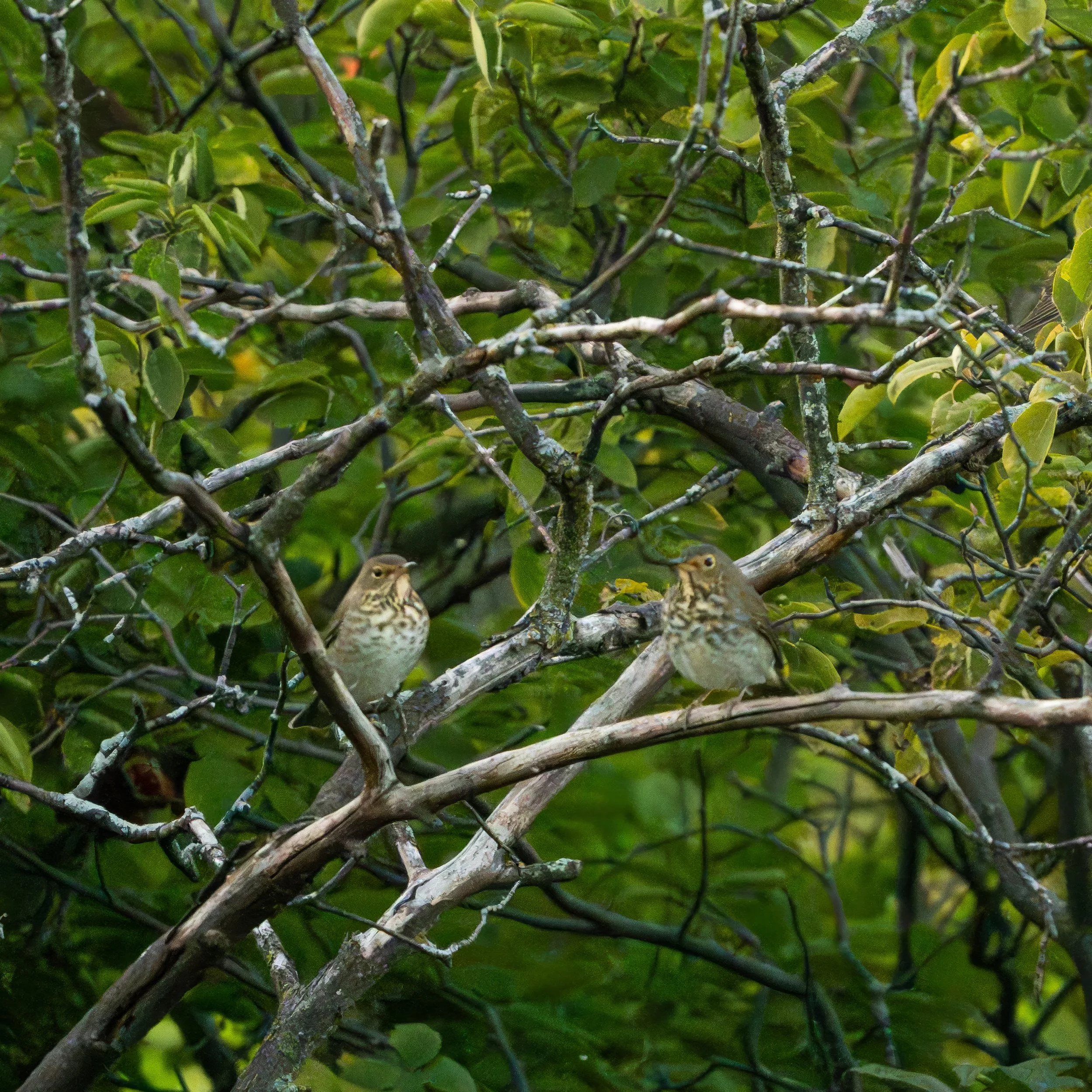
Swainson’s Thrushes. Photo by Madhu Nukathoti, McKinley Park, Sept. 7, 2025.
As we moved northward, we entered Swainson’s Thrush alley. At times as many as four thrushes could be seen in a single shrub. Sammy pointed out the “chocolate chip” pattern of the dark spots on their breasts and their prominent eye rings, both good field marks for identification. A Veery joined the flock and displayed its creamy breast, which appeared unmarked in the fading light.
We saw a lone Chimney Swift or two overhead when we began our walk. They were joined by more than 60 of their pals, all calling and swooping for the bugs that erupted at sunset. We worked our way eastward, relocating the Great Blue Heron and spotting a second Green Heron near the first. A Cooper’s Hawk swooped east, giving good looks of its long banded tail.
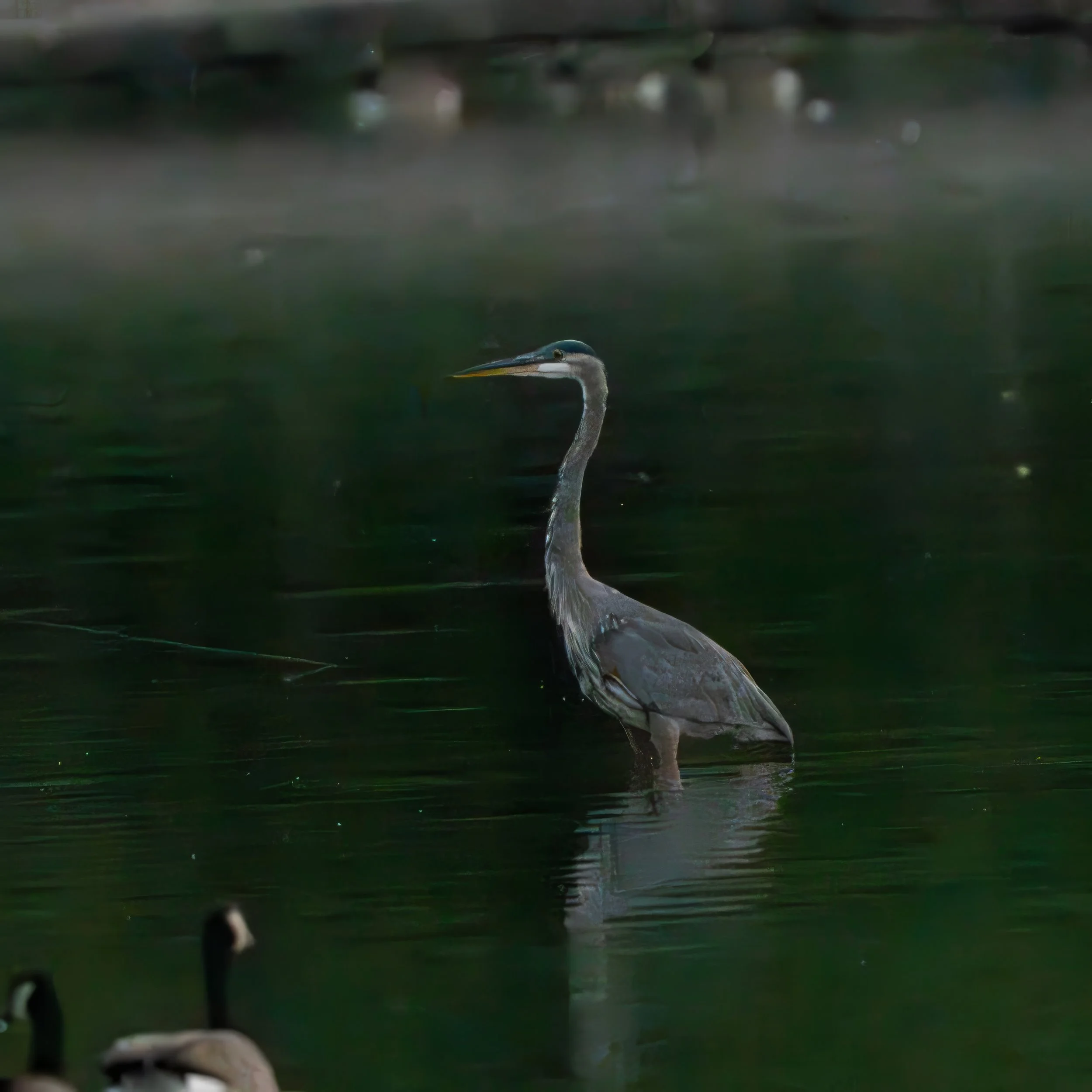
Great Blue Heron. Photo by Madhu Nukathoti, McKinley Park, Sept. 7, 2025.
Suddenly the distinctive call of a Belted Kingfisher rang out, and some of us saw it swoop into trees further ahead.
We followed, hoping to get better looks. Instead of the kingfisher, a Black-crowned Night Heron flew in, circled the small island, and then perched for us. Sammy talked about the nesting colony at Lincoln Park Zoo, the largest in Illinois, and explained that April and May are the best time to visit the colony.
While we did not see the Common Nighthawks we hoped for, we did see 24 species. Many of us will now put McKinley Park on our birding lists.